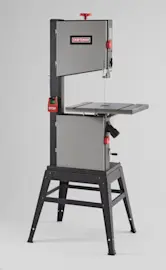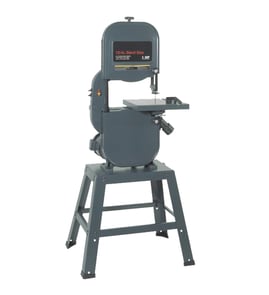

How do I know the size of my bandsaw blade?
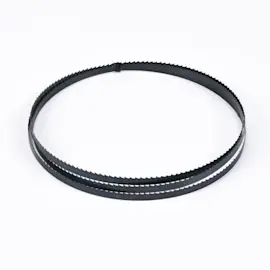
For your Craftsman 10324250 12" band saw, blade “size” means three specs: blade length (circumference), blade width, and teeth per inch (TPI). The most reliable way to know what you have is to measure the blade you’re using now, then match those measurements when you shop for a replacement.
Measure blade length (the key spec)
- Unplug the band saw and open the wheel covers.
- Release blade tension and carefully remove the blade.
- Put on gloves and coil the blade into manageable loops.
- Lay it on the floor and mark a starting point (often the weld).
- Use a tape measure to follow the blade edge, rolling the coil as needed, until the mark returns to the start.
That total distance is the blade length.
Measure blade width and TPI
- Blade width: measure from the tooth tip to the back edge of the blade.
- TPI: count how many teeth are in 1 inch; if the teeth are variable pitch, count over 2 inches and divide by 2.
- Blade thickness (optional): measure with calipers if you have them; most woodworking band saw blades are around 0.020 to 0.035 inches thick.
Quick spec checklist (write this down)
- Blade length: ____ inches
- Blade width: ____ inches
- TPI: ____
- Tooth style (optional): regular, skip, hook
Common blade choices (what to use when)
| What you’re cutting | Typical blade width | Typical TPI |
|---|---|---|
| Tight curves | 1/8" to 1/4" | 10 to 18 |
| General woodworking | 1/4" to 3/8" | 6 to 10 |
| Resawing thicker stock | 1/2" to 3/4" | 2 to 4 |
Why it matters
Matching length, width, and TPI helps the blade track correctly on the wheels, reduces drift, and improves cut quality. A blade that’s too wide for the cut or too fine for thick stock can overheat, wander, or burn the wood.
Helpful tip for ordering
When you’re ready to buy, search by your measured specs and model number 10324250 on Sears PartsDirect.
Last updated: February 2026
What is the 3-tooth rule for bandsaws?
The 3-tooth rule for a bandsaw blade means you should choose a blade pitch (TPI) so at least three teeth are in the cut at all times. On a Craftsman 10324250 12-inch band saw, this helps prevent tooth snagging and stripping on thin stock, and it improves cut control and blade life.
How to apply the 3-tooth rule (quick method)
- Measure the material thickness (the direction the blade teeth travel through).
- Pick a blade TPI that keeps 3 or more teeth engaged.
A simple rule of thumb:
- Minimum TPI ≈ 3 ÷ thickness (in inches)
Examples
- 1/8 in (0.125) thick: 3 ÷ 0.125 = 24 TPI (fine tooth)
- 1/4 in (0.25) thick: 3 ÷ 0.25 = 12 TPI
- 1/2 in (0.5) thick: 3 ÷ 0.5 = 6 TPI
Blade pitch guide (typical)
Use this as a practical starting point for most 12-inch band saw work.
| Material thickness | Typical blade pitch (TPI) | What you’ll notice |
|---|---|---|
| 1/16 to 1/8 in | 18 to 24 | Smoother cut, slower feed |
| 3/16 to 3/8 in | 10 to 14 | Good general control |
| 1/2 to 1 in | 6 to 10 | Faster cutting, rougher finish |
| Over 1 in | 3 to 6 | Aggressive cut, best chip clearing |
Why it matters
Bandsaw teeth need enough support from the workpiece. With fewer than 3 teeth engaged, each tooth takes too much load and can catch, chatter, or break. With very fine teeth in thick stock, the gullets can pack with sawdust, which increases heat and wandering.
Tips that improve results on the Craftsman 10324250
- Set blade tension correctly; under-tensioning increases drift and flutter.
- Adjust blade guides and thrust bearings close to the blade without rubbing.
- Use a steady feed rate; forcing the cut overheats the blade.
- For curves, use a narrower blade; for straight resawing, use a wider blade.
- If the cut burns or wanders, switch to a more appropriate TPI before chasing alignment.
Related DIY help
- For safe electrical checks (switch, cord, motor circuit), use how to use a multimeter to test electrical parts video.
Last updated: February 2026
What is the specs of the Craftsman 12 inch bandsaw 10324250?
The Craftsman 12-inch band saw model 10324250 is a classic 12-inch vertical band saw; the core specs to confirm for blades and setup are the 12-inch throat, about 6-inch max cutting height, and an 80-inch blade length. Use the saw’s data plate and blade cover decal to match your exact electrical rating.
Key specifications to use for blades and setup
These are the specs that matter most when buying blades, setting guides, and tuning tracking:
- Throat capacity: 12 inches (blade to frame)
- Max cutting height (resaw height): about 6 inches
- Blade length: 80 inches
- Table tilt: 0 to 45 degrees (typical for this Craftsman style)
- Motor/electrical: verify volts and amps on the motor nameplate (varies by how the saw was equipped)
Quick reference table
| Spec | What to use | Where you’ll see it |
|---|---|---|
| Blade length | 80 inches | Blade packaging, decal under upper cover, or measured blade |
| Throat | 12 inches | Measure from blade to column/frame |
| Cutting height | About 6 inches | Measure from table to fully raised guidepost |
| Electrical | Nameplate value | Motor tag (volts, amps, HP) |
How we recommend verifying on your exact saw
- Unplug the saw; open the upper wheel cover and look for a blade-length decal.
- Read the motor nameplate for voltage and amperage before choosing an outlet or extension cord.
- Measure the max cutting height with the guidepost fully raised.
- Use the full model number 10324250 when searching diagrams and replacement items on Sears PartsDirect.
Why it matters
Using the correct 80-inch blade prevents tracking issues and guide wear, and matching the motor nameplate rating helps avoid nuisance breaker trips and overheating.
Last updated: February 2026