Owner’s manual


Do LG top load washers have a filter that needs to be cleaned?
Yes. LG top-load washers like model WT1901CK use small inlet screen filters at the water valve and a drain system that can trap debris; cleaning these helps prevent slow filling, poor rinsing, and drain problems. For model-specific locations and access steps, use the WT1901CK owner's manual.
What “filters” you should check on a top-load LG washer
Most LG top-load washers do not have a big, removable lint filter like many older designs. Instead, filtration is handled in a few places:
- Inlet screen filters: tiny mesh screens where the hot and cold hoses connect to the washer
- Drain path debris traps: coins, hair pins, and lint can collect in the tub outlet, drain hose, or pump area
- Dispenser screens/paths (if equipped): residue can restrict flow and cause buildup
Quick cleaning checklist (safe, no special tools)
- Unplug the washer.
- Turn off both water supply valves.
- Remove the fill hoses; rinse and gently brush the inlet screens.
- Check the drain hose for kinks or clogs; confirm the standpipe is not blocked.
- If draining is slow or noisy, inspect the pump area and consider replacing the drain pump assembly 5859EA1004P if it is jammed or leaking.
- Run a tub-clean cycle (or hottest cycle) to reduce residue and odor.
Symptoms that point to a clogged inlet screen vs. a drain restriction
| Symptom | Most likely area | What to do first |
|---|---|---|
| Slow fill, long fill time | Inlet screens or valve | Clean inlet screens; then evaluate the water inlet valve |
| Won’t fill or fills incorrectly | Pressure sensing or inlet | Check hose to pressure switch; verify water supply |
| Slow drain, standing water | Drain hose or pump | Check drain hose routing; inspect pump for debris |
Why it matters
Restricted inlet screens can cause underfilling and poor wash action; drain restrictions can trigger drain errors, leave water in the tub, and strain the pump. Keeping these areas clear helps the WT1901CK wash and spin normally.
Last updated: February 2026
What is the most common problem with the LG washing machine?
On the LG WT1901CK top-load washer, the most common service issue we see is a drain or spin problem caused by restricted water flow out of the tub (often debris in the drain path). When the washer cannot drain correctly, it may stop mid-cycle, leave water behind, or refuse to spin.
Quick checks that fix many drain and spin complaints
- Make sure the drain hose is not kinked, crushed, or shoved too far down the standpipe.
- Confirm the standpipe or laundry sink drains fast (a slow house drain can mimic a washer failure).
- Run a Drain/Spin cycle with the tub empty to see if the symptom changes.
- Listen for the drain pump sound; a loud hum with little water movement points to a restriction.
- Check for small items (coins, socks) that can block the pump or outlet path.
Parts that commonly relate to “won’t drain” symptoms
If the basic checks do not help, these model-matched parts are the most common next suspects:
| Symptom | Most likely area | Example model-matched part |
|---|---|---|
| Water stays in tub | Drain system | Drain pump assembly 5859EA1004P |
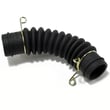
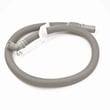
| Drains slowly or backs up | Drain routing | Washer drain hose AEM73732901 |
| Overfills or water level seems wrong | Water level sensing | LG washer water-level pressure switch 6501EA1001R |
Why it matters
A washer that cannot drain correctly often will not spin at full speed. That leaves clothes soaking wet and can strain the drain pump, control logic, and drive system over time.
What we recommend next
- Follow the drain and spin troubleshooting steps in the WT1901CK manual.
- If the pump runs but water barely moves, plan on inspecting the drain path and replacing the pump if it is jammed or weak.
- If the washer drains but still will not spin, check for an out-of-balance condition and review LG top load washer ue and ue error codes.
Last updated: February 2026
Is a DE1 error expensive to repair?
On the LG WT1901CK washer, a dE1 (door or lid lock related) issue is usually not expensive to fix because many causes are setup or load related, not a major component failure. Start with the checks in the WT1901CK owner's manual before replacing parts.
What to try first (no-parts checks)
- Press Power, wait 10 seconds, then restart the cycle.
- Make sure the lid is fully closed and nothing is pinched between the lid and rim.
- Redistribute the load; bulky items can keep the lid from locking correctly.
- Confirm the washer is level and not rocking (a tilted cabinet can affect lid alignment).
- Unplug the washer for 1 minute to reset the control, then try again.
When it becomes a paid repair
If the error returns immediately after the steps above, the most common paid fixes are a lid lock/lid alignment issue, wiring connection problem, or a control sensing problem.
| Likely cause | Typical cost driver | What you’ll notice |
|---|---|---|
| Lid not aligning or not closing cleanly | Labor only | Intermittent dE1, works if you press on lid |
| Lid lock or switch problem | Part + labor | Won’t lock at all, stops early in cycle |
| Control sensing issue | Higher part cost | Random behavior, multiple symptoms |
Parts that can be involved
We match parts to symptoms so you do not replace the wrong item.
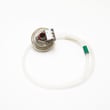
- If the washer is acting like it cannot “sense” water level correctly, check the pressure system: LG washer water-level pressure switch 6501EA1001R and the washer water-level pressure switch hose 5210FA3427J.
- If the unit stops mid-cycle and will not drain (sometimes misread as a lock problem), inspect the drain path and pump: drain pump assembly 5859EA1004P.
Why it matters
A dE1 condition prevents safe spinning. Fixing it early helps avoid repeated cycle stops, wet loads, and extra strain on the lid lock and control.
Related help: LG top load washer error codes
Last updated: February 2026
What is the average lifespan of an LG washing machine?
Most LG washing machines, including the LG WT1901CK top-load washer, typically last 10 to 14 years with normal household use. Consistent maintenance (cleaning, correct loading, and good water supply and drainage) is what most often determines whether you land closer to 10 or 14.
Typical lifespan and what affects it
A washer’s service life depends more on conditions than brand alone. The biggest factors are:
- Loads per week (more cycles equals more wear)
- Overloading (stresses the drive system and suspension)
- Water quality (hard water increases residue and valve wear)
- Drain performance (slow draining strains the pump)
- Leveling and vibration (extra movement shortens suspension life)
Maintenance that extends life
Use these habits to reduce wear on key components like the drain pump, inlet valve, and washplate:
- Run the tub-clean cycle and wipe the lid and tub ring regularly (see the WT1901CK owner's manual)
- Use the right amount of HE detergent; too much causes buildup and odors
- Keep loads balanced; mix items and avoid washing single heavy pieces alone
- Check fill hoses yearly for bulges, cracking, or leaks
- Confirm the washer is level and stable to reduce out-of-balance shaking
Parts that commonly wear first (and what they do)
These are normal wear items we often see replaced as a washer ages:
| Part | What you’ll notice when it’s failing | Example part for WT1901CK |
|---|---|---|
| Drain pump | Won’t drain, humming, water left in tub | Drain pump assembly 5859EA1004P |
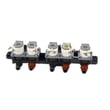
| Water inlet valve | Slow fill, no fill, filling when off | LG washer water inlet valve assembly AJU73213301 |
| Suspension | Excessive shaking, banging, frequent UE errors | Washer suspension rods (model-specific set) |
Why it matters
Knowing the 10 to 14 year average helps you decide whether to invest in a repair (like a pump or valve) versus planning for replacement, especially if multiple symptoms show up at once.
Last updated: February 2026
How much does it cost to replace a rubber seal on an LG washing machine?
For LG washer model WT1901CK (a top-load washer), you typically are not replacing a front-load style door boot rubber gasket. Costs depend on the exact leak source; common top-load leak repairs usually total $150 to $350 with service (part plus labor), and simple hose or clamp fixes often cost less.
What “rubber seal” usually means on a top-load LG washer
On a top-load design like WT1901CK, customers often use “rubber seal” to describe one of these items:
- A drain hose connection leaking at the pump or outlet
- A hose clamp that is loose, corroded, or not sealing
- A water inlet valve connection dripping during fill
- A pressure switch hose that is split or leaking
- A tub-to-pump hose or other internal hose (varies by design)
Typical cost ranges (part plus labor)
| Repair type (top-load) | Typical parts cost | Typical labor cost | Typical total |
|---|---|---|---|
| Hose or clamp replacement | $10 to $60 | $120 to $250 | $130 to $310 |
| Water inlet valve replacement | $30 to $120 | $120 to $250 | $150 to $370 |
| Internal seal or tub-related repair | $20 to $150 | $200 to $450 | $220 to $600 |
How we recommend confirming the correct part for WT1901CK
Use the diagrams and part list in the WT1901CK manual to identify the leaking area first, then match the part by location.
Quick checks that pinpoint the leak
- Leak only during fill: inspect inlet hoses and the valve area
- Leak only during drain/spin: inspect the pump outlet and drain hose
- Water on the back wall: check hose connections and clamps
- Water under the front center: check pump and nearby hoses
- Suds overflow: reduce detergent and run a tub clean cycle
Parts that commonly solve “seal” complaints
If the leak is at a connection, these model-listed parts are often involved:
- Washer drain hose AEM73732901 (cracks, pinholes, loose fit)
- Clamp 4861FR3068A (loose clamp can mimic a failed seal)
Why it matters
Top-load leaks are frequently caused by hoses and clamps, not a door gasket. Identifying the leak stage (fill, agitate, drain) prevents buying the wrong part and paying for repeat labor.
Last updated: February 2026