 Error Codes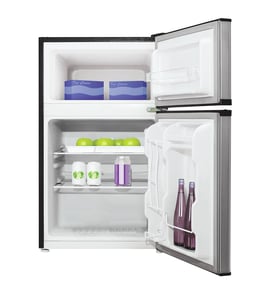



Can I use any gas to refill my fridge?
No. For your GE WMR04GAZABB compact refrigerator, you must recharge the sealed system with the exact refrigerant type listed on the appliance data label (and the correct amount by weight). Using the wrong refrigerant or “topping off” incorrectly can damage the compressor and create an unsafe condition.
What to know before you try a refrigerant recharge
Refrigerant work is sealed-system service; it requires the right tools, recovery equipment, and leak repair.
- Check the data label for the refrigerant type (common types include R-134A or R-600A on compact refrigerators).
- Never mix refrigerants; mixing changes pressures and oil compatibility.
- If the unit is low, there is a leak; recharging without fixing the leak is a temporary result.
- Do not use “universal” cans or additives marketed for HVAC; they are not appropriate for refrigerators.
- If the refrigerator is not cooling, confirm basics first: power, temperature control setting, airflow, and condenser cleanliness.
Quick decision guide
| Situation | What it usually means | Best next step |
|---|---|---|
| Fridge runs but won’t cool | Airflow issue, dirty condenser, fan problem, or sealed-system issue | Do basic checks; then consider service |
| Oily residue near tubing | Likely refrigerant leak | Stop using; sealed-system repair |
| Door not closing well | Warm air infiltration, frost, poor cooling | Level unit; check hinges/legs |
Parts that can help with common “not cooling” look-alikes
If the door is sagging or not sealing because the cabinet is out of level, correcting alignment can restore normal cooling performance.
- Replace a damaged hinge with the top hinge co WR02X12865.
- If the unit rocks or leans, replace a worn foot such as the refrigerator leveling leg WR02X13363 (or match your existing leg style).
- If you see water under the unit after defrost cycles, inspect the refrigerator defrost tray WR30X10144.
Why it matters
Compact refrigerators like the GE WMR04GAZABB rely on a precise refrigerant charge and correct refrigerant chemistry. The wrong gas changes operating pressures and lubrication, which can quickly lead to poor cooling and compressor failure.
Last updated: February 2026
How long will a gas fridge last?
Most gas refrigerators (LP/propane absorption-style) last about 15 to 25 years with normal use and good ventilation. Your GE WMR04GAZABB is a compact electric refrigerator, so its typical life is 10 to 15 years.
Typical lifespan by refrigerator type
Gas fridges and compact electric fridges age differently because the cooling systems and operating conditions are different.
| Refrigerator type | Typical lifespan | What usually ends it |
|---|---|---|
| Gas (LP/propane absorption) refrigerator | 15 to 25 years | Cooling unit wear, overheating from poor ventilation, corrosion |
| Compact electric refrigerator (like GE WMR04GAZABB) | 10 to 15 years | Compressor failure, sealed-system leak, thermostat/control issues |
What makes a gas fridge last longer (or fail sooner)
We see these factors make the biggest difference:
- Ventilation and heat management: blocked vents and high ambient heat shorten life fast.
- Level installation: running off-level can stress absorption cooling performance.
- Clean burner and flue (gas models): soot and restricted airflow cause overheating.
- Door seal condition: air leaks force longer run time and higher temperatures.
- Condenser cleanliness (electric models): dust buildup increases compressor load.
Quick checks that protect lifespan
Use these practical steps to reduce wear on either style:
- Keep the unit level; replace worn feet if it rocks (see refrigerator leveling leg WR02X13363).
- Leave clearance around the cabinet for airflow; do not pack it into a tight enclosure.
- Keep the door closing squarely; if it sags, inspect hinges (see top hinge co WR02X12865).
- Clean spills and odors promptly to protect liners and gaskets (see how to get rid of refrigerator smells).
Why it matters
Lifespan is mostly about heat and run time. Better airflow, a level cabinet, and a door that seals correctly reduce compressor or cooling-unit stress, which is what typically determines whether you get 8 years or 18.
Last updated: February 2026
How to tell if refrigerant is low in a refrigerator?
Low refrigerant in your GE WMR04GAZABB compact refrigerator usually shows up as weak cooling even though the compressor runs a lot; it almost always means there’s a sealed-system leak. Because refrigerant is in a closed loop, “topping it off” is not a normal maintenance step.
What you’ll notice first (common symptoms)
- Fridge temperature stays too warm even on a colder setting
- Compressor seems to run for long periods with few off-cycles
- Little to no frost pattern on the evaporator (instead of an even, light frost)
- One area cools slightly while the rest stays warm (uneven cooling)
- New or worsening gurgling or hissing sounds near the sealed-system lines
Quick checks to rule out more common causes
Before assuming refrigerant is low, we recommend checking these items because they cause the same “not cooling” complaint more often than a refrigerant issue:
- Make sure the door closes and seals fully (no gaps, no torn gasket)
- Confirm the temperature control is set correctly and hasn’t been bumped
- Clean dust from the condenser area and make sure airflow is not blocked
- Verify the unit is level so the door aligns and closes consistently; a damaged leg can prevent proper leveling (see refrigerator leveling leg WR02X13363)
- Look for water under or behind the unit; drainage issues can point to airflow and defrost problems (see how to get rid of refrigerator puddles)
What “low refrigerant” looks like vs other problems
| What you see | More likely cause | What to do next |
|---|---|---|
| Warm fridge, compressor runs a lot, no obvious frost pattern | Sealed-system/refrigerant issue | Have a technician check pressures and leak-test |
| Heavy frost/ice buildup | Defrost or airflow issue | Defrost fully, check vents and fan airflow |
| Door won’t close or cabinet rocks | Leveling/door alignment issue | Adjust legs, recheck door closure |
| Intermittent cooling with beeps or codes (on models that display them) | Control/sensor issue | Use GE refrigerator error codes as a starting point |
Why it matters
Running a refrigerator with a sealed-system leak can lead to poor food safety temperatures and extra compressor wear. Catching the pattern early helps you decide whether a repair makes sense.
Last updated: February 2026
What is the most common problem with a GE refrigerator?
The most common GE refrigerator problem is not cooling properly (warm fridge, weak cooling, or temperature swings). On a compact model like GE WMR04GAZABB, this is usually tied to airflow issues, dirty condenser areas, door sealing problems, or frost buildup that blocks cold air movement.
Quick checks we recommend first
- Confirm the temperature control is set to a mid-range setting, then allow 24 hours to stabilize.
- Make sure the door closes fully and the cabinet is level; a tilted unit can keep the door from sealing.
- Leave space around the refrigerator for ventilation; compact units overheat easily in tight enclosures.
- Listen for the compressor cycling; frequent short cycling often points to airflow or heat removal issues.
- Check for heavy frost on the back wall inside; frost can block airflow and reduce cooling.
Common GE refrigerator problems and what they usually mean
| Symptom | Most common cause | What to do next |
|---|---|---|
| Not cooling or weak cooling | Airflow blocked, dirty condenser area, frost buildup | Improve ventilation, defrost if iced, clean dust from vents/coil area |
| Water puddles | Defrost water not evaporating, drain issues, door left ajar | Inspect for ice blockage, keep door shut, verify unit is level |
| Door not closing | Cabinet not level, hinge wear, overloaded door bins | Level the unit, inspect hinges, reduce door load |
| Rattling or buzzing | Unit not level, parts vibrating against cabinet | Level the unit, ensure nothing touches the back or sides |
Parts that often help with “door won’t close” and stability issues
If your WMR04GAZABB door is sagging or the refrigerator rocks, these model-matched parts are commonly involved:
- Refrigerator leveling leg WR02X13363 (front leveling support)
- Refrigerator leveling leg WR02X13361 (leveling support, alternate position)
- Top hinge co WR02X12865 (door alignment and hinge support)
Why it matters
When a refrigerator is not level or the door does not seal, warm air leaks in. That forces longer run times, creates frost, and leads to temperature problems that look like a “cooling failure” even when the sealed system is fine.
Related help: GE refrigerator error codes
Last updated: February 2026





