 Owner’s manual



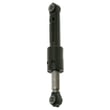
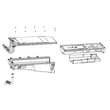
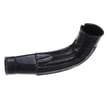
How do I find the right GE part number?
For your GE GFW650SPN1SN washer, the most reliable way to get the right part number is to match the part to your exact model number and the correct diagram location, then confirm the part description before ordering. Use the GFW650SPN1SN owner's manual to verify features and configurations.
Step-by-step: how we match the correct part
- Find the model tag on the washer (commonly inside the door opening or on the cabinet frame).
- Confirm the full model number is GFW650SPN1SN (letters and numbers must match exactly).
- Use the model diagrams to identify the part by location and name (for example: door lock, inlet valve, drain pump).
- Cross-check the part description against your symptom (no fill, no drain, door will not lock, dead display).
- If multiple versions appear, match by finish, connector style, and where it mounts.
- When replacing an electronic part, move one wire connector at a time to avoid miswiring.
Common parts customers mix up on this model
| What you see | What it is usually called | Example part for GFW650SPN1SN |
|---|---|---|
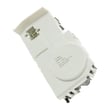
| Door will not lock or unlock | Door lock or door latch | GE washer door lock WH01X29528 or door latch WH01X32580 |
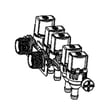
| Washer will not fill | Water inlet valve | GE washer water inlet valve WH23X29553 |
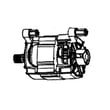
| No drain, water left in tub | Drain pump assembly or hose | GE washer drain pump assembly WH11X39237 or tub to pump hose WH41X29628 |
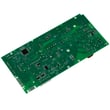
| Dead controls or erratic operation | Main control board or user interface | Washer electronic control board WH22X37840 or user interface board WH22X34918 |
Why it matters
GE often uses similar-looking parts across multiple washer series, but connector layouts, software revisions (control boards), and mounting details can differ. Matching the part to GFW650SPN1SN prevents ordering a part that fits physically but will not operate correctly.
Helpful reference for troubleshooting by code
If you are choosing a part because an error code is showing, use GE gfw front load washer error codes to narrow the failure to a system (drain, fill, door lock, control).
Last updated: February 2026
How to identify GE washer model?
For your GE GFW650SPN1SN washer, the model and serial number are on a label inside the washer door area (typically on the door opening/door jamb). Use that exact model number when ordering parts or looking up error codes in the GFW650SPN1SN owner's manual.
Where to look on this washer
Check these spots in order:
- Inside the door opening on the cabinet (door jamb label)
- Along the inner edge of the door opening where the door seal meets the front panel
- On the back of the washer cabinet (less common for this front-load style)
What to write down (and why)
Record both numbers exactly as shown:
- Model number (example format: GFW650SPN1SN)
- Serial number (unique to your washer)
- Optional: any suffix letters or revision codes printed near the model
Why it matters
The model number ensures you get the correct GE washer parts and instructions. Even small model variations can change which door lock, control board, or water inlet valve fits.
Quick reference table
| Item | What it’s used for | When you need it |
|---|---|---|
| Model number | Matching parts and manuals | Ordering parts, checking compatibility |
| Serial number | Production-specific identification | Warranty/service history, some tech support |
If you are troubleshooting an error code
Once you confirm the model, use a GE front-load error code list that matches the GFW platform. Our guide is a fast way to interpret codes before replacing parts.
- Confirm the code on the display
- Power the washer off, then back on to see if the code returns
- If the code points to a control issue, common related parts include the washer electronic control board WH22X37840 and the GE washer door lock WH01X29528
For code definitions and next steps, see GE gfw front load washer error codes.
Last updated: February 2026
How to order GE appliance parts?
For your GE GFW650SPN1SN washer, order replacement parts from the parts list for this model on Sears PartsDirect. Use the complete model number and your washer’s serial number to match the correct replacement part and avoid fit or wiring issues.
Best ways to order parts
- Use the model parts list to select the exact replacement for GE GFW650SPN1SN
- Match by part name and part ID when possible (example: GE washer door lock WH01X29528)
- Compare your original part to photos and descriptions before ordering
- Keep your serial number handy for production changes that affect part compatibility
- Use the GFW650SPN1SN owner’s manual for feature and component references
Common parts people order for this washer
These are frequent repair items for front-load washers like the GE GFW650SPN1SN:
| Symptom | Part to check | Example part on this model |
|---|---|---|
| Won’t start or won’t lock | Door lock or latch | GE washer door lock WH01X29528 or door latch WH01X32580 |
| No fill or slow fill | Water inlet valve | GE washer water inlet valve WH23X29553 |
| No drain or draining issues | Drain pump | GE washer drain pump assembly WH11X39237 |
Why it matters
Ordering by the exact model number GFW650SPN1SN helps prevent mismatches, especially with electronic parts such as the washer electronic control board, user interface board, and door lock components.
Last updated: March 2026
What is the capacity of the GFW650SPN1SN?
The GE GFW650SPN1SN washer has a 4.8 cu. ft. capacity, which is considered a large-capacity front-load washer. For cycle details, loading guidance, and feature differences by model, use the GFW650SPN1SN owner's manual.
What 4.8 cu. ft. means for everyday loads
A 4.8 cu. ft. drum is designed to handle larger loads while still needing room for proper tumbling.
- Wash bulky items (like comforters) one at a time for best results
- Load loosely; don’t pack items down
- Keep the door gasket area clear of small items (socks, baby clothes)
- Use HE detergent and measure carefully to reduce oversudsing
- If you regularly wash very large bedding, choose a bulky/bedding cycle when available
Quick capacity guide (typical)
Use this as a practical reference for front-load washers.
| Capacity range | Typical use | Who it fits best |
|---|---|---|
| 4.2 to 4.5 cu. ft. | Medium-large loads | 2 to 4 people |
| 4.8 cu. ft. | Large loads, some bedding | 3 to 5 people |
| 5.0+ cu. ft. | Frequent bulky/bedding loads | Larger households |
Why it matters
Capacity affects cleaning performance and wear. When the drum is overloaded, clothes cannot tumble freely, which can leave detergent residue, reduce rinse performance, and increase vibration during spin.
Related help
If you ever see an error code tied to load size, balance, or spinning, use our GE gfw front load washer error codes reference to narrow down the cause.
Last updated: February 2026
What is the lifespan of a GE washing machine?
Most GE washing machines last 10 to 14 years with normal household use. For your GE GFW650SPN1SN front-load washer, consistent care (proper loading, routine cleaning, and replacing aging hoses) is what most directly determines whether you land closer to 10 years or push beyond it; see the GFW650SPN1SN owner's manual for model-specific care steps.
Typical lifespan and what changes it
A washer’s life is mainly driven by how hard it works and how well it’s maintained.
- Usage volume: multiple loads daily shortens life compared to a few loads weekly
- Overloading: stresses the drive system, tub bearings, and suspension
- Water quality: hard water increases detergent buildup and odor issues
- Ventilation habits: leaving the door closed after use can trap moisture
- Preventive maintenance: cleaning and hose replacement reduce failures
Maintenance that extends life on GFW650SPN1SN
The manual for this platform calls out several habits that protect the washer long-term.
- Replace water supply hoses about every 5 years
- Turn off water faucets when not in use to reduce leak risk
- Keep the washer level and stable to reduce vibration wear
- After cycles, dry the door area and gasket; use the venting feature if equipped
- Run periodic cleaning cycles using a washer cleaner as directed
Quick reference: what to do and how often
| Item | Good interval | Why it matters |
|---|---|---|
| Water supply hoses | Every 5 years | Prevents hose failure and water damage risk |
| Washer cleaning cycle | Monthly (typical) | Reduces odor, residue, and performance issues |
| Level check | After moving or vibration | Protects suspension, tub, and bearings |
Why it matters
A washer that is kept clean, properly loaded, and protected from leaks typically avoids the most common “early end-of-life” problems: chronic odor, excessive vibration, and water-related damage.
Last updated: February 2026
What is the most common problem with GE washers?
The most common GE washer problems are no-drain and no-spin symptoms. On the GE GFW650SPN1SN front-load washer, these issues are often tied to a clogged pump filter, an out-of-balance load the washer is trying to correct, or a door not fully closing and locking.
Quick checks we recommend first
- Confirm the door closes firmly; then press Start (front-loaders can lock and unlock briefly during system checks).
- If the Spin light blinks, redistribute the load and run a Spin cycle again.
- If the washer pauses, won’t restart, or the door stays locked, clean the pump filter (a clog can prevent draining).
- If water enters slowly, wait through the automatic self-checks; water can start several seconds after Start.
- If the display shows “door”, open and close the door, then restart the cycle.
- If the display shows “CAnCELEd”, let the 4-minute lockout finish before trying again.
Common symptoms and the most likely causes
| Symptom | Most common cause | What to do next |
|---|---|---|
| Won’t drain, stops mid-cycle | Pump filter clogged; drain path restricted | Clean pump filter; check drain hose for kinks |
| Won’t spin, Spin light blinking | Out-of-balance load | Rebalance load; reduce bulky items |
| Won’t start, shows “door” | Door not fully closed; lock not engaging | Reseat door; inspect door lock |
| Slow fill | Supply issue or inlet screens; normal self-check delay | Verify faucets fully open; check hoses/screens |
Parts that commonly relate to these problems
If the door message persists or the washer won’t lock consistently, the door lock system is a frequent fix on front-loaders.
- GE washer door lock WH01X29528: helps the control confirm the door is locked so the cycle can run.
- GE washer drain pump assembly WH11X39237: moves water out of the tub; restrictions or failures can cause no-drain.
- GE washer water inlet valve WH23X29553: controls water flow; issues can contribute to slow or no fill.
Why it matters
No-drain and no-spin problems can look like “the washer is dead,” but they are often caused by a simple condition (door not latched, out-of-balance load, or a clogged pump filter). Fixing the root cause prevents repeat stoppages, wet loads, and unnecessary part replacement.
For model-specific operating messages, cleaning steps, and troubleshooting, use the GFW650SPN1SN owner's manual.
Last updated: February 2026
What parts fail in a washing machine?
On the GE GFW650SPN1SN washer, the parts that fail most often are the door-locking components, water fill components, drain system, and electronic controls. Many “washer won’t start,” “won’t fill,” “won’t drain,” and “door won’t unlock” complaints trace back to these assemblies.
Most common washer parts that fail
These are the failure points we see most across front-load washers like the GFW650SPN1SN:
- Door lock and latch system: prevents starting or keeps the door locked
- Water inlet valve and inlet screens: causes slow fill or no fill
- Drain pump and pump filter: causes no drain, long drain times, or stopping mid-cycle
- Main control and user interface electronics: causes dead display, random stopping, or no response
- Hoses and clamps: can leak or cause poor water flow
- Suspension and balance components: can cause shaking and out-of-balance errors
Quick symptom-to-part guide (GFW650SPN1SN)
| Symptom | Most likely area | Example model parts |
|---|---|---|
| Door won’t lock or cycle won’t start | Door lock/latch | GE washer door lock WH01X29528, door latch WH01X32580 |
| Won’t fill or fills slowly | Water inlet and screens | GE washer water inlet valve WH23X29553 |
| Stops mid-cycle, won’t drain, door stays locked | Drain pump or pump filter | GE washer drain pump assembly WH11X39237 |
| Dead or unresponsive controls | Control boards | Washer electronic control board WH22X37840, user interface board WH22X34918 |
Checks we recommend before replacing parts
These steps match common causes called out for this model’s operation and troubleshooting:
- Confirm the washer is plugged in and the outlet has power (reset breaker if needed).
- Turn both hot and cold faucets fully on.
- If the load is unbalanced, pause and redistribute; then run a rinse and spin with no load to confirm.
- If filling is slow, shut off water and clean the small inlet screens at the washer connections.
- If the washer won’t drain or the door won’t open, clean the pump filter (a clogged filter is a frequent cause).
For model-specific procedures and indicator messages, use the GFW650SPN1SN owner's manual.
Why it matters
Replacing the wrong part is the most expensive mistake on a modern GE front-load washer. Matching the symptom (no fill, no drain, won’t start, dead controls) to the correct system helps you fix the problem faster and avoid repeat failures.
Last updated: February 2026
Why is my GE washing machine not draining water?
For your GE GFW650SPN1SN front-load washer, a no-drain problem is usually caused by a clogged pump filter, a kinked/siphoning drain hose, or a household drain restriction. Fixing the blockage typically restores draining and prevents the load from ending overly wet.
Quick checks (fastest fixes first)
- Unplug the washer before inspecting internal components.
- If the load ended very wet, redistribute items and run Drain & Spin (out-of-balance loads can limit spinning and mimic a drain issue).
- Check the drain hose behind the washer for kinks; make sure the washer is not sitting on the hose.
- Confirm the standpipe setup prevents siphoning; the drain hose should not be pushed too far down the drain and needs an air gap.
- Check the household drain for a clog (a slow standpipe can back up and stop draining).
Clean the pump filter (most common cause)
GE troubleshooting for this washer points to a clogged pump filter as a primary reason for “Not draining / Not spinning / Not tumbling.” Follow the steps in the GFW650SPN1SN owner's manual to access and clean the pump filter safely.
What you’ll typically find
| What you see | What it means | What to do |
|---|---|---|
| Coins, lint, hair pins | Pump filter blockage | Remove debris; reinstall filter fully seated |
| Water drains slowly after cleaning | Partial restriction | Recheck hose routing and standpipe flow |
| Pump hums but no water moves | Pump jam or failing pump | Inspect for debris; replace pump if needed |
When a part is likely needed
If the filter and hose are clear but the washer still will not drain, the drain pump can be the failure point. For this model, the replacement is the GE washer drain pump assembly WH11X39237.
Why it matters
A drain restriction can leave clothes soaking wet, trigger longer cycle times, and strain the drain pump. Keeping the pump filter and drain path clear helps the washer complete Drain & Spin normally.
Last updated: February 2026


