 Owner’s manual
 Error Codes

Does my Maytag dishwasher have a filter that needs to be cleaned?
Yes. The Maytag MDB9100AWW dishwasher uses a self-cleaning interior with a strainer area at the bottom; we recommend periodically checking the bottom of the tub for large food particles and wiping them out to keep wash performance and draining consistent. See the cleaning and care details in the MDB9100AWW owner's manual.
Where to check (and what to clean)
On MDB9100AWW, focus on the bottom of the tub under the lower spray area and around the strainer opening.
- Pull out the lower rack so you can see the tub bottom clearly
- Look for bones, labels, glass, or other large debris that did not wash through
- Wipe out any food soil sitting in the sump/strainer area
- Wipe the edge of the inner door liner where splashes collect
- Confirm items in the racks are not blocking the wash arms or center tower
Quick cleaning steps (safe monthly routine)
- Turn the dishwasher off at the control and let the unit cool if it just ran.
- Remove the lower rack.
- Wipe out visible debris from the tub bottom and strainer area with a damp cloth.
- Rinse the area with a cup or two of hot water.
- Run a normal cycle empty if you want to flush out loosened debris.
“Filter” vs. “strainer”: what to expect
Many newer dishwashers have a removable cylindrical filter; this Maytag design is typically maintained by checking the strainer area rather than removing a twist-lock filter.
| What you might see | What it means | What to do |
|---|---|---|
| Food pieces in tub bottom | Debris not passing through strainer area | Wipe out debris; re-check loading |
| Poor cleaning | Spray blocked or water flow reduced | Re-load; clear spray path; clean tub bottom |
| Not draining well | Debris restricting sump/strainer area | Remove debris; inspect drain path |
Why it matters
Keeping the tub bottom and strainer area clear helps the pump move water properly, prevents redepositing food soil on dishes, and reduces the chance of a drain restriction during the cycle.
Last updated: February 2026
What are the parts of a Maytag dishwasher?
A Maytag dishwasher like model MDB9100AWW is built around a water-fill system, a wash (circulation) system, a drain system, and door and rack hardware. These parts work together to bring in water, spray it through the racks, heat it as needed, and pump it back out (see the MDB9100AWW owner's manual).
Main dishwasher parts and what they do
- Water inlet valve: opens to let hot water into the tub (common replacement: dishwasher water inlet valve WP99001359).
- Overfill protection float: helps prevent overfilling by signaling the fill system to stop (common replacement: float WP99002363).
- Spray arms: spin and distribute water to clean dishes (common replacement: dishwasher spray arm assembly, lower WP99001788).
- Heating element: helps heat water and improve drying (common replacement: dishwasher heating element WP99002360).
- Door seal and latch parts: keep water in and allow safe operation (common replacement: dishwasher door seal WP902894).
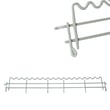
- Racks and rack stops: hold dishes and keep racks aligned (common replacement: lower rack W10139223).
Quick “system” view
| System | What it includes | Common symptom when it fails |
|---|---|---|
| Fill | Water inlet valve, float | Won’t fill, fills too slowly, overfills |
| Wash | Spray arms, pump and motor, filtration | Poor cleaning, gritty residue |
| Heat/dry | Heating element | Dishes stay wet, poor drying |
| Drain | Drain hose, drain pump | Water left in bottom |
| Door/racks | Door seal, latch, racks, stops | Leaks, won’t start, rack falls off track |
Why it matters
Knowing which “system” a symptom belongs to speeds up troubleshooting and helps you choose the right Maytag dishwasher parts the first time. For example, leaks often point to the door seal area, while poor cleaning often points to spray arms or filtration.
Helpful related troubleshooting
If your dishwasher is acting up and showing a code, use our Maytag microclean he dishwasher error codes guide to match the symptom to the most likely part or circuit.
Last updated: February 2026
What is the most common problem with a Maytag dishwasher?
The most common Maytag dishwasher problems on the MDB9100AWW are poor cleaning and draining issues, usually caused by loading mistakes, blocked spray paths, or buildup inside the tub. Regular cleaning and correct water temperature (120-140°F) prevent most day-to-day complaints; see the MDB9100AWW owner's manual.
Most common symptoms and what they usually mean
- Not cleaning well: spray arm holes blocked, dishes loaded too tightly, or low water temperature.
- Not draining: drain path restricted (food debris) or a kinked/blocked drain hose.
- Leaking/overflowing: too many suds from the wrong soap or too much detergent.
- Odor: standing water, food soil in the tub, or detergent chemistry.
- Not drying: cycle options and water temperature can extend or change drying performance.
Quick checks we recommend first (fast, no parts)
- Confirm incoming hot water is 120-140°F (49-60°C).
- Avoid overloading; keep the lower spray arm clear so it spins freely.
- Use only automatic dishwasher detergent; hand soap causes suds and can overflow.
- Wipe the inner door edge and check the bottom of the tub for large particles.
- Run a Rinse Only cycle if dishes will sit before washing.
When a part is the likely cause
If the basics look good and the symptom repeats, these model-matched parts are common fixes:
| Symptom | Common part to inspect on MDB9100AWW | What to look for |
|---|---|---|
| Not filling or weak wash | Dishwasher water inlet valve WP99001359 | No/low water entering, buzzing, intermittent fill |
| Not draining | Dishwasher drain hose WP99001782 | Kinks, clogs, poor routing to disposal/air gap |
| Leaking at the door | Dishwasher door seal WP902894 | Tears, flattening, gaps, debris on sealing surface |
| Poor cleaning on bottom rack | Dishwasher spray arm assembly, lower WP99001788 | Cracked arm, clogged jets, not spinning |
Why it matters
Most “common problems” trace back to water flow and spray coverage. Correct water temperature, proper loading, and keeping the tub and spray paths clear help the wash system work as designed and reduce repeat service issues.
Last updated: February 2026





