Owner’s manual
 Error Codes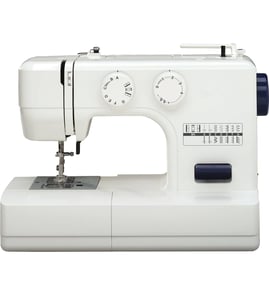

How old is a Kenmore 38515343600 sewing machine?
The Kenmore sewing machine model 38515343600 is part of the Kenmore 385.15343 model family shown in the owner's manual. That places it in the long-running Kenmore 385 series, which is generally considered a vintage mechanical line; the exact build year depends on the specific production run and original purchase date.
The documentation for this machine identifies it as Model 385.15343 (the same family as 38515343600) and includes warranty terms that start from the date of purchase, not a manufacturing date. Use the owner's manual as your model-accurate reference for identification and features.
- Confirm the nomenclature plate on the back of the machine shows 385.15343 (or the full 38515343600 number).
- Match the machine’s controls and stitch selectors to the diagrams in the manual.
- If you still have paperwork, check the receipt or warranty registration for the purchase date.
- If the machine has been stored for months or years, plan on cleaning and oiling before regular use.
Kenmore 385-series mechanical sewing machines were sold across multiple decades. Many units in this family are commonly from the late 20th century into the early 2000s, depending on the exact variant and when it was purchased.
| What you have | What it tells you | Best place to check |
|---|---|---|
| Full model number (38515343600) | Exact variant within the 385 family | Nomenclature plate on machine |
| Manual model family (385.15343) | Confirms the correct manual family | Owner's manual |
| Receipt or service record | Most accurate “how old” date | Your records |
Knowing the approximate age helps you choose the right maintenance approach (cleaning lint, oiling points, checking belts) and troubleshoot issues like sluggish running, feeding problems, or a motor that will not run.
- If your machine displays a code or you are diagnosing a fault, use Kenmore 385 error codes.
Last updated: February 2026
How do I know what model my Kenmore sewing machine is?
Your Kenmore sewing machine’s model number is on the machine’s nomenclature plate, typically on the back of the machine. For Kenmore model 38515343600, the manual also notes you can use the first eight digits (for example, 385.15343 plus an asterisk) when searching for manuals and parts in some Sears systems; confirm the full model number from the plate using the owner's manual.
Check these common locations for the model plate or sticker:
- Back of the sewing machine (most common on Kenmore 385-series)
- Underside of the base (tip the machine back carefully to view)
- Front base area near the bed (varies by cabinet or carrying case)
- Inside the accessory compartment (on some setups)
Kenmore model numbers are usually a long number string. For this model page, the full model number is 38515343600.
Here is a quick way to interpret what you may see:
| What you see on the plate | What it means | What to do next |
|---|---|---|
| 38515343600 | Full model number | Use this for the most accurate parts lookup |
| 385.15343XX (with a dot) | Same family format | Match it to the full model number on the plate |
| First 8 digits (example: 385.15343*) | Short search format used in some instructions | Use it to narrow results, then select the exact model |
Using the exact model number helps us match the correct parts diagrams, accessories (like presser feet), and maintenance instructions (like oiling points and threading paths). A close model number can still use different bobbin cases, needle plates, or feed mechanisms.
If you are troubleshooting instead of ordering parts, use our Kenmore 385 error codes guide to identify what the machine is reporting and what to check first.
Last updated: February 2026
What are the disadvantages of mechanical sewing machines?
Mechanical sewing machines like the Kenmore 38515343600 are simple and durable, but the tradeoff is fewer built-in features and less automation than computerized models. They handle everyday stitching well, but advanced functions (like extensive decorative stitches or guided settings) are more limited.
- Fewer stitch options: typically fewer decorative stitches and fewer one-step features.
- More manual setup: you set stitch length, width, and tension yourself.
- Less “assist” technology: no on-screen prompts, memory, or automatic pattern sequencing.
- Harder learning curve for specialty work: quilting and specialty techniques can require more practice and accessories.
- Maintenance sensitivity: lint buildup and lack of lubrication can affect feeding and smooth operation.
| Feature | Mechanical sewing machine | Computerized sewing machine |
|---|---|---|
| Stitch selection | Dial/lever, fewer options | Buttons/screen, many options |
| Setup | Manual adjustments | More automatic settings |
| Troubleshooting | Mostly mechanical checks | Often includes error codes and diagnostics |
| Best for | Basic sewing, repairs, simple projects | Decorative work, convenience features |
If you want straightforward hemming, mending, and basic garment construction, a mechanical machine is a strong fit. If you expect lots of decorative stitches, automated buttonholes, or guided features, the limitations of a mechanical design can slow you down.
- Follow the threading and adjustment steps in the owner's manual.
- Keep the bobbin area and feed dogs clean; lint can cause uneven feeding.
- Use the correct needle type and replace bent or dull needles.
- Avoid pulling fabric while stitching; it can deflect the needle and affect stitch quality.
- If fabric is not feeding smoothly, use our sewing machine fabric not moving troubleshooting steps.
Last updated: February 2026
What is the most trouble-free sewing machine?
The most trouble-free sewing machines are typically simple, well-built mechanical models that are kept clean, correctly threaded, and properly oiled. Your Kenmore 38515343600 is a mechanical sewing machine with a die-cast metal internal frame, which is a durability-focused design; use the owner's manual to match the right setup and maintenance steps.
A machine feels reliable when it consistently forms stitches and feeds fabric without frequent jams, skipped stitches, or motor issues.
Common traits of low-hassle machines:
- Mechanical stitch selection (fewer electronics to troubleshoot)
- Strong internal frame and stable drive system
- Easy access for cleaning lint from the hook and bobbin area
- Standard needle system and common bobbin style
- Good tension control and consistent presser foot pressure
Use this checklist when comparing brands and models:
- Build quality: prioritize a solid internal frame and smooth handwheel rotation
- Serviceability: easy bobbin/hook access for cleaning and oiling
- Simplicity: only the stitches you actually use (straight, zigzag, buttonhole)
- Parts availability: belts, needle plates, foot control, motor, and switch should be obtainable
- Support content: clear threading diagrams and troubleshooting steps in the manual
| Type | Typical strengths | Typical trouble spots |
|---|---|---|
| Mechanical | Simple controls, durable, easier to diagnose | Needs routine cleaning/oiling; tension and timing still matter |
| Computerized | Convenience features, more stitch options | More sensitive to power issues and board/sensor failures |
Even a very dependable machine can “act up” from a few predictable causes: lint packed in the hook race, thread caught in the hook path, incorrect threading, or a disengaged clutch. Our sewing machine locks up guide covers the most common lock-up causes and fixes.
If you ever see an error display on a Kenmore 385-series machine, our Kenmore 385 error codes reference helps you interpret the code and narrow the repair.
Last updated: February 2026
Is it worth repairing a sewing machine?
Yes, repairing a Kenmore sewing machine like model 38515343600 is usually worth it when the machine still meets your needs and the fix is a wear item or adjustment (belt, switch, motor, timing, cleaning). It is also worth it when the repair cost stays below about half the price of a comparable replacement.
- Repair it if the machine sews well after basic service and only needs a common fix (belt, light, foot control, tension cleanup).
- Repair it if you like the stitch quality and features and want to keep the same feel and controls.
- Repair it if the issue is a jam, sluggish running, or fabric not feeding (often maintenance or a single part).
- Replace it if the machine has repeated major failures (motor plus wiring plus mechanical wear) and downtime matters.
- Replace it if you need features this model does not offer (automatic thread cutting, advanced buttonholes, embroidery).
This model’s warranty coverage is a strong signal that the machine was built to be serviced:
| Component area | Coverage length (from purchase date) | Notes |
|---|---|---|
| Die-cast metal internal frame | 25 years | Defects in materials/workmanship |
| Internal mechanical components | 10 years | Belts are excluded from this term |
| Exterior components | 2 years | Needle plates and accessories excluded |
| Electrical equipment (motor, wiring, switch, speed control) | 2 years | Light bulbs excluded |
| Mechanical adjustments and specified parts | 90 days | Includes belts, light bulbs, needle plates, accessory parts |
Check the warranty section in your owner's manual and compare it to your purchase date and the part that failed.
Use this quick comparison to decide:
- Repair cost under 50 to 60% of a comparable new mechanical machine: repair is the better value.
- Repair cost over 60%: replace unless you specifically want to keep this model.
A good mechanical sewing machine can run for decades with routine cleaning, correct threading, and occasional replacement of wear parts. Repairing a solid machine often restores stitch quality and feed performance without the learning curve of a new model.
If you are deciding because of a specific problem, these guides help you estimate whether it is a simple fix:
Last updated: February 2026