Installation guide
 Owner’s manual
 Error Codes



What is the bottom part of a refrigerator called?
On your Frigidaire LGHB2867PF0 bottom-mount refrigerator, the “bottom part” is most commonly the machine compartment (the area that houses the compressor and other cooling-system components) and, underneath, the toe grille area that covers the lower front. For diagrams and access notes, use the LGHB2867PF0 installation guide.
Depending on whether you mean the lower front, the lower rear, or the freezer area, the “bottom part” can refer to different assemblies:
- Machine compartment: compressor, condenser fan, condenser area, wiring
- Toe grille (kick plate): lower front cover that helps protect components and manage airflow
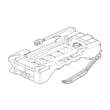
- Drain pan: pan underneath that collects defrost water for evaporation
- Bottom freezer drawer: the freezer compartment on a bottom-mount design
| Where you are looking | Common name | What it does |
|---|---|---|
| Lower rear of cabinet | Machine compartment | Houses cooling components and airflow parts |
| Lower front of cabinet | Toe grille | Covers the lower area and supports airflow |
| Under the cabinet | Drain pan | Collects defrost water |
| Bottom storage area | Freezer drawer | Stores frozen food and seals cold air |
Using the right name helps you order the correct part and follow the right procedure. For example, airflow and cooling issues often point to the machine compartment (fan, compressor), while leaks often involve the drain pan or drain system.
- Unplug the refrigerator before accessing lower panels
- Avoid using door handles to move the refrigerator
- Keep clearance for airflow (tight installs can reduce cooling performance)
- If you are working near water lines for the ice maker, shut off the water supply first
Last updated: January 2026
What is the most common problem with a Frigidaire refrigerator?
The most common Frigidaire refrigerator problem is a cooling complaint: the refrigerator or freezer is too warm, temperatures swing, or food spoils faster than expected. On the Frigidaire LGHB2867PF0, this is often tied to airflow restrictions (blocked vents, dirty coils), fan issues, or doors not sealing fully.
- Confirm the refrigerator is level and has proper airflow; the toe grille should not be blocked.
- Make sure the doors close and seal on all sides (no gaps, no torn gasket).
- Avoid overpacking; blocked air vents cause warm spots and temperature swings.
- Listen for normal fan operation; unusual noise or no airflow can point to a fan problem.
- If the ice maker is not connected to water, keep the ice maker turned OFF.
| Symptom | Most likely category | Common next step |
|---|---|---|
| Fresh food section warm | Airflow or fan issue | Check vents, listen for fan, inspect frost buildup |
| Freezer warm | Airflow/defrost issue | Check for heavy frost on rear freezer panel |
| Ice maker not making ice | Water supply or filter issue | Replace filter, verify shutoff valve is open |
| Water dispenser slow | Filter or inlet valve issue | Replace filter, check water pressure |
If basic checks do not fix the issue, these model-matched parts are common suspects:
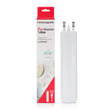
- Refrigerator water filter ULTRAWF (clogs can reduce flow and affect ice and water)
- Refrigerator water inlet valve assembly 242253002 (can cause no ice, slow fill, or no water)
- Refrigerator door gasket 5304537408 (warm temps from air leaks and moisture)
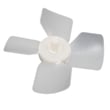
- Refrigerator condenser fan motor 242018301 (poor heat removal can cause warm temps)
Cooling problems usually get worse over time: warm temperatures can lead to food spoilage, excess frost, longer run times, and higher energy use. Door sealing and airflow are the fastest wins, and they also prevent repeat ice maker and dispenser issues.
- Use the LGHB2867PF0 installation guide checklist to confirm leveling, door sealing, and airflow basics.
- If you see an error code, use Frigidaire refrigerator error codes to narrow the failure to a system (cooling, fan, defrost, or controls).
Last updated: January 2026
Why is there ice on the bottom of my freezer side by side?
Ice collecting on the freezer floor is almost always caused by a clogged or frozen defrost drain, which lets defrost water overflow and refreeze at the bottom. On your Frigidaire LGHB2867PF0 bottom-mount refrigerator, clearing the drain and confirming the doors seal tightly typically stops the problem; use the steps in the LGHB2867PF0 owner's manual.
- Unplug the refrigerator before working near the evaporator area or using hot water.
- Remove the freezer drawer/baskets so you can see the bottom panel and drain area.
- Look for a sheet of ice on the freezer floor or a frozen “channel” leading to the back.
- Check that the freezer drawer closes fully and the gasket seals on all sides.
- Confirm the refrigerator is level and stable; poor leveling can affect door sealing.
- Melt the ice on the freezer floor using warm (not boiling) water and towels.
- Locate the drain opening under/near the evaporator cover (typically at the back of the freezer compartment).
- Flush the drain with hot water; a common method is 1 teaspoon baking soda dissolved in 2 cups of hot water, then flush again with plain hot water.
- If water does not flow freely, gently clear the drain opening (avoid sharp tools that can puncture plastic).
- After clearing, dry the area and restore power; monitor for new ice over the next 24 to 48 hours.
The installation instructions emphasize that doors should be “bind-free” and seals should touch the cabinet on all sides. Use these quick checks:
| Check | What you want to see | What it means if it fails |
|---|---|---|
| Dollar-bill test on gasket | Even drag all around | Warm air leak causing frost and extra defrost water |
| Drawer alignment | Drawer closes squarely | Misalignment can prevent a full seal |
| Cabinet level | Stable on all corners | Twisting can open gaps at the gasket |
If the gasket is torn, hardened, or won’t seal after cleaning and warming it, replacement is the long-term fix. For this model, the correct part is the refrigerator door gasket 5304537408.
A blocked drain or air leak forces the refrigerator to run longer, creates recurring ice buildup, and can lead to water leaks and temperature swings that affect food quality.
Last updated: January 2026