Owner’s manual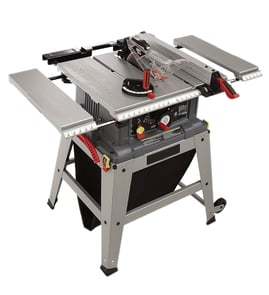
Can you use an 8 inch blade on a 10 inch table saw?
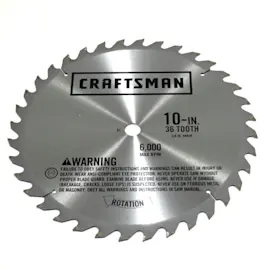
Yes, you can use an 8-inch blade on the Craftsman 113298760 table saw as long as it fits the 5/8-inch arbor and is rated for at least 3450 RPM; however, for thru-sawing (cuts where the blade comes through the top of the workpiece), we use a 10-inch blade on this model so the spreader stays properly positioned.
What the 113298760 manual requires
Our guidance for this saw comes straight from the 113298760 owner's manual:
- Use only 10-inch or smaller blades or cutting tools rated 3450 RPM or higher.
- Use blades designed to fit this saw’s 5/8-inch arbor.
- For thru-sawing, use a 10-inch diameter blade to keep the spreader closest to the blade.
- Use only unbroken, balanced, sharp blades.
- Keep blades clean of gum and resin.
When an 8-inch blade makes sense (and when it does not)
An 8-inch blade can be useful for certain non-through operations, but it is not the right choice for every cut.
| Task | 8-inch blade on this saw | 10-inch blade on this saw |
|---|---|---|
| Thru-sawing (blade exits top of workpiece) | Not recommended | Recommended (per manual) |
| Non-through cuts (depth-limited work) | Often acceptable if arbor and RPM rating match | Acceptable |
| Keeping spreader alignment closest to blade | Harder to maintain | Best match |
Quick safety and setup checks before you swap blades
- Unplug the saw before changing the blade.
- Confirm the blade bore matches the 5/8-inch arbor.
- Verify the blade’s max RPM rating is 3450 RPM or higher.
- Install the correct table insert and keep it flush with the tabletop.
- Tighten the arbor nut snugly (do not overtighten).
Why it matters
Blade diameter affects how your guarding and anti-kickback setup lines up. On the 113298760, the manual calls for a 10-inch blade during thru-sawing specifically so the spreader stays closest to the blade, which helps reduce binding and kickback risk.
Last updated: February 2026
How do I get rid of an old table saw?
If you are getting rid of a Craftsman 113298760 table saw, the best options are to sell or donate it if it still runs, or recycle it as scrap metal if it does not. Before it leaves your shop, unplug it, remove the blade, and secure any loose accessories for safer handling (see the safety guidance in the 113298760 owner's manual).
Best disposal options (from most to least value)
- Sell it as-is (working or repairable): include photos of the fence, miter gauge, guard, and stand.
- Donate it (working): many community shops and reuse programs accept power tools.
- Recycle it (not worth repairing): most of the saw is recyclable metal.
- Dispose through a transfer station: use this when recycling is not available.
- Part it out: keep usable accessories (fence, miter gauge, throat plate) for future projects.
Safety steps before moving or disposing
- Turn the switch OFF and unplug the saw.
- Remove the blade and store it so the teeth cannot contact hands or other items.
- Lower the blade fully and lock adjustments (height and bevel) if your saw has locks.
- Remove loose parts (guard, splitter/spreader, anti-kickback pawls, miter gauge) and box them.
- Vacuum or blow out heavy sawdust buildup so it does not spill during transport.
What to do with the blade
Most blades can be handled separately from the saw:
| Blade condition | What to do | Why it helps |
|---|---|---|
| Still sharp and true | Keep it or pass it along with the saw | Adds value and reduces waste |
| Dull but not damaged | Recycle as scrap metal where accepted | Keeps metal out of landfill |
| Bent, cracked, missing teeth | Wrap and label before disposal | Prevents cuts during handling |
Why it matters
Table saws are heavy, have sharp cutting edges, and can shift unexpectedly in transport. The manual’s safety guidance emphasizes keeping the saw controlled and hazards minimized; unplugging and removing the blade are the two biggest steps to prevent injuries while moving or disposing of the tool.
Last updated: February 2026
Where can I buy Craftsman replacement parts?
You can buy replacement parts for your Craftsman table saw model 113298760 by using the model’s parts list and diagrams in the 113298760 owner's manual to identify the correct part number, then ordering the exact part number through Sears PartsDirect. The manual notes to always order by part number (not key number).
How to find the right part for model 113298760
Use the parts list in the manual to match the diagram key number to the part number and description.
- Locate your needed section (fence, guard, miter gauge, legs, table extensions)
- Match the diagram callout to the parts list key number
- Write down the part number exactly as shown
- Confirm whether it is standard hardware (often purchasable locally) versus a saw-specific part
- Order using the part number to avoid fit issues
Examples of parts called out in the manual
These are examples from the model 113298760 parts lists to show what “order by part number” looks like.
| Assembly area | Example part description | Example part number format |
|---|---|---|
| Blade guard | Guard assembly, saw | 5-digit Craftsman number (example: 62579) |
| Fence system | Bar, fence rear | 5-digit Craftsman number (example: 60313) |
| Miter gauge | Gauge assembly, miter | “9-” stock item format (example: 9-29929) |
| Hardware | Nuts, lockwashers, screws | “STD” standard hardware codes |
Buying tips that prevent wrong-part orders
- Order by part number, not by the diagram key number
- If your saw uses “STD” hardware items, match size and thread (for example, 1/4-20 vs 5/16-18)
- If you are replacing a cutting-related item (blade, guard, spreader), verify alignment after installation
- Keep your model number (113298760) with your order notes for reference
Why it matters
Table saw parts are highly fit-specific; even small differences in fence hardware, guard components, or miter gauge pieces can affect cut accuracy and safety. Using the manual’s part numbers is the fastest way to get the correct replacement.
Last updated: February 2026
Does Craftsman make a good table saw?
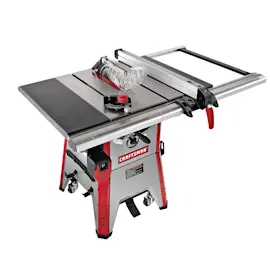
Yes. Craftsman table saws are a solid choice for DIYers and hobbyists who want dependable cutting power at a reasonable cost; the Craftsman 113298760 (10-inch) is especially known as a sturdy, serviceable design when it is properly aligned, maintained, and used with the right blade and safety setup (see the owner's manual).
What “good” means for the Craftsman 113298760
A table saw is “good” when it stays accurate, runs smoothly, and can be adjusted safely. With this model, performance usually comes down to setup and upkeep.
Strengths we commonly see
- Sturdy, long-lasting design when kept clean and lubricated
- Good basic ripping and crosscutting capability with a sharp, correct blade
- Serviceable mechanical adjustments (tilt and height mechanisms)
- Clear maintenance guidance (dust removal, waxing the table surface)
Common limitations to plan for
- Accuracy depends heavily on fence and miter gauge alignment
- Dust buildup can affect smooth operation if the cabinet is not cleaned out
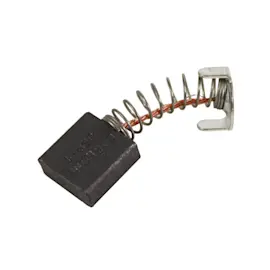
- Worn power cord, switch parts, or brushes can cause reliability issues over time
Quick checklist to get “good results” from this saw
These steps have the biggest impact on cut quality and day-to-day usability.
- Keep the cabinet and motor area free of sawdust (blow out dust frequently)
- Wax the table so workpieces slide smoothly
- Use a clean, sharp blade matched to the material (rip vs. crosscut)
- Confirm blade-to-miter-slot and fence alignment before precision work
- Keep the anti-kickback pawls sharp and the guard assembly correctly installed
Symptoms and likely causes (fast reference)
| What you notice | Most common cause | What to check first |
|---|---|---|
| Cuts are not square or consistent | Alignment issue | Fence, blade-to-slot alignment, miter gauge |
| Blade height is hard to adjust | Dust, pitch, dry mechanisms | Clean and lubricate per manual |
| Motor bogs down | Dull blade, feed rate too fast | Blade condition, cutting technique |
| Saw will not start | Switch/key/cord issue | Power source, cord condition, switch/key |
For step-by-step help on accuracy problems, use table saw bad angle cuts.
Why it matters
A “good” table saw is as much about safety and repeatability as power. Regular cleaning, a slick table surface, and a properly set guard and anti-kickback system reduce binding and kickback risk while improving cut quality.
Last updated: February 2026
How much is a craftsman professional table saw 113298760?
A Craftsman 113298760 table saw is typically priced based on condition, included accessories (fence, miter gauge, guard), and whether it runs smoothly. For a working used saw in good shape, a common real-world range is about $200 to $500, with higher prices when it is clean, complete, and well-tuned.
What drives the price for model 113298760
When we see big price swings on this Craftsman 10-inch table saw, it usually comes down to completeness and wear items.
- Safety and completeness: having the guard assembly and spreader parts installed and intact
- Fence condition: a straight fence that locks firmly and stays parallel to the blade
- Motor performance: starts quickly, no burning smell, no excessive sparking, no bogging under load
- Adjustment function: blade height and tilt adjust smoothly without binding
- Included hardware: miter gauge, wrenches, and leg set or stand parts
Quick “fair price” checklist before you buy
Use this as a fast inspection list, then confirm the correct setup and parts identification in the owner's manual.
- Verify the saw starts and stops reliably using the switch
- Check that the blade raises and lowers through full travel
- Confirm the blade tilts and returns to 90 degrees consistently
- Inspect the arbor and blade for wobble (runout) and unusual noise
- Make sure the guard and spreader are present and usable
Typical price ranges (used market)
These ranges fit most older Craftsman contractor-style table saws like the 113298760.
| Condition of the saw | What’s included | Typical price range |
|---|---|---|
| Needs work | Missing guard/fence issues, slow start, rough adjustments | $50 to $200 |
| Working, average | Runs well, normal wear, basic accessories | $200 to $350 |
| Working, very good | Clean, complete, tuned fence, smooth adjustments | $350 to $500 |
Why it matters
Price is closely tied to safety and cut quality. A complete, properly adjusted saw (guard, spreader, fence alignment, smooth height/tilt mechanisms) costs more up front but saves time and helps prevent bad cuts and binding.
If you are evaluating cut quality after purchase, our DIY guide on table saw bad cuts helps you pinpoint common setup and alignment causes.
Last updated: February 2026