 Owner’s manual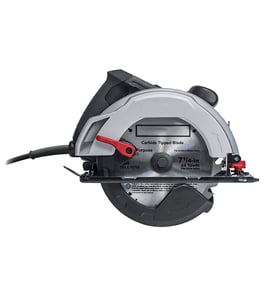

What is a 140 tooth circular saw blade used for?
A 140-tooth circular saw blade is a fine-finish blade used for smooth, low-tearout cuts in thin sheet goods and trim. On your Craftsman 315108340 (7-1/4 inch blade), it is best for plywood and similar panels when you want minimal chipping and a cleaner edge; see the owner's manual for blade size and safe operation details.
A high tooth count means smaller bites per tooth, which improves finish quality but slows cutting.
- Plywood and veneered panels (cleaner top surface)
- Melamine and laminated shelving (reduced edge chipping)
- Thin hardwood trim and molding (smoother cut face)
- Masonite and other thin fiber panels
- Some plastics (use light feed pressure and support the work)
A 140-tooth blade is not the right choice for fast, heavy cuts.
- Thick framing lumber (2x material) where speed matters
- Wet, pitchy, or dirty wood that gums up teeth quickly
- Aggressive ripping with the grain (higher kickback risk if you force the cut)
| Blade type | Typical tooth count | Best for |
|---|---|---|
| Fine finish | 100 to 140+ | Plywood, laminates, trim |
| General purpose | 24 to 60 | Mixed cuts in lumber and sheet goods |
| Rip | 18 to 24 | Fast cuts with the grain |
Using the right blade reduces splintering and helps the saw cut with less strain. The manual also notes that dull or dirty blades cut poorly and increase kickback risk; keep blades clean and sharp, and avoid forcing the saw through the cut.
Last updated: February 2026
Why is my circular saw stopping mid cut?
If your Craftsman 315108340 circular saw stops mid-cut, the most common causes are voltage drop (long/undersized extension cord), a dull or dirty blade that overloads the motor, or cutting technique that forces the saw and triggers a power loss. Start by confirming a solid 120V AC supply and using a sharp, clean blade.
- Plug the saw directly into a known-good outlet; avoid power strips.
- If you must use an extension cord, use a short, heavy-gauge cord (long cords cause voltage drop).
- Let the blade reach full speed before contacting the wood.
- Use steady, even feed pressure; do not force the cut.
- Check the blade for pitch buildup and dull teeth; clean or replace as needed.
- Verify the blade is installed correctly and tightened securely.
Your saw is designed for 120 volts, 60 Hz, AC only. The manual explains that a substantial voltage drop causes loss of power and can overheat the motor. It also notes that a dull blade places a heavy load on the saw and increases kickback risk. Review the operating and safety guidance in the 315108340 owner's manual.
| What you notice | Most likely cause | What to do next |
|---|---|---|
| Stops only when the cut gets “heavy” | Dull/dirty blade, forcing the saw | Clean blade, swap to a sharp blade, slow feed rate |
| Stops more with an extension cord | Voltage drop | Shorten cord, use heavier gauge, try direct outlet |
| Stops randomly, restarts when you release and pull trigger | Switch trigger or internal electrical issue | Inspect cord/plug, stop using if intermittent, have it serviced |
| Bogging plus burning smell | Overload/overheating | Stop, let cool, correct blade and cutting technique |
A saw that repeatedly stalls is usually being overloaded. That increases heat in the motor and raises the chance of kickback. Using a sharp blade, proper feed pressure, and a solid power supply keeps cuts straighter and protects the switch, cord, and motor.
Last updated: February 2026
What is the bottom plate of a circular saw called?
On the Craftsman 315108340 circular saw, the bottom plate that rides on the workpiece is commonly called the base (also called the shoe). It supports the saw during a cut and works with the depth-of-cut and bevel adjustments.
In Craftsman documentation for model 315108340, the term base is used in the feature callouts (for example, the depth-of-cut adjustment is shown at the base area). For diagrams and operating features, use the 315108340 owner's manual.
- Rests flat on lumber, plywood, and paneling to stabilize the saw
- Helps you guide a straight cut along a layout line
- Pivots for bevel cuts (tilted cuts) when you adjust the bevel mechanism
- Works with the depth-of-cut adjustment so the blade is set correctly
- Helps reduce binding and kickback risk when used with proper blade depth
| Name | Meaning | Most common use |
|---|---|---|
| Base | The bottom plate that rides on the material | Manuals, parts diagrams, repair talk |
| Shoe | Same part as the base | Jobsite slang, how-to guides |
| Footplate | Same part as the base | Some brands and tool descriptions |
Using the right term helps when you are troubleshooting cut accuracy (wandering cuts, bevel not holding) or looking up adjustments like bevel angle and depth-of-cut. It also helps you match the correct diagram when identifying nearby parts like the lower blade guard, bevel adjustment, and depth adjustment.
Last updated: February 2026
Why is my Craftsman circular saw not spinning?
If your Craftsman circular saw model 315108340 isn’t spinning, the most common causes are a power supply problem, a trigger switch issue, worn motor brushes, or a jammed blade or guard. Start with the outlet and cord, then move to the switch and motor components.
- Confirm the saw is plugged into a working 120V AC outlet (try a different outlet).
- If you’re using an extension cord, replace it if it’s nicked, loose, or warm to the touch.
- Remove the blade and make sure the arbor turns freely by hand (with the saw unplugged).
- Check the lower blade guard; if it returns slowly or sticks, don’t run the saw until it’s repaired.
- Reinstall a sharp, clean blade; a dull, pitch-covered blade can overload the motor and make it seem like it “won’t spin.”
A voltage drop can reduce power and overheat the motor. If the saw does nothing when you pull the trigger, verify power first.
If the trigger feels loose, intermittent, or the saw only runs when you wiggle the handle, the switch or internal connections can be failing.
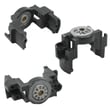
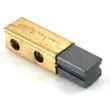
Motor brushes carry current to the spinning armature. When they wear down or burn, the motor may not start, may start and stop, or may run weakly.
A bent blade, debris in the guard area, or a sluggish lower guard can physically prevent the blade from spinning freely.
| What you see | Most likely issue | What we do next |
|---|---|---|
| No sound at all | Outlet, cord, switch | Verify outlet, inspect cord, then test switch/brushes |
| Hums but won’t spin | Binding blade/guard, weak brushes | Remove blade, check free spin, inspect brushes |
| Runs then stops | Brushes overheating, loose wiring | Inspect brushes and internal connections |
A saw that won’t spin is often a simple power or wear item issue, but forcing it can overheat the motor or create unsafe cutting conditions. Keeping the blade sharp and the guard moving freely also reduces kickback risk.
For model-specific diagrams, specs (12 amps, 7-1/4 inch blade, 5,000 RPM no-load), and the repair parts list, use the owner's manual.
Last updated: February 2026
