
How much does a power sander cost?
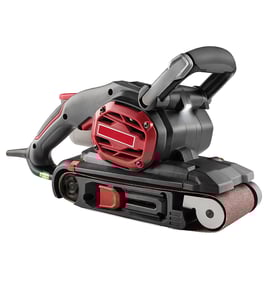
A power sander typically costs about $100 to $150, with budget models around $25 to $60 and heavy-duty or specialty sanders reaching $300 to $550+. For your Skil 7313 belt sander, price mainly depends on motor power, belt size, and included accessories.
- Palm/finish sander: $25 to $100
- Random orbital sander: $40 to $200
- Belt sander (like Skil 7313): $60 to $250
- Detail/mouse sander: $25 to $90
- Pro-grade specialty sanders: $200 to $550+
- Motor amperage and load handling (more power usually costs more)
- Belt or pad size (wider belts and larger pads cost more)
- Dust collection (bag, canister, or vacuum-ready ports)
- Speed control (single speed vs variable speed)
- Included items (extra belts/discs, case, clamps, adapters)
| Tier | Typical price | Best for | Common features |
|---|---|---|---|
| Budget | $25 to $80 | Light DIY, small projects | Basic dust bag, fixed speed |
| Midrange | $80 to $200 | Regular DIY, furniture, decks | Better tracking, improved dust control |
| Premium | $200 to $550+ | Frequent use, tougher materials | Higher power, better durability, refined controls |
Matching the sander price to your workload helps you avoid underpowered tools that stall or overheat, and it also prevents overspending on features you will not use for typical sanding tasks.
For help confirming you have the correct model number before shopping for parts or diagrams, use how to find your appliance model number (and what it means for parts).
Last updated: February 2026
What is the most common type of electric sander?
The most common electric sander for general home and shop use is a random orbital sander because it removes material quickly while leaving fewer swirl marks than many basic sanders. For Skil model 7313 (a belt sander), belt sanders are more common for fast stock removal and leveling.
- Random orbital sander: everyday sanding, smoothing, and finishing with less visible patterning
- Belt sander (like Skil 7313): aggressive removal, flattening, stripping, and shaping
- Palm/finish sander: light sanding between coats, final smoothing on flat areas
- Detail sander: corners, tight spots, and small repairs
- Angle grinder with sanding disc: heavy removal on metal and some wood (with the right disc)
| Sander type | Typical use | Best for | Common downside |
|---|---|---|---|
| Random orbital | General purpose | Smooth finish with fewer marks | Slower at heavy leveling |
| Belt sander | Fast removal | Flattening and shaping | Easy to gouge if you pause |
| Finish sander | Light finishing | Between-coat sanding | Leaves a more noticeable pattern |
| Detail sander | Tight areas | Corners and edges | Small pad, slower coverage |
Choosing the “most common” sander is less important than matching the tool to the job. A random orbital sander is the go-to for most projects, while a belt sander like the Skil 7313 is the right pick when you need speed and flattening power.
Last updated: February 2026
Are orbital sanders better than sheet sanders?
Orbital sanders are usually “better” for faster sanding on large, flat areas, while sheet sanders are usually “better” for controlled finishing and getting closer to edges and corners. For Skil model 7313 belt sander projects, we typically treat orbitals as the go-to for general prep and sheet sanders for final touch-ups.
| Feature | Random orbital sander | Sheet sander (quarter-sheet/palm) |
|---|---|---|
| Speed | Faster stock removal | Slower, more controlled |
| Finish quality | Very smooth with less visible pattern | Smooth, but can show straight-line scratches |
| Swirl marks | Less likely when used correctly | Not typical “swirls”, but can leave directional marks |
| Edges/corners | Struggles in tight corners | Better near edges and into corners |
| Best use | General sanding, paint prep, flattening | Fine finishing, light sanding, detail work |
- Choose a random orbital sander for tabletops, doors, panels, and paint or finish prep.
- Choose a sheet sander for light finishing passes, between-coat sanding, and working close to trim.
- If you already own a belt sander like the Skil 7313, use it for fast leveling, then switch to an orbital or sheet sander to refine the scratch pattern.
- For tight inside corners, plan on hand sanding or a detail tool; neither style is perfect there.
- Match the tool to the grit: coarse grits remove material; fine grits refine the surface.
- 60 to 80 grit: heavy removal (stripping, leveling)
- 100 to 120 grit: general smoothing after shaping
- 150 to 180 grit: pre-finish sanding for many woods
- 220 grit: between coats or very fine finishing
Using the “wrong” sander usually costs time and surface quality. Orbitals help you sand faster with fewer visible patterns on broad surfaces; sheet sanders help you stay controlled near edges and during final finishing so you do not round over details.
If your sander is acting up (won’t start, cuts out, or trips a breaker), electrical testing is often the fastest way to pinpoint the issue; see how to use a multimeter to test electrical parts video.
Last updated: February 2026
What is a 1 4 sheet sander used for?
A 1/4-sheet sander is used for light sanding and finish prep on flat surfaces, especially when you want a smooth, swirl-free result before paint, stain, or clear coat. For Skil model 7313 (a belt sander), a 1/4-sheet sander is a complementary tool for final finishing, not a replacement.
- Smoothing wood before paint, stain, or polyurethane
- Sanding between coats to improve adhesion and feel
- Light scratch removal and surface blending
- Finishing trim, cabinet faces, doors, and furniture parts
- Controlled sanding near edges (with careful pad control)
A belt sander like the Skil 7313 is designed for fast stock removal and flattening large areas. A 1/4-sheet sander is designed for lighter pressure and finer finishing.
| Task | 1/4-sheet sander | Belt sander (Skil 7313) |
|---|---|---|
| Final finish sanding | Best choice | Not the right tool for final finish |
| Leveling uneven boards | Slow | Best choice |
| Removing old finish/paint | Light duty | Fast removal |
| Tight corners | Better control | Not intended for corners |
- 220 to 320 grit: between coats, final smoothing
- 150 to 180 grit: general prep before finishing
- 80 to 120 grit: initial smoothing (use care to avoid visible scratches)
Using the right sander prevents gouges and deep scratches that show through paint or clear coat. We use belt sanders for speed and leveling; we use 1/4-sheet sanders to dial in the surface for a clean finish.
For help matching parts and diagrams to the exact tool version, use how to find your appliance model number (and what it means for parts).
Last updated: February 2026