
Who makes Evcon furnace?
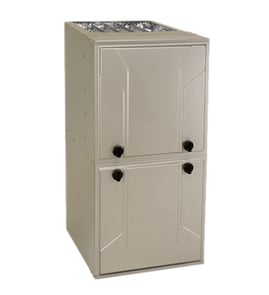
Evcon furnaces are made under the Coleman and York family of HVAC brands; for your Coleman Evcon DGRT070AUA furnace, Evcon is essentially a Coleman-branded product line used on certain heating and cooling equipment.
What that means for parts and service
When you’re identifying replacement parts for an Evcon furnace, the most important detail is the model number on the rating plate (for this page: DGRT070AUA). That model number is what ties your furnace to the correct blower, ignition, gas valve, limit switch, and control board options.
Use this checklist before ordering:
- Confirm the full model number is DGRT070AUA (letters and numbers must match exactly)
- Record the serial number (helps narrow production variations)
- Note fuel type (natural gas vs. propane conversion)
- Note ignition type (hot surface igniter vs. spark)
- Match electrical ratings (typically 120 VAC line power with 24 VAC controls)
Quick brand relationship guide
| Name you see | What it usually indicates | Why it matters |
|---|---|---|
| Evcon | Product line/label used on HVAC equipment | Helps identify the family of parts |
| Coleman | Parent brand name commonly used for Evcon-labeled units | Often used in parts listings |
| York | Same broader manufacturer family as Coleman | Some components cross-reference |
Why it matters
Brand names can be confusing on HVAC equipment, but the model number drives parts accuracy. Two Evcon furnaces that look similar can use different igniters, flame sensors, pressure switches, or blower motors depending on the exact model and production run.
Helpful next step
If you need help confirming the correct model tag location or decoding the model number, use how to find your appliance model number (and what it means for parts).
Last updated: February 2026
How many sq ft will a 70,000 BTU furnace heat?
A 70,000 BTU furnace like the Coleman DGRT070AUA typically heats about 1,800 to 2,800 sq ft in an average, well-insulated home. The real coverage depends most on climate zone, insulation, ceiling height, and how tight (draft-free) the home is.
Quick sizing ranges (what 70,000 BTU usually covers)
Use these as practical planning ranges for a standard 8 ft ceiling:
- Warm climates / very efficient homes: ~2,400 to 2,800 sq ft
- Moderate climates / average insulation: ~2,000 to 2,400 sq ft
- Cold climates / older or drafty homes: ~1,800 to 2,100 sq ft
- High ceilings (9 to 12 ft): reduce the sq ft estimate by 10% to 25%
What changes the sq ft number the most
These factors can swing sizing by hundreds of square feet:
- Climate zone and winter design temperature
- Insulation levels (attic, walls, rim joists)
- Air leakage (drafts, leaky ductwork, unsealed returns)
- Window quality and window area
- Ceiling height and open floor plans
- Duct sizing and airflow (static pressure, filter restriction)
Rule-of-thumb table (BTU per sq ft)
This is a common way to estimate coverage when you do not have a Manual J load calculation.
| Home condition / climate | Typical BTU per sq ft | 70,000 BTU estimated coverage |
|---|---|---|
| Efficient home, mild winter | 25 BTU/sq ft | ~2,800 sq ft |
| Average home, moderate winter | 30 BTU/sq ft | ~2,300 sq ft |
| Older/drafty home, colder winter | 40 BTU/sq ft | ~1,750 sq ft |
Why it matters (oversizing vs undersizing)
Correct sizing helps your DGRT070AUA run longer, steadier cycles for comfort and efficiency. Oversized furnaces tend to short-cycle (more on/off), which can cause uneven temperatures and extra wear on igniters, flame sensors, and blower components.
If you are shopping parts or confirming the exact model
Before ordering furnace parts, match the rating plate model number exactly (DGRT070AUA) so you get the right ignition, control, and blower components. Our best starting point is how to find your appliance model number (and what it means for parts).
Last updated: February 2026
How much does it cost to replace a 70,000 BTU furnace?
Replacing a 70,000 BTU furnace (like many Coleman Evcon systems in this size range) typically costs about $4,000 to $9,000 installed, depending on efficiency rating, venting changes, and labor in your area. The furnace itself is usually only part of the total; installation and required code upgrades often drive the final price.
Typical replacement cost breakdown
Here is a realistic way to think about the total installed cost for a 70,000 BTU gas furnace replacement.
- Furnace equipment: $1,500 to $4,500 (standard to high-efficiency)
- Labor and removal of old furnace: $1,500 to $3,500
- Venting changes (especially for 90%+ AFUE): $300 to $2,000
- Electrical, gas line, condensate drain updates: $200 to $1,500
- Permits and inspection: $100 to $600
What changes the price the most
A “same size” replacement can still vary a lot in cost because of installation details.
- Efficiency level (AFUE): higher efficiency usually costs more up front
- Venting type: switching from metal flue to PVC venting adds materials and labor
- Blower type: variable-speed or ECM blowers typically cost more
- Cabinet size and duct transitions: sheet metal work can add cost
- Condition of the A/C coil above the furnace: coil compatibility or replacement can add cost
Quick comparison table (common scenarios)
| Scenario | What it usually includes | Typical installed cost |
|---|---|---|
| Basic replacement | Similar efficiency, minimal venting changes | $4,000 to $6,000 |
| Mid-range upgrade | Better efficiency, some venting or drain work | $5,500 to $7,500 |
| High-efficiency conversion | 90%+ AFUE, new PVC venting, condensate routing | $7,000 to $9,000+ |
Why it matters for DGRT070AUA owners
For a Coleman Evcon DGRT070AUA furnace, the best replacement value comes from matching the correct capacity and airflow to your ductwork and home. Oversizing can cause short cycling and comfort issues; undersizing can struggle in cold weather.
Before you order anything
- Confirm the exact model number on the rating plate
- Note fuel type (natural gas vs propane) and venting style
- Take photos of the vent route, drain (if present), and wiring connections
- Use our model page to look up diagrams and part listings, or search by model on Sears PartsDirect
Last updated: February 2026
What is the most common part to fail on a furnace?
The most common “failure point” on a furnace is the air filter getting clogged, which restricts airflow and triggers safety shutdowns. On a Coleman Evcon furnace like model DGRT070AUA, the next most common trouble spots are the flame sensor, igniter, and blower-related components.
Most common furnace failures (in order)
- Dirty air filter: Causes overheating and limit switch trips; the furnace may start then shut off.
- Flame sensor: Gets coated and stops proving flame; burners light briefly then go out.
- Ignition system (hot surface igniter or spark igniter): No ignition, or repeated clicking/tries.
- Thermostat or low-voltage wiring: No call for heat, intermittent operation.
- Blower motor or capacitor: Poor airflow, overheating, or no air movement.
- Safety switches (limit switch, pressure switch): Opens due to overheating, venting, or draft issues.
Quick symptom-to-part checklist
| What you notice | Most likely culprit | What we recommend first |
|---|---|---|
| Furnace runs briefly then shuts off | Air filter, limit switch, blower airflow issue | Replace filter; confirm supply/return vents are open |
| Burners light then go out in 2 to 10 seconds | Flame sensor | Clean flame sensor; check grounding |
| Inducer runs but burners never light | Igniter, gas supply issue, pressure switch | Check igniter glow/spark; confirm gas valve is on |
| Nothing happens when thermostat calls for heat | Thermostat, fuse, door switch, transformer | Check thermostat settings; check for a blown fuse |
Why the air filter “fails” so often
A filter is a consumable part, but when it plugs up it acts like a system failure: airflow drops, the heat exchanger gets too hot, and the furnace shuts down to protect itself. Keeping airflow correct prevents nuisance shutdowns and reduces stress on the blower motor.
Safe first steps we use before replacing parts
- Turn off power at the furnace switch or breaker before opening panels.
- Replace the filter with the correct size and airflow rating.
- Make sure return grilles and supply registers are not blocked.
- If you suspect an electrical issue, test safely with a meter using how to use a multimeter to test electrical parts video.
- If a fuse is involved, confirm it is actually open using how to tell if a fuse is blown.
Last updated: February 2026
Why is my furnace running but not producing heat?
If your Coleman Evcon furnace model DGRT070AUA is running (blower on) but not heating, the most common causes are a thermostat/call-for-heat issue, restricted airflow (dirty filter or blocked vents) triggering a safety limit, or an ignition or flame-sensing problem that shuts the burners off.
Quick checks we recommend first
- Confirm the thermostat is set to HEAT and the setpoint is above room temperature.
- Replace the air filter if it is dirty or collapsed.
- Make sure supply registers and return grilles are open and not blocked.
- Check the furnace service switch and your home’s breaker for the furnace.
- If you have a gas furnace, confirm the gas shutoff valve is fully open.
What “running” usually means (and what it points to)
| What you observe | Most likely area | What it means |
|---|---|---|
| Blower runs, no flame at all | Thermostat, ignition sequence | Furnace is not lighting burners |
| Flame lights briefly, then shuts off | Flame sensor, airflow/limit | Safety shuts burners down |
| Blower runs, air is cool or lukewarm | Airflow, ducting, firing cycle | Heat is not being produced or not being delivered |
Common causes and what to do next
1) Airflow restriction and overheating
A clogged filter or blocked vents can overheat the heat exchanger area and trip a high-limit switch, which often leaves the blower running but stops heat.
- Install a clean filter
- Clear obstructions around returns and registers
- Make sure the blower compartment door is fully seated
2) Ignition or flame-sensing issues
If the burners never light, or they light and then drop out quickly, the issue is often in the ignition system (hot surface igniter or spark) or the flame sensor.
- Turn power off before inspecting anything inside the cabinet
- If you smell gas, stop and contact a qualified technician
3) Electrical control or safety switch problems
Loose wiring, a tripped rollout switch, or a door interlock issue can interrupt the heating cycle.
- Use safe electrical testing practices if you troubleshoot
- For wiring diagnosis, follow a schematic and test methodically
Why it matters
A furnace that runs without heat is often protecting itself (overheat limit) or failing to prove flame (flame-sensing). Fixing airflow problems early helps prevent repeated shutdowns and reduces stress on controls and the blower.
For safe electrical troubleshooting basics, we recommend how to use a multimeter to test electrical parts video.
Last updated: February 2026