Owner’s manual
 View engine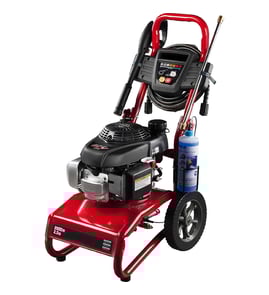



Can you put 87 gas in a pressure washer?
Yes. For the Craftsman 580762250 gas pressure washer, we recommend using clean, fresh, regular unleaded gasoline; 87 octane is the standard “regular” fuel and works well for normal operation. Follow the fueling and safety steps in the Craftsman 580762250 owner's manual.
Use fuel that keeps the carburetor and fuel system clean and stable.
- Use regular unleaded gasoline (typical pump “87 octane”).
- Do not refuel indoors, and do not refuel with the engine running or hot.
- Do not overfill the tank; leave room for expansion.
- For storage longer than 30 days, plan to remove fuel from the tank to help prevent gum deposits.
- Avoid letting alcohol-blended fuel sit for long periods; it can attract moisture and contribute to fuel system issues during storage.
| Situation | What we recommend | Why |
|---|---|---|
| Everyday use | Fresh regular unleaded (87 octane) | Matches the manual’s “regular unleaded” guidance |
| Unleaded not available | Regular leaded (short-term) | Allowed as a fallback in the manual |
| Storage over 30 days | Drain fuel system before storage | Helps prevent gum deposits and starting problems |
Using the right gasoline and safe refueling habits helps your pressure washer start easier, run smoother, and reduces carburetor and fuel-hose problems that often show up after storage.
Last updated: January 2026
What is a good PSI for a gas pressure washer?
For a gas pressure washer, a good PSI depends on what you’re cleaning: 2,000 to 3,000 PSI handles most home jobs, while 3,000 to 4,000+ PSI is for tougher work like heavy concrete cleaning or paint prep. With the Craftsman 580762250, always stay within the washer’s rated PSI and use the correct nozzle and distance as shown in the 580762250 owner's manual.
- 1,200 to 1,900 PSI: vehicles, patio furniture, grills (lower risk of surface damage)
- 2,000 to 2,900 PSI: decks, fences, siding, most homeowner cleaning
- 3,000 to 4,000+ PSI: driveways, masonry, stripping stubborn buildup (higher risk, more kickback)
- Any PSI: use extra caution around windows, soft wood, older paint, and seals
| Task | Typical PSI range | Notes |
|---|---|---|
| Car and outdoor furniture | 1,200 to 1,900 | Use a wider spray pattern and keep distance |
| Deck, fence, siding | 2,000 to 2,900 | Test a small area first |
| Concrete and masonry | 3,000 to 4,000+ | Avoid etching by keeping the wand moving |
PSI is only part of cleaning power. For better results without damaging surfaces, focus on setup and flow.
- Use the widest spray that still cleans effectively
- Keep the nozzle moving; do not “dig in” on one spot
- Start farther away, then move closer until it cleans
- Confirm hose and gun connections are tight before starting
- Never exceed the pressure washer’s rated PSI
Too much PSI can gouge wood, etch concrete, and force water behind siding, while too little PSI wastes time and can tempt you to spray too close. Matching PSI to the job helps you clean faster and protect surfaces and seals.
Last updated: January 2026
How to tell if your pressure washer pump is bad?
On the Craftsman 580762250 gas pressure washer, a failing pump shows up as low or surging pressure, leaks at the pump head, or abnormal pump noise. Before replacing the pump, we follow the 580762250 owner's manual steps to verify water supply, purge air, and clean the nozzle because a restricted nozzle commonly mimics pump failure.
- Confirm the water supply is fully ON and can provide about 3 GPM.
- Inspect and clean the water inlet screen; do not run the unit if the screen is damaged.
- Purge air from the pump: remove the wand extension, squeeze the trigger until flow is steady, then reconnect.
- If the spray pulses, clean the nozzle and back-flush the wand (a partially clogged nozzle causes pulsing).
- Inspect the high-pressure hose for cuts, bulges, leaks, or loose couplings; replace if damaged.
- Pressure stays low even with a clean nozzle and steady inlet flow.
- Pressure surges even after purging air and confirming good water supply.
- Water leaks from the pump head area (not just at hose fittings).
- Grinding, rattling, or squealing from the pump.
- Milky or discolored pump oil (on oil-lubricated pumps), which indicates water intrusion past seals.
| Symptom | More likely cause | What we do first |
|---|---|---|
| Pulsing while spraying | Nozzle partially clogged | Clean nozzle and back-flush wand |
| Low pressure all the time | Supply restriction or worn pump valves/seals | Check inlet screen, purge air, verify nozzle |
| Leak at pump head seam | Pump head gasket or seals | Inspect head, replace sealing parts |
| Mist or spray from hose | High-pressure hose damage | Replace hose (do not repair) |
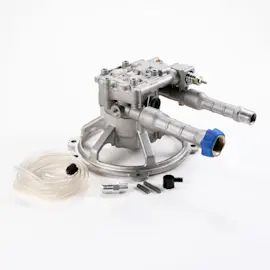
If your checks point to a pump-head leak or worn sealing surfaces, these model-matched parts are commonly involved:
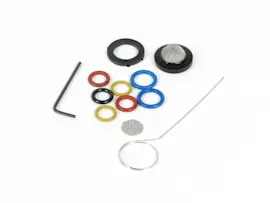
- Gasket B2668GS (pump head gasket)
- Piston seal 93680GS (pump piston oil seal)
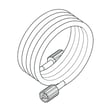
- Hose-2400psi 84006753 (high-pressure hose; replace if leaking or damaged)
A clogged nozzle, air in the pump, or a damaged high-pressure hose can cause pulsing, pressure spikes, and faster pump wear. Doing the quick checks first often restores normal pressure without replacing the pump.
Last updated: January 2026
Is it worth repairing a pressure washer?
Yes. Repairing a Craftsman 580762250 pressure washer is worth it when the problem is a wear item (hose, seals, gaskets) or routine maintenance; replacement makes more sense when the pump or engine has major internal damage or the repair cost is about half the price of a comparable new unit. Use the 580762250 owner's manual for maintenance and safety guidance.
- Repair if the issue is a leak at a fitting, worn seal, or a clogged injector filter.
- Repair if the engine runs well and pressure only surges or drops (often an unloader/regulator issue).
- Replace if the pump housing is cracked or the engine has low compression.
- Replace if multiple major symptoms stack up (pressure loss plus oil leak plus hard starting).
- Repair if the fix is straightforward and parts are available for your exact setup.
| Symptom | Likely cause | Typical fix |
|---|---|---|
| Water leaking at pump head | Worn gasket or seal | Replace gasket or seals |
| Pressure surges or drops | Unloader/regulator sticking | Service or replace unloader/regulator |
| Water spraying from hose | Hose cut, bulged, or coupling damage | Replace the high-pressure hose (do not patch) |
| Poor detergent pickup | Clogged injector filter | Clean or replace injector filter |
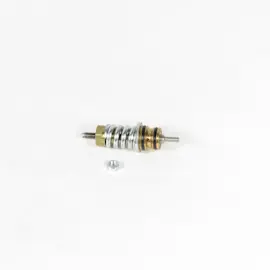
Parts that often apply to these symptoms include the hose-2400psi 84006753, gasket B2668GS, and regulator SRV21447GS.
A “small” leak or pressure fluctuation can quickly turn into pump damage, and a high-pressure hose leak is a serious safety hazard. Fixing hoses, seals, and regulators early helps the 580762250 run consistently and safely.
Last updated: January 2026