Owner’s manual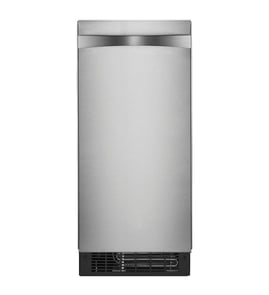






Is it worth replacing the ice maker on a refrigerator?
Yes, it’s worth replacing a refrigerator ice maker when the refrigerator is in good overall condition and the problem is isolated to the ice system; for Kenmore model 10689583707 (a freestanding ice maker), replacing a failed ice-making component is often a practical repair compared with replacing the entire unit. See the 10689583707 owner’s manual for model-specific diagnostics and access steps.
Quick decision checklist
- The unit cools normally and only ice production is affected.
- You have steady water supply to the appliance and no obvious leaks.
- The repair is limited to a single part (not multiple electrical and sealed-system issues).
- You use ice daily and downtime is a real inconvenience.
- The cabinet, door seal, and bin area are in good shape (no major corrosion or damage).
Common repairs that usually make sense on this model
On a freestanding ice maker like Kenmore 10689583707, these part-level fixes are typically the first place we look:
| Symptom | Likely area to check | Example part for this model |
|---|---|---|
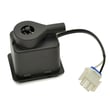
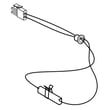
| No ice or slow ice | Temperature sensing or control | Thermistor WPW10503764 or ice maker electronic control board WPW10226156 |
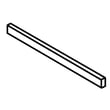
| Small, hollow, or misshapen cubes | Water fill and distribution | Ice maker water inlet valve WPW10340983 or dispenser W10863947 |
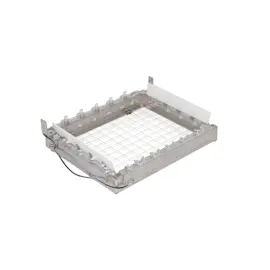
| Ice slab not cutting cleanly | Cutting system | Ice maker cutter grid WP2313637 |
When replacement is usually not the best value
We recommend stepping back and evaluating the whole appliance if you see any of these:
- The compressor runs constantly and the unit still will not get cold.
- You have repeated failures across multiple systems (cooling, water fill, controls).
- There is heavy rust, insulation damage, or the door will not seal even after gasket checks.
Why it matters
An ice maker is a system (water inlet valve, distributor tube, thermistor, control board, cutter grid). Replacing the right component restores normal ice production and prevents repeat issues like overfilling, leaking, or poor cube quality.
Last updated: January 2026
How do I reset the icemaker on a Kenmore refrigerator?
For Kenmore model 10689583707 (a freestanding ice maker), the most reliable reset is a power reset: turn the unit off, disconnect power for a few minutes, then restore power and let it restart a harvest cycle. Use the steps in the 10689583707 owner's manual for the exact control locations.
Quick reset steps (power reset)
- Turn the ice maker OFF using the power switch or control (if equipped).
- Unplug the ice maker (or switch the dedicated breaker OFF).
- Wait 3 to 5 minutes to clear the control.
- Restore power and turn the unit ON.
- Allow 15 to 30 minutes for the unit to cool and begin cycling; full ice production can take longer.
If it still will not restart
These checks solve most “won’t reset” or “won’t cycle” complaints on freestanding ice makers.
- Confirm the unit is getting power (outlet, breaker, cord fit).
- Make sure the door is fully closed and the bin is seated correctly.
- Verify the water supply is on and the inlet line is not kinked.
- Clean dust from the condenser area and ensure airflow around the cabinet.
- If the unit is warm inside, a failed temperature sensor can prevent cycling; test or replace the thermistor WPW10503764.
Common symptoms and what they usually mean
| Symptom after reset | Most common cause | What to do next |
|---|---|---|
| No sound, no lights | No power to unit | Check outlet, breaker, cord |
| Runs but no ice | Water supply issue | Check shutoff valve and line |
| Ice is thin or slow | Poor airflow or dirty condenser | Clean condenser, improve clearance |
| Starts then stops | Temperature sensing/control issue | Check thermistor, wiring |
Why it matters
A reset clears a “stuck” control state after a power flicker or interruption, but it will not fix underlying issues like restricted airflow, a water supply problem, or a failed thermistor or control board.
Last updated: January 2026
Can I replace my own ice maker?
Yes, many owners can replace the ice maker assembly in a Kenmore 10689583707 freestanding ice maker with basic hand tools, as long as you unplug the unit first and follow the wiring and mounting steps shown in the 10689583707 owner's manual. If the repair involves sealed-system parts, we recommend professional service.
Before you start (safety and prep)
- Unplug the ice maker (do not rely on the control being off).
- Turn off the water supply if your model is plumbed in.
- Empty the bin and remove any panels needed for access.
- Take a photo of wire connectors before disconnecting anything.
- Keep screws organized by location so reassembly is straightforward.
What “replace my own ice maker” usually means
On a freestanding ice maker, DIY replacement is typically practical when you are swapping a serviceable component such as the cutter grid, thermistor, or control board, not when you are opening the sealed refrigeration system.
| Repair type | Typical DIY-friendly? | Why |
|---|---|---|
| Electrical or mechanical part swap (grid, sensor, board) | Yes | Mostly screws, connectors, and careful reassembly |
| Water path parts (valve, distributor tube) | Often | Requires leak checks and correct tubing fit |
| Sealed-system cooling parts (compressor, evaporator) | No | Requires specialized tools and refrigerant handling |
Parts that are commonly replaced on this model
If your symptoms match, these are examples of replaceable parts listed for model 10689583707:
- Ice maker cutter grid WP2313637 (ice slabs not cutting cleanly)
- Thermistor WPW10503764 (temperature sensing issues, erratic cycling)
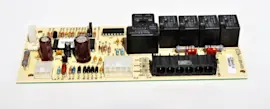
- Ice maker electronic control board WPW10226156 (no operation, inconsistent operation)
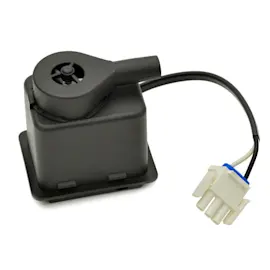
- Ice maker water inlet valve WPW10340983 (no fill or slow fill)
- Dispenser W10863947 (poor water distribution over the evaporator plate)
Why it matters
Replacing the correct component restores normal ice production and helps prevent repeat issues like leaks, overfilling, or incomplete freezing. Following the 10689583707 owner's manual also helps you avoid damaging wiring, tubing, or insulation during disassembly.
Last updated: January 2026