Error Codes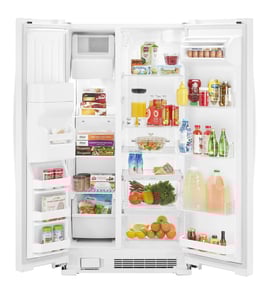



What's better, a side-by-side or a French door refrigerator?
A French door refrigerator is better for wide, flexible fresh-food storage and fitting large platters, while a side-by-side (like Whirlpool model WRSF6536RZ00) is better for narrow kitchens and easy freezer organization. The best choice depends on your space, how you shop, and whether you use the freezer daily.
Quick comparison (what most households notice)
| Feature | Side-by-side | French door |
|---|---|---|
| Fresh-food space | Tall, narrower shelves | Wide shelves for trays and pizza boxes |
| Freezer access | Eye-level shelves and bins | Pull-out drawer, items can stack |
| Door swing clearance | Usually needs less | Often needs more |
| Best for | Tight aisles, freezer users | Entertaining, large fresh-food items |
Choose a side-by-side when
- Your kitchen has tight walkways and you want narrower door swing.
- You prefer freezer shelves at eye level (less bending).
- You buy lots of frozen foods and want them organized by shelf.
- You want a simpler layout that is easy to see at a glance.
Choose a French door when
- You store wide items often (party trays, sheet pans, large produce bins).
- You want the most flexible fresh-food layout.
- You open the refrigerator side more than the freezer side.
- You like a bottom freezer drawer for bulk storage.
What to measure before you decide
Use this checklist so the new refrigerator fits and functions correctly:
- Opening width, height, and depth (including baseboards)
- Door swing clearance and nearby walls or islands
- Space behind the unit for airflow and water line routing
- Pathway from the entry door to the kitchen (tight turns)
Why it matters
The “better” style is the one that matches how you access food every day. Side-by-side models prioritize freezer visibility and tighter door clearance; French door models prioritize wide fresh-food storage and convenience for large items.
For dispenser and ice-maker ownership tips that apply to both styles, use how to prevent water dispenser and ice maker problems.
Last updated: January 2026
How long do Whirlpool side-by-side refrigerators last?
Most Whirlpool side-by-side refrigerators, including model WRSF6536RZ00, typically last 10 to 18 years with normal household use. Consistent basic maintenance (airflow, clean seals, stable temperatures) is what most often separates a 10-year fridge from an 18-year fridge.
Typical lifespan and what changes it
A refrigerator’s life is mainly driven by compressor run time, heat removal, and door-seal performance.
- 10 to 12 years: common when coils are dusty or the fridge runs hot
- 13 to 15 years: typical with routine cleaning and good ventilation
- 16 to 18 years: achievable with strong maintenance and stable conditions
- Heavy use (frequent door openings, warm garage) usually shortens lifespan
- Poor door sealing and restricted airflow usually shorten lifespan fastest
Maintenance that adds years (practical checklist)
These are the highest-impact steps we recommend for Whirlpool side-by-side units:
- Keep condenser area clean and maintain clearance for airflow
- Keep freezer around 0°F and fresh food around 37°F
- Make sure doors close fully and gaskets seal all the way around
- Avoid overpacking; blocked vents force longer run times
- Replace worn door hardware or supports that cause sagging
- Address ice maker or dispenser leaks quickly to prevent corrosion and icing
Quick “repair vs replace” guide
Use this as a simple decision framework when you are planning a repair.
| Refrigerator age | What we typically see | Practical approach |
|---|---|---|
| 0 to 7 years | Wear items, minor leaks, ice maker issues | Repair is usually worthwhile |
| 8 to 12 years | Fan, defrost, dispenser, door seal problems | Repair if cooling is strong |
| 13 to 18 years | Higher chance of sealed-system or control issues | Compare repair cost to replacement |
Why it matters
A side-by-side refrigerator that runs hotter than normal or leaks cold air through the door seal will cycle longer, which increases wear on the compressor and fans. Fixing airflow and sealing issues early is one of the simplest ways to extend the service life.
Helpful DIY resources
- How to replace the water filter in a Whirlpool refrigerator
- How to prevent water dispenser and ice maker problems
Last updated: January 2026
What is the most common problem with a Whirlpool refrigerator?
The most common Whirlpool refrigerator problem is a cooling complaint: the fridge is warm, the freezer is warm, or the unit runs constantly. On the Whirlpool WRSF6536RZ00 side-by-side refrigerator, the next most common issues are ice maker and dispenser problems caused by airflow restrictions, dirty coils, or worn ice system parts.
Most common symptoms and what they usually point to
- Refrigerator warm, freezer OK: restricted airflow (blocked vents, frosted evaporator cover), evaporator fan issue
- Freezer warm, refrigerator warm: dirty condenser coils, condenser fan or compressor/inverter issue
- Runs all the time: dirty coils, door not sealing, frequent door openings, warm room temperature
- No ice or small cubes: water supply issue, clogged filter, ice maker fault
- Ice dispenses poorly: ice clumps, auger/ice path issue, coupler wear
Quick checks we recommend before replacing parts
- Set temps to typical targets: 0°F freezer and 37°F refrigerator.
- Make sure vents are not blocked by food packages.
- Clean condenser coils (dust buildup is a top cause of “not cooling well”).
- Confirm doors close fully and gaskets seal all the way around.
- If ice or water is slow, purge air and verify household water pressure.
Parts that commonly solve ice and dispenser complaints
If the cooling is good but ice production or dispensing is the issue, these model-matched parts are common fixes:
- Assembly, ice maker W10873791
- Refrigerator auger motor coupler WP2220458
- Refrigerator water tubing WPW10238092
- Refrigerator water tube fitting WPW10271543
Troubleshooting guide (symptom to likely fix)
| Symptom | Most likely cause | What to do first |
|---|---|---|
| Warm temps, unit running | Dirty condenser coils | Clean coils, verify airflow |
| Warm fridge, freezer OK | Evaporator airflow problem | Check vents, listen for fan |
| No ice | Water supply or ice maker issue | Check supply, then test ice maker |
| Ice won’t dispense | Ice clumped or coupler slipping | Break up ice, inspect coupler |
Why it matters
Cooling and ice maker problems often start as simple airflow or maintenance issues. Catching them early helps protect food, reduces compressor run time, and prevents repeat ice jams and dispenser wear.
Related help: Whirlpool refrigerator error codes
Last updated: January 2026