Error Codes


How to remove bottom grille on GE refrigerator?
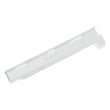
On the GE GNE27JYMWFFS bottom-mount refrigerator, the bottom grille (base grille/toe grille) typically comes off by removing any retaining screws (if present) and then pulling the grille straight out to release the clips. Reinstall by aligning it and pushing it back into place.
Steps to remove the bottom grille
- Unplug the refrigerator or switch off power at the breaker (recommended for safety).
- Pull the refrigerator forward a few inches if you need better access.
- Look along the top edge or ends of the grille for Phillips-head screws.
- If screws are present, remove them and set them aside.
- Grip the grille near both ends and pull straight outward to release the retaining clips.
- If it feels stuck, wiggle gently side-to-side while pulling; do not pry hard on the painted or stainless surfaces.
What you should see once it is off
Removing the grille is mainly for access and cleaning. Depending on the exact build of your GNE27JYMWFFS, you may see:
| Area behind grille | What it is for | What to do while you are there |
|---|---|---|
| Condenser area | Helps remove heat | Vacuum dust and pet hair carefully |
| Drain pan area | Evaporates defrost water | Check for cracks or overflow signs |
| Leveling feet/rollers | Keeps doors aligned | Verify the unit is stable and level |
If the grille will not come off
- Confirm all screws are removed (some models have screws at both ends).
- Check for hidden locking tabs; press tabs while pulling outward.
- Make sure the refrigerator is not sitting on the grille (leveling feet too low).
- If the grille is warped or cracked, replace it rather than forcing it.
Why it matters
A properly installed base grille helps airflow across the condenser area. Keeping that area clean helps the refrigerator cool efficiently and can reduce warm-temperature complaints.
For related GE refrigerator access and panel tips, we recommend how to disassemble the ice and water dispenser on a GE refrigerator if you are also working around the dispenser area.
Last updated: February 2026
What is the average lifespan of a GE refrigerator?
A GE refrigerator typically lasts about 13 years on average. For your GE GNE27JYMWFFS bottom-mount refrigerator, real-world lifespan depends most on condenser airflow, door seal condition, and how well the cooling system and defrost system stay maintained.
Typical lifespan range (what to expect)
Most full-size GE refrigerators fall into this range:
- 10 to 15 years: common lifespan for many households
- 15+ years: achievable with good airflow, stable temperatures, and timely part replacement
- Under 10 years: usually tied to heavy use, poor ventilation, or unresolved cooling/defrost issues
| Lifespan outcome | What it usually means | What to do |
|---|---|---|
| 10 to 12 years | Normal wear starting to show | Clean coils, watch temps, address noises early |
| 13 to 15 years | Typical average | Keep seals tight, keep vents clear, replace filters |
| 15+ years | Above average | Stay ahead of fan, sensor, and water system issues |
What shortens a refrigerator’s life fastest
These are the most common lifespan reducers we see with bottom-mount and French door refrigerators:
- Dirty condenser area causing the compressor to run hot and long
- Door gasket leaks that create constant warm air infiltration
- Frost buildup from a defrost problem (ice blocks airflow and stresses the evaporator fan)
- Poor temperature control from a failing sensor or control issue
- Water system restrictions (filter or valve issues) that lead to leaks or icing
Parts that often matter as the unit ages
If your GNE27JYMWFFS starts running warm, cycling oddly, or showing temperature swings, these model-matched parts are commonly involved:
- GE profile refrigerator temperature sensor WR55X10025 (helps the control board regulate cooling)
- Refrigerator defrost bi-metal thermostat WR50X10069 (protects and controls defrost operation)
- Refrigerator condenser fan WR60X10209 (moves air across the condenser for efficient cooling)
- GE refrigerator water filter XWFE (keeps water flow and taste consistent; reduces restrictions)
Why it matters
A refrigerator that is struggling to cool efficiently runs longer and hotter; that increases energy use and accelerates wear on the compressor, fans, and electronic controls. Simple maintenance and early troubleshooting usually add years of reliable service.
Last updated: February 2026
What is the most common problem with GE refrigerators ice maker?
The most common GE refrigerator ice maker problem is no ice production due to a water supply issue (restricted filter, low water pressure, or a valve that is not opening). On GE model GNE27JYMWFFS, start by checking the water filter and inlet valve before assuming the ice maker itself failed.
Quick checks we recommend first
- Confirm the household shutoff valve is fully open.
- Make sure the water line is not kinked behind the refrigerator.
- Replace the water filter if it is overdue or flow is slow (use GE refrigerator water filter XWFE).
- Purge air from the dispenser after a filter change (air can delay ice production).
- Check freezer temperature; most ice makers need about 0°F to cycle reliably.
- Look for a frozen fill tube or ice clump blocking the mold.
What to replace when symptoms match
| Symptom | Most likely cause | What to check/replace on GNE27JYMWFFS |
|---|---|---|
| No ice, dispenser water is weak | Restricted filter or air in line | GE refrigerator water filter XWFE then purge air |
| No ice, dispenser water is normal | Inlet valve not opening for ice | Refrigerator water inlet valve WR57X30890 |
| Ice is small or hollow | Low water flow or pressure | Filter, supply valve, inlet valve |
| Ice maker cycles but no water enters | Frozen fill tube or valve issue | Thaw fill tube; test inlet valve |
Why it matters
Ice makers are simple, but they depend on steady water flow and correct freezer temperature. Fixing the water path first prevents unnecessary part replacement and usually restores normal ice production faster.
Helpful DIY guides
- How to replace the water filter in a GE refrigerator
- How to diagnose a faulty refrigerator water inlet valve
- How to prevent water dispenser and ice maker problems
Last updated: February 2026
What is the most common problem with a GE refrigerator?
The most common problem we see with GE refrigerators like model GNE27JYMWFFS is a cooling complaint (fresh food section warm, freezer not holding temperature, or temperature swings). The most frequent causes are airflow restrictions, dirty condenser coils, or a failing fan or temperature-sensing component.
Quick checks that fix many “not cooling” complaints
- Make sure air vents inside the refrigerator and freezer are not blocked by food packages.
- Set temperatures to typical targets: 37°F for fresh food and 0°F for freezer.
- Clean condenser coils and the area around the condenser fan (dust buildup is a common cause of poor cooling).
- Confirm both doors close fully and the gaskets seal all the way around.
- Listen for the evaporator fan; if it is not running, cooling will be weak and uneven.
Common symptoms and the most likely areas to inspect
| Symptom | What it usually points to | Parts that may be involved on GNE27JYMWFFS |
|---|---|---|
| Fresh food warm, freezer OK | Airflow problem or evaporator fan issue | Motor dc evap fan WR60X39625, vents, frost buildup |
| Both sections warm | Dirty coils, condenser fan issue, control problem | Refrigerator condenser fan WR60X10209, main control board WR55X46945 |
| Temps swing up and down | Sensor or control reacting incorrectly | GE profile refrigerator temperature sensor WR55X10025 |
| Frost buildup, warm fridge | Defrost system problem | Refrigerator defrost bi-metal thermostat WR50X10069 |
Ice maker and water issues are also very common
On French door and bottom-mount designs, the next most common complaints are slow/no ice, weak water flow, or leaks. These are often caused by a restricted filter, air in the water line, or a valve that is not opening fully.
- If water flow is slow, replace the filter and purge air.
- If the dispenser works but the ice maker does not, focus on ice maker fill and freezer temperature.
Helpful guides:
- How to replace the water filter in a GE refrigerator
- How to diagnose a faulty refrigerator water inlet valve
Why it matters
Cooling and airflow problems can make food spoil faster and can also force the compressor to run longer than normal. Catching issues early (coils, fans, sensors, defrost) helps restore proper temperatures and reduces wear on major components.
Last updated: February 2026