 Owner’s manual
 Error Codes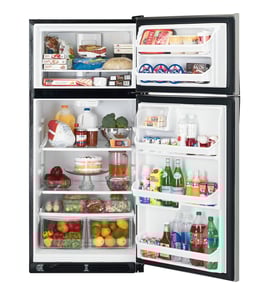



Is GE Cafe considered high end?
Yes. GE Café is considered a high-end (premium) GE appliance line; it typically sits above standard GE models with upgraded design, finishes, and feature sets, while still being positioned below GE’s ultra-premium Monogram line in most product categories.
How GE Café compares to other GE lines
GE organizes products into tiers; the exact features vary by refrigerator type, but the positioning is consistent.
| GE line | Typical market tier | What you usually get |
|---|---|---|
| GE (standard) | Mainstream | Core features, value-focused options |
| GE Profile | Upper-mainstream | More features, more styling, more tech |
| GE Café | Premium | Pro-style design, upgraded finishes, higher feature density |
| Monogram | Ultra-premium | Luxury build, flagship features, higher price points |
What “high end” usually means in practice
When customers call a refrigerator “high end,” they usually mean a mix of design, performance, and convenience features.
- More premium exterior styling (often pro-style handles and coordinated finishes)
- More convenience features (organization, lighting, controls, sometimes smart features)
- More configuration choices (capacity, shelving, storage options)
- Higher typical price than mainstream models
- More emphasis on fit and finish
Why it matters when you are shopping parts
For parts and repairs, the brand line (GE, Profile, Café, Monogram) matters less than the exact model number. Parts are matched to the specific refrigerator model, such as GE GTH16DBEDRWW, because components like door gaskets, shelves, switches, and fan motors vary by design.
- Use the model number to confirm fit before ordering
- Compare the part name and part ID, not just the refrigerator “series”
- Check diagrams and part lists to avoid ordering look-alike parts
For model-specific specs and identification details, use the GTH16DBEDRWW owner's manual.
Last updated: February 2026
What are the disadvantages of a top mount fridge?
Top-mount refrigerators like the GE GTH16DBEDRWW put the freezer on top and the fresh-food section below; the main disadvantages are less convenient access to fresh foods (more bending), fewer premium organization features, and fewer built-in dispenser options compared with many bottom-mount designs. For model-specific features and adjustments, use the GTH16DBEDRWW owner's manual.
Common drawbacks you may notice day to day
- More bending for fresh food: the most-used shelves and crispers sit lower.
- Less flexible organization: many top-mounts have simpler bins and fewer specialty drawers.
- Fewer exterior features: top-mount models are less likely to include through-the-door ice and water.
- Freezer access can be tight: smaller upper freezer openings can make bulky items harder to load.
- Temperature swings from frequent freezer use: opening the top freezer often can affect overall airflow.
Quick comparison: top-mount vs bottom-mount
| Feature | Top-mount refrigerator | Bottom-mount refrigerator |
|---|---|---|
| Fresh-food access | Lower, more bending | Higher, easier reach |
| Freezer access | Eye level | Lower drawer/basket |
| Organization | Often simpler | Often more configurable |
| Dispenser options | Less common | More common |
Why it matters
Layout affects how often doors open, how long they stay open, and how easily you can keep food organized. Better access and organization typically reduce door-open time, which helps temperature stability and can reduce frost and moisture issues.
Tips to reduce the downsides on this style
- Keep everyday items on the upper fresh-food shelves to reduce bending.
- Avoid overpacking the freezer; leave space for airflow.
- Check door closing and sealing regularly; a poor seal increases moisture and frost.
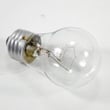
- If the interior light is dim, replace it with the correct appliance bulb such as the GE appliance light bulb, 40-watt 40A15.
Last updated: February 2026
What are the main 5 parts of a refrigerator?
The main five parts that make a refrigerator cool are the compressor, condenser, expansion device, evaporator, and a temperature control (thermostat or thermistor). On your GE GTH16DBEDRWW, these work together to move heat out of the cabinet and keep food at safe temperatures; see the GTH16DBEDRWW owner's manual for model-specific component locations.
The “core 5” cooling-system parts (what each one does)
- Compressor: pumps refrigerant through the sealed system and raises its pressure and temperature.
- Condenser: releases heat to the room air so refrigerant can condense back to a liquid.
- Expansion device (capillary tube or valve): drops refrigerant pressure so it can get cold.
- Evaporator: absorbs heat from inside the refrigerator and freezer as refrigerant boils.
- Temperature control (thermostat/thermistor + control logic): senses temperature and cycles cooling to maintain setpoints.
Parts people often count as “main parts” (and why)
Many customers include airflow and sealing parts because they directly affect cooling performance:
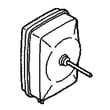
- Evaporator fan motor circulates cold air across the evaporator and into the compartments (example: refrigerator evaporator fan motor WR60X31522).
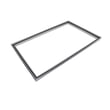
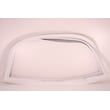
- Door gasket keeps warm, moist air out; leaks cause frost and long run times (example: refrigerator door gasket (white) WR24X10231 and refrigerator freezer door gasket WR24X10228).
- Defrost heater melts frost off the evaporator so airflow stays strong (example: refrigerator defrost heater WR51X10038).
Quick guide: “cooling parts” vs “support parts”
| Category | What it includes | Common symptom when it fails |
|---|---|---|
| Sealed-system cooling | Compressor, condenser, evaporator, expansion device | Not cooling or weak cooling in both sections |
| Airflow and defrost | Evaporator fan, defrost heater | Freezer cold but fridge warm; heavy frost |
| Sealing and insulation | Door gaskets | Moisture, frost, temperature swings |
Why it matters
Knowing the core five helps you troubleshoot faster: if both sections are warm, we focus on the sealed system and controls; if the freezer is cold but the fresh-food section is warm, we often focus on airflow (fan, frost buildup, vents) and door sealing.
Last updated: February 2026
What is the most common problem with GE profile refrigerators?
The most common GE Profile refrigerator problems are ice maker issues and temperature or cooling problems. In practice, those symptoms are often tied to airflow (evaporator fan), defrost performance, or electronic sensing and control. For model-specific checks and settings, use the GTH16DBEDRWW owner's manual.
What “most common” usually looks like
These are the complaints we see most often across GE Profile refrigerators (and many GE top-mount units):
- Ice maker not making ice, slow ice production, or small cubes
- Fresh food section warm while freezer seems cold (airflow imbalance)
- Frost buildup on the freezer back wall (defrost system trouble)
- Loud humming, rattling, or intermittent fan noise
- Door not sealing well, leading to moisture, frost, and temperature swings
Quick checks you can do first (no parts needed)
Before replacing anything, we recommend these basic troubleshooting steps:
- Confirm temperature settings are correct and allow 24 hours after changes
- Make sure vents inside the freezer and refrigerator are not blocked by food
- Check door gaskets for gaps, tears, or areas that do not grip paper
- Listen for the evaporator fan running when the compressor is on
- Look for heavy frost on the freezer rear panel (a strong defrost clue)
Common causes and the parts that often fix them
If the symptoms point to airflow or defrost, these parts are frequent solutions for GE GTH16DBEDRWW:
| Symptom | Likely system | Part that commonly applies |
|---|---|---|
| Fridge warm, freezer cold | Airflow | Refrigerator evaporator fan motor WR60X31522 |
| Frost on freezer back wall | Defrost | Refrigerator defrost heater WR51X10038 |
| Moisture, frost, temp swings | Door seal | Refrigerator door gasket (white) WR24X10231 or refrigerator freezer door gasket WR24X10228 |
Why it matters
Ice maker and cooling complaints are usually “system” problems, not just one setting. Restoring proper airflow, defrosting, and a tight door seal protects food temperatures, reduces frost, and helps the compressor run less.
Last updated: February 2026





