Error Codes



How wide is a 25.6 cubic foot refrigerator?
Most 25.6 cubic foot refrigerators are about 35 to 36 inches wide. For the GE side-by-side refrigerator model GSS25GMPFCES, the exact width depends on the cabinet and door design, so we recommend measuring your installation space and allowing clearance for door swing and airflow.
Typical width range (what you can plan around)
For a 25 to 26 cu. ft. side-by-side refrigerator, these are the most common real-world widths:
- 35 3/4 in. (very common “36-inch class”)
- 36 in. (rounded spec used by many retailers)
- 33 in. (less common, usually smaller capacity)
- 36 1/4 in. (some models with thicker doors or trim)
| Capacity class | Common advertised width | What it usually measures |
|---|---|---|
| 25 to 26 cu. ft. side-by-side | 36-inch class | Cabinet width, not always door-to-door |
| 22 to 24 cu. ft. side-by-side | 33-inch class | Narrower cabinet footprint |
How to measure correctly (so it fits the first time)
Measure in three places and use the largest number:
- Cabinet opening width (wall to wall)
- Depth clearance (especially if you have a counter-depth cutout)
- Door swing clearance (handles and door arc can add space needs)
- Height clearance (include hinges)
- Airflow clearance (space behind and above the refrigerator)
Why it matters
A refrigerator that is “36-inch class” can still bind in a tight opening if the doors, handles, or hinges need extra room. Planning for clearance also helps prevent warm running, poor cooling, and ice maker or water dispenser issues caused by restricted airflow.
Related help for GE refrigerators
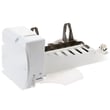
If you are also planning for water and ice hookups or troubleshooting dispenser performance, our DIY guide how to prevent water dispenser and ice maker problems covers the most common setup and maintenance issues.
Last updated: January 2026
What is the most common problem with a GE refrigerator?
The most common problem we see on GE refrigerators like model GSS25GMPFCES is a cooling complaint (fresh food too warm, freezer too warm, or temperatures swinging). In many cases, the root cause is restricted airflow, a failing evaporator fan, a temperature-sensing issue, or a defrost-related frost buildup.
Quick checks before replacing parts
- Confirm the controls are set correctly (freezer typically around 0°F; fresh food around 37°F).
- Make sure vents inside both compartments are not blocked by food packages.
- Listen for the evaporator fan running when the doors are closed (a stalled fan often causes warm temps).
- Check for heavy frost on the freezer back wall (commonly points to a defrost problem).
- Clean dust from condenser coils and verify the condenser fan is running (if equipped).
- Inspect door gaskets for gaps, tears, or areas not sealing.
Common causes and the parts that often fix them
If your GE side-by-side is not cooling well, these are the most frequent “usual suspects”:
| Symptom | Most likely area | What to check first |
|---|---|---|
| Freezer cold, fresh food warm | Airflow problem | Evaporator fan operation, blocked vents |
| Both sections warm | Sealed system or control issue | Condenser airflow, compressor running, control response |
| Temps swing up and down | Sensing/control problem | Temperature sensor readings, board behavior |
| Frost buildup, weak airflow | Defrost problem | Frost pattern, fan noise, airflow at vents |
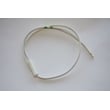
Model-relevant parts that commonly relate to cooling complaints include the refrigerator evaporator fan motor WR60X10307 and the GE profile refrigerator temperature sensor WR55X10025.
Why it matters
Cooling problems are time-sensitive: warm temperatures can spoil food quickly, and restricted airflow or heavy frost can force the compressor to run longer than normal. Catching the issue early often prevents bigger failures and keeps energy use down.
Helpful DIY guidance
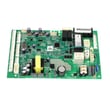
For GE-specific troubleshooting steps that match common cooling and control symptoms, use GE refrigerator error codes.
Last updated: January 2026
Are GE side by side refrigerators good?
GE side-by-side refrigerators like model GSS25GMPFCES are a solid choice for everyday reliability, easy access to both fresh and frozen foods, and convenient dispenser features. Overall performance is typically strong, with the biggest tradeoff being slightly narrower shelf space compared with many French-door designs.
What “good” usually means for a side-by-side
A side-by-side refrigerator is a good fit when you want consistent cooling, organized storage, and quick access to ice and water.
Common strengths we see with GE side-by-sides:
- Stable temperatures for fresh food and freezer sections
- Adjustable shelving and door bins for flexible storage
- Through-the-door ice and water convenience
- Good visibility (many models use bright interior lighting)
- Straightforward maintenance (filters, dispenser parts, fan system)
Common complaints and what to check first
Most issues that affect satisfaction are fixable with basic troubleshooting or routine maintenance.
- Noisy operation: Check for a vibrating water line, items touching the back wall, or a fan area with frost buildup.
- Slow ice production: Replace the water filter, confirm strong water supply, and make sure the freezer temperature is set cold enough.
- Weak water dispensing: A clogged filter or a restricted inlet valve is often the cause.
- Warm spots or uneven cooling: Airflow problems can point to an evaporator fan issue.
If you are diagnosing dispenser or ice-maker performance, these resources help:
- How to prevent water dispenser and ice maker problems
- Common refrigerator ice maker problems and solutions
Parts that commonly affect performance on GSS25GMPFCES
If your “good vs. bad” experience is tied to cooling, ice, or water performance, these model-matched parts are often involved:
| Symptom | Common system | Example model-matched part |
|---|---|---|
| Warm fridge or poor airflow | Evaporator airflow | Refrigerator evaporator fan motor WR60X10307 |
| Slow water flow or no ice fill | Water supply | Refrigerator water inlet valve WR57X30890 |
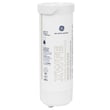
| Bad taste/odor or low flow | Filtration | GE refrigerator water filter XWFE |
Why it matters
A “good” refrigerator is usually one that matches your kitchen habits. Side-by-sides excel at organization and dispenser convenience; keeping the water filter, inlet valve, and airflow system in good shape protects cooling performance and ice production.
Last updated: January 2026