Owner’s manual
 Error Codes



What's the average lifespan of a Whirlpool refrigerator?
Most Whirlpool refrigerators, including the Whirlpool WRS571CIHV04 side-by-side, typically last 10 to 18 years. To reach the high end of that range, we recommend steady maintenance (cleaning, correct temperatures, good airflow) and fixing small issues early.
Typical lifespan and what affects it
A refrigerator’s life is mostly driven by compressor run time, heat removal, and door seal performance.
- 10 to 18 years is the normal lifespan range for Whirlpool refrigerators
- Heavy use (frequent door openings, warm garage installs) shortens life
- Dirty condenser areas increase run time and wear
- Poor door sealing causes temperature swings and frost issues
- Water and ice system leaks can create avoidable damage
For model-specific care and cleaning routines, follow the WRS571CIHV04 owner's manual.
Maintenance that adds years (high impact)
These steps reduce strain on the sealed system and help stabilize temperatures.
- Keep door gaskets clean and sealing flat
- Maintain steady set temps (avoid frequent adjustments)
- Allow proper cabinet clearance for ventilation
- Keep the unit level so doors close fully
- Address unusual noises quickly (fan, ice maker, or airflow issues)
If you’re seeing dispenser or ice issues, our guide on how to prevent water dispenser and ice maker problems helps you avoid common failures that shorten appliance life.
Quick “what to expect” table
| Refrigerator age | What’s common | What we recommend |
|---|---|---|
| 0 to 5 years | Minor adjustments, occasional ice/water quirks | Keep temps stable; follow routine cleaning |
| 6 to 10 years | Fan noise, door seal wear, ice maker wear | Inspect gaskets; service ice maker components |
| 11 to 18 years | Higher repair frequency (cooling, defrost, controls) | Compare repair cost vs. replacement |
Why it matters
Knowing the expected lifespan helps us plan smart repairs. A simple fix (like restoring airflow or correcting a door seal) can prevent compressor overwork, which is the most expensive type of refrigerator failure.
Last updated: February 2026
How to look up Whirlpool model number?
For a Whirlpool refrigerator like model WRS571CIHV04, we look up the model number on the appliance’s rating label, which is typically inside the fresh food compartment around the door opening or near the crisper area. Use that exact model number when ordering parts or checking specifications in the WRS571CIHV04 owner's manual.
Where to find the model number on a Whirlpool refrigerator
Check these common spots first:
- Inside the refrigerator compartment on the side wall near the front frame
- Around the door opening (hinge side or latch side)
- Near the crisper drawers (side wall or ceiling area)
- Behind the base grille area (less common, but worth a quick look)
- On a paper/foil rating plate rather than a removable sticker
How to use the model number once you find it
The model number is the key to matching the correct Whirlpool parts and diagrams.
- Enter the full model number exactly as shown (letters and numbers)
- Use it to confirm fit for items like an ice maker, door gasket, or water inlet valve
- Match parts by model first, then verify by part ID when available
- Keep a photo of the label for future repairs
Example: model number vs. part identifiers
| What you’re looking at | What it’s used for | Example for this model |
|---|---|---|
| Model number | Identifies the exact refrigerator version | WRS571CIHV04 |
| Part ID | Identifies a specific replacement part listing | W10873791 |
| Part number | Manufacturer number for the same part | W11130444 |
Why it matters
Whirlpool often has multiple versions within the same model family. Using the exact model number helps us match the correct components, wiring, and door or dispenser configurations so you do not end up with a part that looks similar but does not fit.
If you are troubleshooting ice production after confirming the model number, the common refrigerator ice maker problems and solutions guide is a good next step.
Last updated: February 2026
What are the disadvantages of an inverter refrigerator?
Inverter refrigerators can cost more up front and can be more expensive to diagnose and repair because the compressor speed is controlled by electronics. For a Whirlpool side-by-side like model WRS571CIHV04, stable power and correct electrical setup (grounded outlet, no extension cord) helps prevent avoidable control and compressor issues; see the WRS571CIHV04 owner's manual.
Common disadvantages (what you may notice)
- Higher purchase price compared with non-inverter models.
- More complex repairs (inverter board, sensors, wiring) and higher labor costs.
- Greater sensitivity to power quality; surges, brownouts, and improper backup power can damage electronics.
- Troubleshooting often requires error-code checks and electrical testing.
- Some users notice different sound patterns (longer, lower-speed run times instead of on-off cycling).
Power and installation factors that matter most
The WRS571CIHV04 manual calls for a dedicated, grounded 115 V, 60 Hz, 15 A or 20 A electrical supply and specifically says not to use an adapter or extension cord. Following those basics reduces nuisance shutdowns and protects the inverter-driven compressor controls.
Quick checklist
- Plug directly into a grounded 3-prong outlet
- Avoid extension cords and plug adapters
- Use a circuit that is not controlled by a wall switch
- Consider surge protection rated for refrigerators (especially in storm-prone areas)
Repair cost and complexity: inverter vs non-inverter
| Topic | Inverter refrigerator | Non-inverter refrigerator |
|---|---|---|
| Compressor operation | Variable speed | On/off cycling |
| Typical failure points | Control boards, sensors, wiring plus compressor | Relays, start devices, compressor |
| Service approach | More diagnostics and electronic testing | Often more mechanical/electrical basic testing |
Why it matters
Inverter technology can improve temperature stability and efficiency, but the tradeoff is that the electronics that deliver those benefits can raise repair complexity. Good electrical practices and correct installation help you get the upside without avoidable failures.
Last updated: February 2026
What is the most common problem with a Whirlpool refrigerator?
The most common problems we see on a Whirlpool refrigerator like model WRS571CIHV04 are cooling complaints, ice maker not making ice, and water leaking. Many of these start with airflow or water-supply basics (dirty coils, door not sealing, clogged drain) before a part failure is involved.
Most common symptoms and what usually causes them
- Not cooling well or warm fridge section: blocked vents, dirty condenser coil, evaporator fan issue
- Freezer cold but fridge warm: airflow restriction, evaporator fan problem, frost buildup from defrost issues
- Ice maker not making ice: water supply problem, frozen fill tube, ice maker failure
- Water under the fridge: defrost drain clog, water line connection leak
- Water dispenser slow or stops: filter restriction, air in the line, inlet valve issue
For model-specific operating tips (including leveling and door alignment guidance), use the WRS571CIHV04 owner's manual.
Quick checks we recommend first (before replacing parts)
- Confirm temperatures: set freezer near 0°F and fresh food near 37°F.
- Check door closing and alignment: a refrigerator that is not level can leak air and create cooling swings.
- Clean airflow paths: keep vents inside the compartments clear of food packages.
- Inspect for leaks: look at the water line connections and the area under the unit.
- Listen for the evaporator fan: a steady fan sound in the freezer area is a good sign.
Common “problem to part” matchups for this model
| Problem you notice | Often involved system | Example part for WRS571CIHV04 |
|---|---|---|
| Ice maker not producing ice | Ice maker assembly, water supply | Refrigerator ice maker W10873791 |
| Warm temps, poor airflow | Evaporator fan | Refrigerator evaporator fan motor WP2315549 |
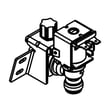
| No water to ice maker/dispenser | Water inlet valve | Refrigerator water inlet valve WPW10341320 |
Why it matters
Cooling, ice, and leak issues tend to snowball. A small airflow problem can cause longer run times and frost buildup; a small water issue can turn into puddles or ice clumps. Catching the root cause early protects food quality and helps avoid repeat repairs.
If you’re seeing a display error or unusual flashing lights, use our Whirlpool refrigerator error codes guide to narrow the failure down faster.
Last updated: February 2026