Error Codes


What is the advantage of a bottom mount fridge?
A bottom-mount refrigerator like the KitchenAid KRFF507HPS03 keeps the fresh-food section at eye level and puts the freezer in a lower drawer. That means less bending for everyday items, easier organization, and faster access to the foods you use most.
- Fresh food is easier to see and reach (less crouching for produce, drinks, leftovers)
- Freezer storage is deeper and more “drawer-like”, which helps group frozen items
- Better day-to-day ergonomics for households that open the refrigerator more than the freezer
- Improved organization with wide shelves and bins in the main compartment
- Less door-open time because you can spot items quickly (helps temperature stability)
| Feature | Bottom-mount refrigerator | Top-freezer refrigerator |
|---|---|---|
| Most-used items | At eye/waist level | Lower shelves require more bending |
| Freezer access | Pull-out drawer | Swing door, shelves |
| Organization style | “Zones” in fridge, bins and drawers | Simpler layout |
| Best for | Frequent fresh-food use | Budget-focused, basic storage |
- Freezer drawer weight: a fully loaded drawer can feel heavy to pull out
- Space in front of the unit: you need clearance for the freezer drawer to open fully
- Habits matter: if you use frozen foods constantly, a top-freezer can feel more convenient
Most households access fresh food far more often than frozen food. With a bottom-mount design, we reduce the repetitive bending that happens during everyday cooking and snacking, while keeping the freezer in a dedicated lower zone.
If you are also planning routine upkeep for KRFF507HPS03, our how to use your refrigerator efficiently tips can help you get the best performance from the layout.
Last updated: January 2026
Why is water collecting in the bottom of my KitchenAid refrigerator?
Water collecting in the bottom of your KitchenAid KRFF507HPS03 refrigerator is most often caused by a clogged or frozen defrost drain, which forces defrost water to overflow into the fresh food compartment instead of draining to the pan underneath. Less commonly, a water supply leak or door sealing issue can contribute.
- Unplug the refrigerator before removing interior panels.
- Look for a sheet of ice or standing water under the crisper drawers; this strongly points to a defrost drain issue.
- Check for food packaging or crumbs blocking the drain opening at the back of the fresh food section.
- Flush the drain with warm water (a turkey baster works well) until it flows freely.
- Inspect the freezer floor for ice buildup; a frozen drain often starts in the freezer and shows up as water in the fridge.
| What you see | Most likely cause | What to do next |
|---|---|---|
| Water under crispers, returns after cleaning | Drain line still restricted or refreezing | Clear again; verify warm water drains quickly |
| Water on floor near back | Water line or valve leak | Inspect tubing and valve connections |
| Frost or moisture around doors | Door not sealing well | Inspect gaskets and door alignment |
If the drain keeps clogging or refreezing, the drain outlet hardware may need attention.
- Refrigerator drain funnel W10503218: Helps guide defrost water into the drain path; damage or misalignment can contribute to overflow.
- If you suspect a supply leak (especially near the back), inspect the inlet valve area; a failing valve can seep water even when not dispensing.
Standing water can lead to recurring ice buildup, odors, and food spoilage risk. Fixing the drain path restores normal defrost drainage and helps the KRFF507HPS03 maintain stable temperatures.
Last updated: January 2026
What is the life expectancy of a KitchenAid refrigerator?
A KitchenAid refrigerator like model KRFF507HPS03 typically lasts 12 to 17 years with normal household use. Regular maintenance (clean coils, good door sealing, and on-time filter changes) helps you stay closer to the high end of that range.
- Condenser coil cleanliness (dust makes the compressor work harder)
- Door seal condition (air leaks cause longer run times)
- Airflow inside the cabinet (overpacking blocks vents)
- Water quality and filter maintenance (protects the dispenser and ice system)
- Room temperature and ventilation around the refrigerator
Even without model-specific lifespan specs, these steps apply well to KitchenAid bottom-mount designs:
- Vacuum and brush the condenser area regularly (especially if you have pets)
- Keep doors aligned and closing smoothly; fix gaps early
- Replace the water filter on schedule; use the correct filter style for your unit
- Replace the air filter if odors linger or airflow seems restricted
- Keep freezer drawers sealing fully and free of ice buildup
Helpful how-to: how to use your refrigerator efficiently
These are parts we often see customers replace over the life of a refrigerator (not because they fail on a schedule, but because they are serviceable):
| Part | What it impacts | Typical symptom when it needs attention |
|---|---|---|
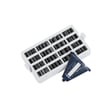
| Refrigerator air filter W10311524 | Odor control and air freshness | Food odors linger, stale smell returns quickly |
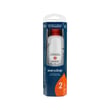
| Refrigerator cartridge wrap assembly EDR2RXD1 | Water and ice filtration | Slow water flow, bad taste/odor, filter light stays on |
| Door gaskets | Temperature stability and run time | Frost, sweating, warm spots, longer compressor run |
A refrigerator that runs longer than necessary uses more energy and puts extra wear on the sealed system (compressor, condenser, evaporator). Simple upkeep can reduce run time, protect food temperatures, and delay major repairs.
Last updated: January 2026
What is the most common problem with a KitchenAid refrigerator?
On the KitchenAid KRFF507HPS03 bottom-mount refrigerator, the most common customer-reported problems typically fall into three buckets: cooling or temperature inconsistency, ice maker issues, and water leaks. These symptoms usually trace back to airflow, water supply, or control-related components rather than the sealed system.
- Fridge too warm or temps swing: restricted airflow, a fan problem, or a control/sensor issue
- Ice maker not making ice or making small cubes: water supply restriction, freezing in the fill path, or an ice maker fault
- Water leaking or puddles: drain path issues, loose tubing, or a valve seep
- Noisy operation: fan blade rubbing, fan motor wear, or vibration from panels
- Lights or dispenser acting odd: door switch or electronic control behavior
- Confirm the doors seal tightly and nothing is holding them open.
- Set temps to typical targets: 37°F fresh food and 0°F freezer.
- Make sure vents inside are not blocked by food packages.
- If ice is slow, verify the household shutoff valve is fully open and the water line is not kinked.
- If you see water, check whether it is coming from the dispenser area, under crispers, or from the freezer floor.
| Symptom | Commonly involved part | Example from this model’s parts |
|---|---|---|
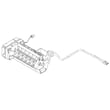
| Ice maker not making ice | Ice maker assembly | Ice maker as W11658802 |
| Fill tube freezing | Fill tube heater | Fill tube heater W11087201 |
| Water dispenser/ice issues | Dual water valve | Valve, dual water W11482383 |
| Odors in fresh food section | Air filter | Refrigerator air filter W10311524 |
Temperature swings, slow ice production, and small leaks can look “minor,” but they often lead to food spoilage, ice clumping, or hidden water damage. Catching the root cause early usually keeps the repair simpler and less expensive.
If the issue is water quality, slow dispensing, or ice maker performance, we recommend starting with how to replace the water filter in a KitchenAid refrigerator.
Last updated: January 2026