 Installation guide
 Owner’s manual



What is the life expectancy of a GE Profile dishwasher?
A GE Profile dishwasher typically lasts 10 to 15 years with normal household use and basic maintenance. For your GE GDT655SGJ4BB, keeping the wash system clean and addressing small issues early helps you stay in that range.
What affects how long it lasts
- Usage frequency: multiple loads per day shortens lifespan faster than 3 to 5 loads per week
- Water quality: hard water can leave mineral buildup on spray arms and the heating system
- Cleaning and upkeep: regular cleaning reduces strain on the circulation pump and drain pump
- Drying heat: heavy heated-dry use increases wear on the heating element
- Installation quality: proper installation reduces leaks, vibration, and wiring issues (see the installation guide)
Maintenance that extends dishwasher life
- Clean the filter and sump area regularly (food debris forces the pump to work harder)
- Inspect and rinse spray arm holes; replace a cracked or clogged arm if cleaning does not restore spray
- Run a monthly cleaning cycle using a dishwasher cleaner to reduce grease and mineral buildup
- Check the door seal area for residue and wipe it clean to help prevent leaks
- Use the right detergent amount for your water hardness and avoid over-sudsing
Common wear items and what they impact
| Part or system | What you may notice | Example part for this model |
|---|---|---|
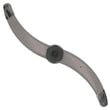
| Spray system | Poor cleaning, gritty dishes | Dishwasher spray arm, lower WD22X33499 |
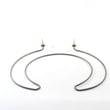
| Heating/drying | Dishes not drying, cool water | Dishwasher heating element |
| Drain system | Standing water, slow drain | Drain pump assembly |
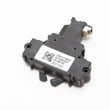
| Controls | No start, dead panel, random stopping | Electronic control board |
Why it matters
Knowing the typical 10 to 15 year lifespan helps you decide when maintenance and targeted part replacement make sense versus planning for a replacement. For model-specific care steps and cleaning guidance, use the GDT655SGJ4BB owner’s manual.
Last updated: January 2026
Can a clogged drain cause an FTD error?
Yes. On the GE GDT655SGJ4BB dishwasher, a clogged drain path is a common reason the unit cannot pump water out, which can trigger a drain-related fault such as FTD. Clearing the filter, air gap, disposer connection, or drain hose usually restores normal draining (see the GDT655SGJ4BB owner’s manual).
What to check first (fast drain-path checklist)
- Cancel the cycle so the dishwasher starts draining; then confirm the tub empties.
- Check the sink and disposer: if the sink drains slowly, the dishwasher often will not drain well.
- If your dishwasher drains through a disposer, make sure the disposer inlet plug was removed.
- Inspect the drain hose for kinks or crushing behind or under the dishwasher.
- Clean the air gap (if installed) and clear any debris.
- Clean the bottom filters (Ultra-Fine Filter and Fine Filter) so water can reach the drain pump.
How a clog turns into an FTD-style drain error
A dishwasher drains in a chain: tub filter area → drain pump/impeller → drain hose → air gap or high drain loop → disposer or drain line. A blockage anywhere in that chain can leave water standing in the tub and cause a fail-to-drain condition.
| Where the clog is | What you’ll notice | Typical fix |
|---|---|---|
| Air gap | Water standing in tub, gurgling at sink | Clean air gap cap and passage |
| Disposer connection | Dishwasher drains poorly after install | Clear disposer inlet and run disposer |
| Drain hose | Intermittent draining, hose feels pinched | Re-route hose, remove kinks |
| Filters | Poor cleaning plus standing water | Remove and rinse filters |
When a part is likely involved
If the drain path is clear but the dishwasher still will not pump out, the drain pump can be the next suspect. For this model, the drain pump is the drain pump asm WD19X24829.
Why it matters
A drain restriction can leave dirty water in the tub, reduce cleaning performance, and cause odors. Fixing the clog quickly also helps prevent repeat drain faults.
Last updated: January 2026
Are GE Profile dishwashers any good?
Yes. GE Profile dishwashers are a strong choice for most homes because they are built for quiet operation, solid cleaning performance, and convenient features (like flexible racks and advanced wash options). For your GE dishwasher model GDT655SGJ4BB, we recommend confirming the exact feature set in the GDT655SGJ4BB owner's manual.
What “good” usually means for GE Profile dishwashers
When customers compare dishwashers, these are the areas that most often define overall satisfaction:
- Noise level: Many GE Profile models are designed to run quietly, which matters in open kitchens.
- Cleaning performance: Strong spray coverage and filtration help remove normal food soil without pre-rinsing.
- Drying results: Drying depends on cycle selection, rinse aid use, and a working heater.
- Rack flexibility: Adjustable tines, a third rack (on some models), and bottle jets (on some models) improve loading.
- Reliability and serviceability: Common wear items (spray arms, pumps, heaters, latches) are replaceable.
Quick reality check: performance depends on setup and maintenance
Even a “good” dishwasher can underperform if water temperature, loading, or maintenance is off.
| What you notice | Most common cause | What to do first |
|---|---|---|
| Dishes not clean | Clogged filter or blocked spray arm holes | Clean filter and inspect spray arms |
| Not drying well | No rinse aid or heater issue | Use rinse aid; verify heat/dry settings |
| Won’t start | Door not fully latched or control lock | Close firmly; check control lock |
| White film | Hard water minerals | Use rinse aid; run a cleaner cycle |
Model-relevant parts that affect “how good it is” day to day
If cleaning or drying is slipping on GDT655SGJ4BB, these parts commonly influence results:
- Dishwasher spray arm, lower WD22X33499 (spray coverage for the lower rack)
- Dishwasher heating element WD05X30818 (water heating and drying performance)
- GE dishwasher door latch lock WD21X10490 (starting reliability and safe operation)
Why it matters
A dishwasher’s “goodness” is mostly about consistent results: clean dishes, acceptable cycle time, and low noise. Keeping filters clean, using rinse aid, and ensuring spray arms spin freely protects performance over the life of the machine.
Last updated: January 2026
What is the most common problem with a GE dishwasher?
The most common GE dishwasher problems are “won’t run” and “won’t drain” symptoms caused by a tripped breaker, a door that is not fully latched, a clogged filter/drain path, or a control issue. For GE model GDT655SGJ4BB, start with the quick checks in the GDT655SGJ4BB owner’s manual.
Most common symptoms and what usually causes them
- Dishwasher won’t start: door not firmly closed, control panel locked, wall switch off, breaker tripped
- Not draining: blocked filter area, drain hose restriction, drain pump issue
- Not drying: heater not heating, rinse aid issues, cycle selection
- Not cleaning well: spray arm blockage, overloaded racks, detergent cup blocked
- Suds/foam: wrong detergent (hand dish soap) or too much detergent
Quick troubleshooting checklist (in order)
- Confirm the door closes and latches firmly; a weak latch can stop the cycle.
- Check the breaker and any under-sink wall switch that powers the dishwasher.
- If the tub is full of suds, stop the cycle and let suds dissipate; use only automatic dishwasher detergent.
- Inspect and clean the filter area; if the float is stuck, lightly tap it and reinstall the filter.
- If wash performance is poor, check for clogged spray arm holes and clear debris.
Parts that commonly fix these problems on GDT655SGJ4BB
| Symptom | Common part involved | What it affects |
|---|---|---|
| Won’t start or stops mid-cycle | GE dishwasher door latch lock WD21X10490 | Confirms the door is closed so the control will run |
| Poor cleaning, detergent not rinsing out | Dishwasher spray arm, lower WD22X33499 | Wash jet coverage and water flow to dishes |
| No heat, poor drying | Dishwasher heating element WD05X30818 | Water heating and drying performance |
| Dead/no response or erratic operation | Dishwasher electronic control board WD21X24901C | Cycle control and power management |
Why it matters
Most “GE dishwasher problems” are simple flow or safety-interlock issues. Fixing a latch, clearing a filter, or restoring power prevents repeat failures and helps the circulation pump and heating system operate correctly.
Last updated: January 2026





