Owner’s manual
 Error Codes




What's the lifespan of a bottom freezer fridge?
Most bottom-freezer refrigerators, including the Samsung RF18A5101WW, typically last 15 to 20 years with normal household use. Lifespan depends most on airflow, door-seal condition, and keeping temperatures set correctly; our owner's manual covers operating and care basics that help maximize service life.
What affects lifespan the most
- Ventilation and clearance: Keep airflow around the cabinet; restricted clearance makes the system work harder.
- Air vents inside the fridge: Don’t block rear vents with food packages; poor circulation can cause warm spots and longer run times.
- Door sealing: Worn or warped gaskets leak cold air and increase compressor run time.
- Temperature settings: For best performance, set the freezer to 0 °F (-18 °C) and the fridge to 37 °F (3 °C).
- Usage patterns: Frequent door openings, hot food loads, and overpacking shorten component life.
Quick care checklist (high impact, low effort)
- Leave space between food and the rear air vents.
- Keep condenser area and vents free of dust and pet hair.
- Confirm doors close fully and don’t “bounce” open.
- Avoid overloading door bins and shelves.
- Use Power Cool and Power Freeze only when needed (they increase energy use and run time).
Common wear items vs. major repairs
| Category | Examples | What you’ll notice |
|---|---|---|
| Wear/maintenance | Door gaskets, fan-related airflow issues | Frost, sweating, temperature swings |
| Major sealed-system | Compressor, evaporator, filter dryer | Warm fridge/freezer, long run times |
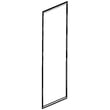
If you’re seeing air leaks or moisture around the doors, replacing a gasket is a common fix; for this model, options include the Samsung refrigerator door gasket DA63-07733A and the Samsung refrigerator freezer door gasket DA97-16990A.
Why it matters
A bottom-mount refrigerator relies on steady airflow and tight door seals to hold safe food temperatures efficiently. When the system runs longer to compensate (air leaks, blocked vents, poor clearance), key components like the compressor and fan motor wear faster.
Last updated: February 2026
What are the disadvantages of a bottom freezer?
Bottom-freezer refrigerators like the Samsung RF18A5101WW put fresh food at eye level, but the tradeoff is more bending and heavier freezer-drawer use. The freezer drawer can also be easier to overload, which can lead to poor closing and frost buildup (see the owner's manual).
Common disadvantages (what you notice day to day)
- You bend more to reach frozen foods, especially items stored in the lower basket.
- The freezer drawer gets heavy when fully loaded, so it takes more effort to open and close.
- Organization can be harder; stacked items in a deep drawer are easier to lose or crush.
- Freezer access is slower than a swing door; you often have to pull the drawer fully open.
- If the drawer is overfilled, it may not close correctly, which can cause frost buildup.
Wear-and-tear considerations (parts that can be affected)
A bottom-mount design puts frequent stress on drawer rails, baskets, and door sealing surfaces. When the drawer does not close squarely, warm air leaks in and moisture turns into frost.
| Issue you see | What it often points to | What to check first |
|---|---|---|
| Frost in freezer | Drawer not closing fully | Remove excess food, re-seat baskets |
| Drawer feels rough or misaligned | Rail or basket alignment problem | Inspect rails and basket position |
| Condensation near door edges | Door seal not sealing | Clean gasket, check for gaps |
Tips to reduce the downsides
- Keep heavier frozen items low and centered so the drawer tracks straight.
- Do not pack food above the basket height; it can prevent full closure.
- Make sure baskets are mounted in the correct position so the door closes properly.
- Keep interior vents clear so airflow stays consistent.
- If you see persistent frost or leaks, inspect the drain path; a damaged drain component such as the refrigerator drain tube DA97-04049D can contribute to water issues.
Why it matters
Most bottom-freezer complaints come down to drawer loading and sealing. When the drawer is overloaded or misaligned, the freezer can run longer, build frost faster, and become less convenient to use.
Last updated: February 2026
What are the common problems with RF18A5101WW?
Common RF18A5101WW refrigerator problems usually show up as warm temperatures, frost or ice buildup that blocks airflow, water leaking or puddling, and ice maker issues. We use the owner's manual to confirm settings, clearances, and safe troubleshooting steps before replacing parts.
Most common symptoms and what they point to
- Not cooling or uneven cooling: airflow restriction (ice buildup), fan issue, or control problem
- Frost buildup on the back wall or in the freezer: evaporator area icing that reduces airflow
- Water under the crisper or on the floor: drain system restriction or a damaged drain tube
- Ice maker not making ice: water supply issue, ice maker fault, or temperature too warm
- Noisy operation: fan motor or evaporator cover and fan assembly issues
Quick checks we recommend first (no parts needed)
- Confirm temperatures: set refrigerator to about 37°F and freezer to about 0°F.
- Give it proper clearance: this model family needs space for ventilation; the manual lists the installation clearances.
- Wait after moving: after installation and turning it on, let it stand 2 hours before loading food.
- Check door sealing: look for gaps, torn gasket areas, or doors not closing fully.
- Look for airflow blockage: heavy frost or packed items can block vents and cause warm temps.
Parts that commonly solve these problems
| Symptom | Likely area | Part on this model that often applies |
|---|---|---|
| Water leaking/puddles | Defrost drain path | Refrigerator drain tube DA97-04049D |
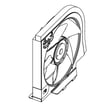
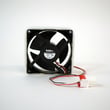
| Warm temps, noise, poor airflow | Evaporator fan area | Refrigerator fan motor DA97-20025A or refrigerator freezer evaporator cover and fan assembly DA97-11824B |
| Ice maker not working | Ice maker assembly | Samsung refrigerator ice maker da97-07603b |
| Doors not sealing, moisture/frost | Door gasket | Samsung refrigerator door gasket DA63-07733A or Samsung refrigerator freezer door gasket DA97-16990A |
| Erratic temps or won’t respond | Controls/sensing | Samsung Refrigerator Electronic Control Board (DA92-01364A) or Sensor Temp (DA32-00029X) |
Why it matters
Cooling and ice-making problems on a Samsung bottom-mount refrigerator are often airflow-related. Fixing the root cause (fan, drain, gasket, or controls) prevents food spoilage, repeat icing, and water damage.
For ice-specific troubleshooting steps, we also use why your Samsung fridge stopped making ice and how to fix it.
Last updated: February 2026