




What is the life expectancy of a range hood?
Most range hoods, including the Kenmore 2335208910, typically last 10 to 20 years; about 15 years is a solid average with normal cooking and routine cleaning. Lifespan is driven mainly by grease buildup, heat exposure, and how hard the fan motor has to work.
What affects how long a range hood lasts
- Filter and grease buildup: clogged filters restrict airflow and strain the motor
- Cooking frequency and style: high-heat frying and daily cooking shorten life
- Vent duct condition: crushed, long, or blocked ducting reduces airflow
- Moisture and heat: steam and high temperatures accelerate wear on switches and wiring
- Cleaning habits: regular degreasing prevents sticky controls and noisy operation
Signs it may be near end of life
- Fan runs but barely moves air
- New or worsening noise (rattle, hum, grinding)
- Fan or lights work intermittently
- Controls feel sticky, loose, or inconsistent
- Visible damage such as a cracked Light lens S97013316
Repair vs. replace: a practical guide
| Situation | Usually makes sense to do | Why |
|---|---|---|
| Hood is under ~10 years and issue is cosmetic or minor | Repair | Low cost, restores normal use |
| Hood is ~10 to 20 years and performance is still good | Maintain | Cleaning and small parts can extend life |
| Hood is older and has repeated electrical or motor issues | Replace | Reliability and performance drop over time |
Why it matters
A range hood that is pulling air correctly removes smoke, grease, and odors; when airflow drops, the motor runs hotter and longer, which shortens the life of the hood and can lead to more frequent part failures.
Helpful next step
If your hood is running but not performing well, follow our troubleshooting steps in range hood fan not pulling much air.
Last updated: February 2026
Can range hoods be repaired?
Yes. We repair most Kenmore range hoods, including model 2335208910, by diagnosing the failed function (fan, lights, or controls) and replacing the specific worn or damaged part rather than replacing the entire hood.
What “repairable” usually means
Most range hood problems come from a small set of serviceable parts. Common repair wins include:
- Replacing a cracked or missing lens such as the light lens S97013316
- Replacing broken control hardware such as the knob S600348
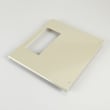
- Replacing a damaged control face such as the control panel S97014285
- Reseating or replacing mounting and sealing pieces (rubber mounts, foam seals)
- Tightening or replacing stripped fasteners
Quick troubleshooting before you buy parts
Start with the simplest checks first; they often solve “dead” or intermittent symptoms.
- Verify the hood has power at the outlet or junction box (reset the breaker if needed)
- If the fan runs but airflow is weak, check for a blocked damper or duct restriction
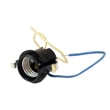
- If lights do not work, try a known-good bulb first (correct base and wattage)
- If switches feel loose or knobs slip, inspect the shaft and knob fit
- If the fan or lights work only sometimes, inspect the control area for heat damage or loose connections
Symptom-to-fix guide
| Symptom | Most likely area | Typical repair approach |
|---|---|---|
| Lights do not work | Bulb, socket, lens | Test bulb, inspect socket, replace lens if broken |
| Fan does not work | Switch/control, motor circuit | Check switch operation and wiring; replace failed control parts |
| Fan turns on by itself | Switch/control | Inspect and replace the control/switch components |
| Hood is noisy or vibrating | Mounting, blower area | Tighten mounting, check rubber mounts and alignment |
For step-by-step diagnosis, use our DIY symptom guide: range hood lights and fan don't work.
Why it matters
A properly working range hood protects cabinets and indoor air by removing heat, smoke, and grease. Fixing a small control or lighting issue early also helps prevent heat and grease buildup that can shorten the life of the fan and wiring.
Last updated: February 2026
What are the parts of a range hood called?
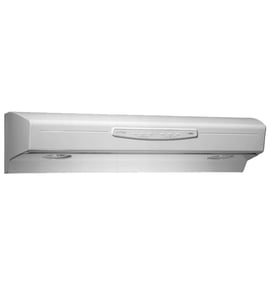
A range hood is typically made up of the hood body (canopy), a venting path (damper and duct connection), a fan system, lighting, filters, and a control area. On Kenmore model 2335208910, you will commonly see these parts referenced by their functional names.
Common range hood part names (and what they do)
- Hood canopy (hood body): the main shell that mounts under the cabinet or on the wall.
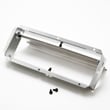
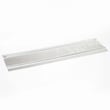
- Vent damper / damper cover: helps prevent outside air from backdrafting into the kitchen (see range hood vent damper cover S98005221).
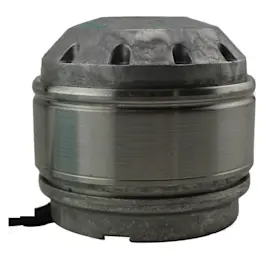
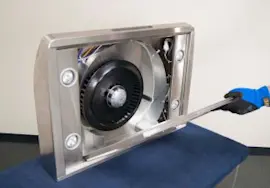
- Fan and blower assembly: pulls air, smoke, and odors through the hood and into the ducting (or through filters on non-ducted setups).
- Grease filter(s): captures grease before it reaches the blower and duct.
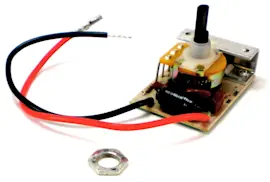
- Control panel and switches: where you select fan speed and lights (see control panel S97014285).
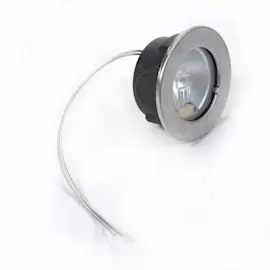
- Light lens / lamp cover: shields the bulb and spreads light (see light lens S97013316).
Quick reference: name vs. where you’ll find it
| Part name | Typical location | Common reason to replace |
|---|---|---|
| Control panel | Front underside | Buttons/switches loose, cracked, or not responding |
| Light lens | Under the hood near bulbs | Lens cracked, yellowed, or missing |
| Vent damper cover | At the duct outlet | Rattling, poor sealing, backdraft noise |
| Knob | Front control area | Missing, stripped, or won’t turn |
Why the names matter when ordering parts
Using the correct part name helps match the right diagram and hardware for your Kenmore 2335208910 range hood. For example, “control panel” and “control panel cover” are different items, and ordering the wrong one can prevent proper fit and operation.
Tips to identify the right part on your hood
- Look for the location first (front controls, light area, duct outlet).
- Match the function (lighting, venting, mounting, control).
- Compare color/finish when applicable (for example, a black control cover vs. standard).
- If a piece is cosmetic, check for “cover” in the name.
- If it’s mounting-related, look for seals, bushings, nuts, or rubber mounts.
For more help understanding what commonly fails and what it’s called, use our DIY overview: what are the most common range hood parts that need replacing.
Last updated: February 2026
Why is the fan not working on my Kenmore range hood?
If the fan isn’t working on your Kenmore range hood model 2335208910, the most common causes are a failed fan switch/control, a loose or burned wire connection, or a problem in the control panel assembly. Start with power and simple control checks before replacing parts.
Quick checks we recommend first
- Confirm the hood has power (try the light and any other speeds).
- Turn the fan knob/switch through every speed; listen for any motor hum.
- Reset the circuit breaker (or replace the fuse) feeding the hood.
- If the hood plugs into an outlet, reseat the plug and test the outlet.
- If the fan turns on intermittently or by itself, focus on the switch/control area.
What usually fails (and what to inspect)
Range hoods commonly lose fan operation due to a control issue or a wiring issue at the control panel.
| What you observe | Most likely area | What to do next |
|---|---|---|
| Light works, fan never runs | Fan switch/control circuit | Inspect control panel wiring; consider replacing the control panel parts |
| Fan hums but won’t spin | Fan motor or blower wheel issue | Check for obstruction; if free-spinning, motor is the next suspect |
| Fan works only on one speed | Switch contacts failing | Replace the switch/control (often part of the control panel assembly) |
| Fan starts when you touch/wiggle knob | Loose knob/shaft or worn switch | Check knob fit; inspect switch shaft and mounting |
Parts on this model that relate to fan controls
These parts don’t guarantee a fix by themselves, but they are commonly involved when the fan control area is loose, damaged, or not making contact:
- Control panel S97014285 (fan and light control interface area)
- Cover control panel S99090983 (protects and supports the control area)
- Knob S600348 (can slip or crack and stop engaging the switch shaft)
Why it matters
A non-working fan reduces ventilation, which lets heat, smoke, and grease stay in the kitchen. Fixing the control or wiring issue early also helps prevent overheating or further electrical damage inside the hood.
If you’re ready to troubleshoot deeper
Use our step-by-step symptom guide for targeted checks (switch, wiring, motor): range hood fan doesn't work
Last updated: February 2026