Error Codes




Is a top mount or bottom mount fridge better?
A bottom-mount refrigerator like the GE GNE21FYKHFFS is better when you want fresh-food items at eye level and more freezer organization; a top-mount is better when you want the simplest layout and typically the lowest purchase cost. “Better” depends on how you shop and how often you use the freezer.
| Feature | Top-mount (freezer on top) | Bottom-mount (freezer on bottom) |
|---|---|---|
| Fresh-food access | You bend more | Most-used items are easier to reach |
| Freezer organization | Usually a shelf or two | Often baskets and pull-out storage |
| Space for large frozen items | Can be easier on a shelf | Easier in a deep drawer, but stacking can hide items |
| Typical maintenance pain points | Door gaskets, defrost issues | Drawer seals, ice maker and airflow issues |
We recommend using these practical “tie-breakers”:
- If you cook daily, bottom-mount wins because the refrigerator section is the most convenient.
- If you use the freezer most (bulk frozen foods), top-mount can feel easier to see and sort.
- If you have limited floor space in front of the unit, a bottom freezer drawer needs room to pull out.
- If you want better freezer organization, bottom-mount designs usually deliver it.
- If you want fewer moving parts in the freezer area, top-mount layouts are often simpler.
Layout affects airflow, door sealing, and how often doors stay open. Longer door-open time can lead to temperature swings, frost buildup, and ice maker or dispenser complaints.
If you’re troubleshooting cooling consistency on a bottom-mount like the GNE21FYKHFFS, common “layout-related” checks include:
- Confirm doors and drawer close fully and seals are clean.
- Avoid blocking vents with tall packages.
- Watch for frost patterns that suggest an airflow or defrost issue.
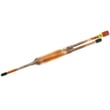
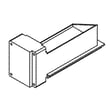
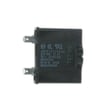
- If temperatures seem off, a failed sensor can be a cause; see GE profile refrigerator temperature sensor WR55X10025.
- For cooling or display issues, use GE refrigerator error codes to narrow down what the control is detecting.
Last updated: February 2026
What are the disadvantages of a bottom freezer refrigerator?
Bottom-freezer refrigerators like the GE GNE21FYKHFFS keep fresh food at eye level, but the tradeoffs are real: you bend more for frozen items, the freezer drawer can feel cramped or harder to organize, and the heavy drawer hardware sees more wear over time.
- More bending for frozen food: the freezer is low, so frequent freezer use is less convenient.
- Drawer weight and wear: a fully loaded freezer drawer puts extra stress on slides, baskets, and door alignment.
- Freezer organization can be trickier: deep drawers can hide items; baskets help but still require digging.
- Higher repair cost potential: many bottom-mount designs use more complex door, drawer, and airflow components.
- Less ideal for kids or mobility limits: frozen items are harder to reach safely.
If the “disadvantage” feels like a performance issue (not just layout), these quick checks often help:
- Confirm the refrigerator and freezer temps are set correctly.
- Make sure the freezer drawer closes fully and seals evenly.
- Avoid overpacking; blocked vents reduce airflow.
- Clean dust from the condenser area to improve cooling efficiency.
- If you see temperature swings, a sensor or airflow part may be involved (for example, the GE profile refrigerator temperature sensor WR55X10025 or the refrigerator air damper WR60X27396).
| Feature | Bottom freezer | Top freezer |
|---|---|---|
| Fresh food access | Easier (eye level) | More bending |
| Frozen food access | More bending | Easier |
| Freezer storage style | Drawer and baskets | Shelves and bins |
| Wear points | Drawer slides, baskets, alignment | Door hinges, shelves |
Knowing these disadvantages helps you separate normal design tradeoffs (bending, drawer organization) from fixable problems (poor sealing, airflow restrictions, temperature instability). That makes it easier to decide whether you need an adjustment, maintenance, or a replacement part.
Last updated: February 2026
How to remove bottom grille on GE refrigerator?
On the GE GNE21FYKHFFS bottom-mount refrigerator, the bottom grille (base grille or toe grille) typically pulls off after you release its retaining clips or remove a couple of screws, depending on the exact grille style. Once it is free, pull straight out to avoid cracking the tabs.
- Unplug the refrigerator or switch off power at the breaker (safer when working near wiring and fans).
- Open both fresh food doors for better access.
- Look along the top edge of the grille for clip points.
- Pull the grille straight toward you with even pressure from both sides.
- If it will not release, check the lower corners for Phillips-head screws and remove them.
- Reinstall by lining up the tabs, pushing the grille into place, then reinstalling screws (if used).
These checks prevent broken tabs and bent trim.
- Look for hidden fasteners: Some versions use 2 screws at the bottom corners.
- Check for a center locking tab: Press the tab with a flat-blade screwdriver while pulling.
- Warm the room slightly: Cold plastic is more brittle; let the unit sit at room temp for a bit.
- Pull from the ends, not the middle: The middle flexes and can crack.
Removing the bottom grille gives you access to components that affect cooling and noise. Keeping this area clean helps airflow and efficiency.
| What you see behind the grille | Why it matters | Example related part |
|---|---|---|
| Condenser fan area | Poor airflow can cause warm temps and longer run times | Refrigerator condenser fan WR60X10209 |
| Wiring and sensors | Loose connections can cause erratic temps | GE profile refrigerator temperature sensor WR55X10025 |
If you are removing the grille as part of a door or mullion adjustment, our guide on how to remove a GE french door refrigerator flipper mullion pairs well with this task.
Last updated: February 2026
What is the most common problem with GE profile refrigerators?
The most common problems we see on GE Profile refrigerators like model GNE21FYKHFFS are ice maker issues (no ice, slow ice, clumping) and temperature complaints (fresh food too warm or freezer too warm). These problems usually trace back to airflow, frost buildup, or a failed sensor or control.
- Ice maker not making ice or slow production: water supply restriction, filter restriction, ice maker failure
- Fresh food section warm but freezer cold: airflow problem, damper issue, evaporator fan issue
- Both sections warm: condenser airflow problem, sealed system or compressor issue
- Temperature swings: thermistor (temperature sensor) reading wrong, control reacting incorrectly
- Frost buildup and reduced cooling: defrost system problem
- Confirm the controls are set to normal temps (typical targets: 37°F fresh food, 0°F freezer).
- Make sure vents are not blocked by food packages (air must circulate).
- Check door closing and gasket seal; poor sealing causes moisture, frost, and warm temps.
- If you have a water dispenser or ice maker, replace the water filter on schedule; a restricted filter can reduce water flow.
- Listen for fan operation (evaporator fan inside, condenser fan near the compressor).
| Problem area | What fails | Example part for this model |
|---|---|---|
| Temperature sensing | Thermistor reads wrong | GE profile refrigerator temperature sensor WR55X10025 |
| Airflow to fresh food | Damper sticks or won’t open | Refrigerator air damper WR60X27396 |
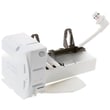
| Ice production | Ice maker module wears out | Refrigerator ice maker WR30X39385 |
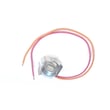
| Defrost protection | Defrost thermostat opens early | Refrigerator defrost bi-metal thermostat WR50X10069 |
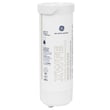
| Water flow | Filter restriction or overdue change | GE refrigerator water filter XWFE |
Ice maker and cooling complaints often share the same root cause: temperature stability and airflow. Fixing the underlying airflow, defrost, or sensor issue prevents repeat failures and helps the refrigerator hold safe food temperatures.
- Use our GE refrigerator error codes guide if the display shows a code; it can quickly narrow the problem to a sensor, fan, or control issue.
- If the issue is ice or water related, follow how to replace the water filter in a GE refrigerator to restore proper flow and reduce dispenser and ice maker problems.
Last updated: February 2026