Installation guide
 Owner’s manual
 Error Codes
How to replace filter in KitchenAid refrigerator?
On KitchenAid model KBRS36FTX02, the water filter is in the base grille below the freezer door. Press the eject button, pull the filter straight out, move the cap to the new filter, then push the new filter in until it fully seats and the eject button pops back out (expect a little water spill). See the KBRS36FTX02 owner's manual.
- Press the eject button and pull the filter straight out by the cap.
- Turn the filter cap counterclockwise to remove it from the old filter.
- Remove the protective covers from the new filter O-rings (make sure the O-rings stay in place).
- Install the cap on the new filter; align the ridge and arrow, then turn clockwise until it snaps.
- Push the new filter into the base grille opening until it’s fully engaged (the eject button will pop out).
- Pull gently on the cap to confirm the filter is locked in.
- Do not twist the cap while pulling the filter out; twisting can separate the cap from the filter.
- Keep a towel handy; water in the old filter can spill during removal.
- After replacement, discard the first three batches of ice.
The correct replacement is the refrigerator water filter EDR3RXD1.
| What you’re doing | What to look for | What it means |
|---|---|---|
| Removing old filter | Eject button releases, filter slides out | Filter is not stuck in the housing |
| Installing new filter | Eject button depresses then pops out | Filter is fully seated |
| After install | No drips at base grille | Cap and O-rings are sealing |
A properly installed refrigerator water filter protects water flow to the dispenser and ice maker, reduces taste and odor issues, and helps prevent leaks caused by a mis-seated cap or damaged O-rings.
Last updated: February 2026
How to clean condenser coils on KitchenAid built-in refrigerator?
For your KitchenAid KBRS36FTX02 built-in bottom-mount refrigerator, we clean the condenser area by turning power off, removing the top grille or base grille (as equipped), vacuuming dust with a soft brush attachment, then reinstalling the grille. This restores airflow and helps the refrigerator cool efficiently.
- Turn cooling off using the power on/off switch (or unplug the refrigerator if accessible). See the owner's manual.
- Remove the grille:
- Top grille: grasp both ends, push straight up, then pull straight out.
- Base grille: remove the lower grille if your installation uses one.
- Vacuum dust and lint using a vacuum with a soft brush; clean the grille and the open areas behind it.
- Reinstall the grille and restore power.
- Use a soft brush tool; stiff bristles can bend fins and reduce airflow.
- Keep the vacuum nozzle slightly off the coils; let the brush do the work.
- Clean the surrounding intake and exhaust openings, not just the coil surface.
- If you see heavy pet hair buildup, clean more often.
- While the grille is off, confirm nothing is blocking airflow at the front.
Most built-in refrigerators do best with coil cleaning every 6 to 12 months. If you have pets, a dusty kitchen, or the refrigerator runs a lot, clean closer to every 3 to 6 months.
| Home condition | Recommended interval |
|---|---|
| Typical home | Every 6 to 12 months |
| Pets or dusty environment | Every 3 to 6 months |
| After remodeling or heavy dust | Clean immediately, then resume schedule |
A dirty condenser restricts airflow, which makes the compressor run longer. That can cause warmer temperatures, higher energy use, and more wear on sealed-system components.
Last updated: February 2026
Why is my KitchenAid refrigerator leaking water underneath?
On KitchenAid model KBRS36FTX02, water leaking underneath is usually caused by defrost water missing the drain path (a clogged or frozen defrost drain) or a water supply leak from the filter or tubing. Start by checking for ice or debris in the drain area, then inspect the filter connections.
- Unplug the refrigerator before removing panels or working near wiring.
- Look for a sheet of ice on the freezer floor; that points to a frozen/clogged defrost drain.
- Pull the unit forward and check the drain pan for cracks, overflow, or misalignment.
- Inspect the water line and fittings for drips, especially after filter changes.
- Confirm the refrigerator is level; poor leveling can cause water to miss the drain pan.
| What you see | Most likely cause | What to do next |
|---|---|---|
| Water under the front, freezer floor icy | Defrost drain clogged or frozen | Melt ice with warm water; clear the drain with a flexible tube/pipe cleaner; flush until it drains freely |
| Water near the filter area | Loose filter, damaged O-rings, or cracked housing | Reseat the filter; inspect the housing for cracks; replace the filter if it will not seal |
| Slow drip from back/bottom near water line | Water line or fitting leak | Tighten compression fittings; replace damaged tubing; recheck after 10 minutes |
| Drain pan full and overflowing | High humidity, frequent door openings, or drain issue | Clear drain first; then monitor pan level over 24 hours |
- If the leak started right after a filter change, the refrigerator water filter is the first item to verify: refrigerator water filter EDR3RXD1
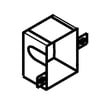
- If you see water around the filter head or it will not seal consistently, the housing can be involved: refrigerator housing WPW10121140
Water under a bottom-mount refrigerator can damage flooring and can also lead to ice buildup that restricts airflow, which makes cooling less consistent in both the freezer and fresh food sections.
For model-specific access points, leveling guidance, and installation clearances (including grille removal clearance and water shutoff placement), follow the installation guide.
Last updated: February 2026
What is the most common problem with a KitchenAid refrigerator?
For a KitchenAid bottom-mount refrigerator like model KBRS36FTX02, the most common problems we see are ice maker and water system issues, temperature swings from poor airflow, water leaks, and unusual noises. These symptoms usually trace back to airflow parts (like the evaporator fan), drainage, or water filtration and supply.
- Ice maker not making ice: ice maker module problems, low water flow, or air in the water line
- Fridge warm but freezer cold: restricted airflow, stuck baffle, or evaporator fan issue
- Water leaking inside or under the unit: clogged/iced defrost drain or water line connection seepage
- Buzzing, rattling, or whirring: evaporator fan motor noise or condenser area vibration
- Slow water dispensing or bad taste/odor: overdue water filter replacement
- Confirm the temperature settings and allow 24 hours after any adjustment.
- Make sure vents are not blocked by food packages (air must circulate).
- Inspect for ice buildup on the freezer back wall (often tied to airflow/defrost issues).
- If water or ice is affected, replace the filter and purge air from the line.
- Clean condenser coils if accessible; dirty coils can contribute to temperature problems.
| Symptom | Likely system | Example part on this model |
|---|---|---|
| Warm refrigerator section | Air circulation | Refrigerator evaporator fan motor W11671461 |
| Poor water taste/slow flow | Filtration | Refrigerator water filter EDR3RXD1 |
| Noisy operation or cooling issues | Controls/compressor drive | Refrigerator inverter assembly W10629033 |
| Water filter won’t seat or leaks | Filter mounting | Refrigerator housing WPW10121140 |
These problems are common because refrigerators rely on a tight balance of airflow, sealed-system cooling, and steady water supply. A small issue, like a restricted vent or overdue filter, can quickly look like a bigger failure (warm temps, leaks, or noise).
For operating, care, and service access details specific to KBRS36FTX02, follow the procedures and safety notes in the owner's manual. For built-in fit, panel, and access considerations during installation, use the installation guide.
Last updated: February 2026
What's the life expectancy of a KitchenAid refrigerator?
Most KitchenAid refrigerators last 14 to 17 years with normal household use and basic upkeep. For your KitchenAid KBRS36FTX02 bottom-mount refrigerator, consistent maintenance (clean airflow, good door sealing, and stable temperatures) is what most directly determines whether you reach the high end of that range; see the KBRS36FTX02 owner's manual for model-specific care guidance.
A refrigerator’s “life expectancy” is the point where major repairs (sealed system, controls, cooling fan) become more common.
- 14 to 17 years is the typical KitchenAid range
- 10 to 12 years is common when maintenance is neglected (dirty condenser area, poor door seal)
- 17+ years happens when temperatures stay stable and airflow stays clear
These are the most common wear items and failure points on built-in and premium bottom-mount refrigerators like the KBRS36FTX02.
- Water filter and water system restrictions: replace on schedule; a clogged filter can reduce dispenser flow and stress the water system (see refrigerator water filter EDR3RXD1)
- Evaporator fan issues: poor airflow can cause warm spots or frost patterns (see refrigerator evaporator fan motor W11671461)
- Electronic control problems: temperature swings, no-cool, or intermittent operation can point to control issues
- Door sealing and alignment: warm air leaks increase run time and frost
- Lighting and small hardware: bulbs and screws are minor but common service items
Use this short routine to extend service life.
- Keep vents inside the refrigerator and freezer unblocked
- Maintain a consistent fresh food temperature near 37°F and freezer near 0°F
- Clean spills quickly to prevent odors and gasket contamination
- Confirm doors close fully and gaskets seal all the way around
- Replace the water filter on schedule and purge air after changes
The warranty does not define lifespan, but it helps you understand what components are supported early on.
| Item | Typical timing | What it affects |
|---|---|---|
| Water filter | Months (routine) | Water taste, flow, ice quality |
| Fan and controls | Mid-life | Cooling consistency, airflow |
| Sealed refrigeration system | Later-life | Core cooling performance |
A refrigerator that runs longer than necessary (air leaks, restricted airflow, unstable temps) wears out compressors, fans, and controls faster. Keeping airflow clear and seals tight is the most reliable way to reach the expected 14 to 17 years.
Last updated: February 2026