Owner’s manual
 Error Codes


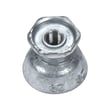
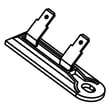
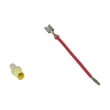
Where is my dryer part number?
On your Whirlpool WED6620HW2 dryer, the part number is printed on the label or stamped on the part itself; we use that number (or your model number) to match the exact replacement. For label locations and diagrams, use the WED6620HW2 owner's manual.
Where to look on the dryer
Check these common spots first (power off for safety):
- Door opening: around the door frame or on the inner door area
- Front panel: behind the lower access panel (if equipped)
- Back panel: near the power cord entry or vent outlet area
- Inside the cabinet: on the blower housing, heater housing, or motor area (requires disassembly)
- On the part itself: many Whirlpool parts have a sticker or stamping with a part number
Part number vs. model number (what to use)
Both can help, but they do different jobs.
| What you have | What it identifies | Best use |
|---|---|---|
| Model number (WED6620HW2) | The exact dryer version | Finding diagrams and the correct compatible parts |
| Part number (printed on the part) | The specific component | Matching the exact replacement part |
| Part ID (example: WP3387747) | Sears PartsDirect catalog identifier | Ordering the correct item on our site |
Examples of parts where the number is usually easy to find
If you are holding the old part, look for a sticker or stamped characters on:
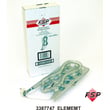
- Heating element assembly (often on the heater housing); example replacement: element, heater 5400w WP3387747
- Thermal fuse (often printed on the plastic body)
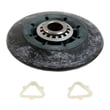
- Drum support roller (often on the roller or packaging)
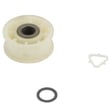
- Idler pulley (often on the bracket or packaging)
Why it matters
Dryer parts can look identical but vary by revision, wiring, or mounting. Using WED6620HW2 plus the part number helps prevent wrong-part returns and fixes issues faster (no-heat, squealing, not drying, or not starting).
Last updated: February 2026
What is the average lifespan of a Whirlpool dryer?
A Whirlpool electric dryer like model WED6620HW2 typically lasts about 10 to 13 years with normal household use. Consistent airflow, routine lint removal, and prompt repair of wear parts (rollers, idler pulley, blower wheel) are what most often determine whether you reach the high end of that range.
What affects dryer lifespan the most
- Vent airflow and vent length: long or restricted venting increases heat and run time, which shortens component life.
- Lint control: a clogged lint screen or lint buildup inside the cabinet makes the dryer work harder.
- Load habits: frequent overloading strains the drum support system and drive components.
- Heat system health: overheating can damage thermostats, fuses, and the heating circuit.
- Preventive maintenance: periodic deep cleaning and inspection prevents small issues from becoming major failures.
Maintenance schedule we recommend (based on the manual)
Use the WED6620HW2 owner’s manual for the exact procedures and safety steps.
| Task | How often | Why it matters |
|---|---|---|
| Clean lint screen | Every load | Improves airflow and drying time |
| Remove lint from exhaust vent | About every 2 years (more with heavy use) | Reduces overheating and long dry times |
| Remove lint inside dryer cabinet (service cleaning) | About every 2 years | Helps protect motor and heater area |
| Check vent routing (fewest elbows, shortest run) | Anytime drying slows | Helps prevent excessive run time |
Parts that commonly wear before the dryer “wears out”
If your WED6620HW2 is noisy, squealing, thumping, or taking longer to dry, these are frequent culprits:
- Dryer drum support roller WPW10314173 (worn rollers can rumble or thump)
- Dryer idler pulley W10837240 (can squeal and affect belt tension)
- Dryer blower wheel WP697772 (can rattle, reduce airflow)
- Thermal fuse W10909685 (opens if the dryer overheats, often tied to vent restriction)
Why it matters
A dryer that maintains strong airflow runs cooler and finishes cycles faster; that reduces stress on the heater, motor, and drum support system and is the most reliable way to extend service life.
Last updated: February 2026
What are the common problems with Whirlpool dryers?
Common Whirlpool dryer problems (including model WED6620HW2) usually fall into a few buckets: the dryer will not start, it runs but will not heat, it takes too long to dry, it makes squealing or thumping noises, or it shuts off early on sensor cycles. Many of these issues trace back to airflow, power supply, or normal wear parts.
Most common symptoms and what they usually mean
- Won’t start: door not fully closed, start control not engaged, or a power supply issue (tripped breaker or blown fuse).
- No heat: one side of the 240V supply is missing, a heating circuit component failed, or airflow is restricted.
- Long dry times: lint screen clogged, vent crushed/blocked, too many elbows, or exhaust hood packed with lint.
- Loud squeal or thump: worn drum support rollers, idler pulley, or blower wheel.
- Shuts off too soon: poor tumbling from an unlevel dryer, low room temperature (below about 45°F), or sensor-related issues.
Quick checks we recommend first (safe, high-impact)
- Clean the lint screen before every load.
- Confirm strong airflow at the outside exhaust hood.
- Verify the dryer has full power (many electric dryers use two breakers/fuses).
- Make sure the door closes firmly and the Start button is pressed fully.
- Check vent material and routing (use 4-inch heavy metal vent; keep it short with minimal bends).
Parts that commonly wear on Whirlpool dryers
If the dryer is noisy or the drum does not glide smoothly, these model-matched parts are frequent fixes:
| Symptom | Common wear part | Example model-matched part |
|---|---|---|
| Squealing, rumbling | Drum support roller | Dryer drum support roller WPW10314173 |
| Squealing, belt slack | Idler pulley | Dryer idler pulley W10837240 |
| Thumping, vibration, poor airflow noise | Blower wheel | Dryer blower wheel WP697772 |
| No heat (electric) | Heating element | Element, heater 5400w WP3387747 |
Why it matters
Airflow and venting problems do more than slow drying; they can overheat components and trigger safety shutoffs. Keeping the lint screen and vent system clean also helps the dryer run efficiently and protects key parts.
For model-specific operating tips, venting guidance, and troubleshooting steps, use the WED6620HW2 owner’s manual.
Last updated: February 2026