Owner’s manual

How to tell if an air compressor regulator is bad?
A bad regulator on your Craftsman 919152910 air compressor shows up as unstable outlet pressure: it will not hold a set PSI, it “creeps” higher after you stop airflow, or it leaks air continuously at the outlet. The manual also notes the regulator controls tank air and should adjust smoothly. See the owner's manual for regulator operation and safety steps.
- Pressure creep: outlet PSI rises after you stop using air (trigger released, valve closed).
- Pressure droop: outlet PSI drops sharply when a tool runs, even with a full tank.
- Regulator will not shut off: continuous air leak at the outlet side.
- Hard to adjust: knob turns but outlet gauge barely changes.
- Inconsistent gauge behavior: outlet gauge jumps around while the tank gauge is steady.
- Build tank pressure until the motor stops at cut-out.
- Set the regulator from low to high (approach the target PSI from below, as the manual recommends).
- Close airflow (release the tool trigger or close the downstream valve).
- Watch the outlet pressure gauge for 1 to 2 minutes.
| What you see at the outlet gauge | Most likely cause | What to do next |
|---|---|---|
| PSI slowly rises with no airflow | Regulator “creep” (internal seat/diaphragm wear or debris) | Clean/replace regulator; check for contamination in fittings |
| PSI falls a lot when tool runs | Regulator restriction or compressor undersized for SCFM | Check tool SCFM needs; inspect regulator and hose for restrictions |
| Constant hissing at outlet | Internal regulator leak | Replace regulator or internal parts |
The regulator sets the outlet regulated air pressure; if it drifts or leaks, your nailer, impact wrench, or spray gun can run poorly, and you can accidentally exceed a tool’s maximum pressure rating (the manual warns the outlet pressure must never exceed the tool rating).
Last updated: February 2026
What does 4.0 SCFM at 90 PSI mean?
On a Craftsman air compressor like model 919152910, 4.0 SCFM at 90 PSI means the compressor can deliver about 4 standard cubic feet of air per minute while maintaining 90 pounds per square inch (gauge) pressure at the outlet. This rating helps you match the compressor’s airflow to the needs of air tools.
- SCFM (standard cubic feet per minute) is a measure of air delivery (airflow) under standardized conditions, so you can compare compressors more fairly.
- PSIG (pounds per square inch gauge) is the pressure level the compressor is producing.
- 90 PSI is a common working pressure for many pneumatic tools.
- If a tool needs more airflow than the compressor can supply at that pressure, the compressor will run constantly and tank pressure will drop.
For the model 919152910, the manual glossary defines SCFM as a unit of measure of air delivery and PSIG as a unit of measure of pressure; it also explains how pressure switch cut-in and cut-out pressures control when the motor restarts and shuts off. See the owner's manual.
Use the tool’s required SCFM at a stated PSI (often 90 PSI) and compare it to your compressor’s rating.
- If the tool requires 3.0 SCFM at 90 PSI, a 4.0 SCFM compressor typically keeps up.
- If the tool requires 6.0 SCFM at 90 PSI, you typically need a larger compressor.
- For intermittent tools (brad nailers), tank size can help cover short bursts.
- For continuous-use tools (DA sanders, grinders), SCFM matters more than tank size.
| Tool demand at 90 PSI | What you can expect | Best approach |
|---|---|---|
| Lower than 4.0 SCFM | Stable pressure, normal cycling | Use normally |
| About 4.0 SCFM | Frequent running, may struggle on long use | Short duty cycles, larger hose fittings |
| Higher than 4.0 SCFM | Pressure drop, tool performance suffers | Use a higher-SCFM compressor |
SCFM at a given PSI is the most practical way to predict real tool performance. The manual’s troubleshooting guidance also ties poor performance to airflow mismatch: if the accessory air requirement is higher than the SCFM or pressure supplied, you need a larger compressor.
Last updated: February 2026
What is the average lifespan of an air compressor?
Most homeowner-grade air compressors like the Craftsman 919152910 typically last 8 to 15 years with normal DIY use and basic care; heavy daily use, heat, and moisture shorten life, while good ventilation and routine draining extend it. For model-specific operating and care details, use the 919152910 owner's manual.
Lifespan depends more on compressor design and duty cycle than brand name.
| Compressor type | Typical lifespan | Common use |
|---|---|---|
| Small oil-free piston (DIY) | 5 to 10 years | Inflation, brad nailers, light tools |
| Larger piston (DIY or prosumer) | 8 to 15 years | Framing, intermittent shop use |
| Rotary screw (shop/industrial) | 10 to 20+ years | Continuous air demand |
These are the most common “life reducers” we see on portable compressors:
- Running in a hot, dusty, poorly ventilated area (restricted cooling airflow)
- Letting water sit in the tank (internal corrosion risk)
- Frequent long run times (high duty cycle) without cool-down breaks
- Using an extension cord that causes voltage drop and motor overheating
- Ignoring air leaks so the pump runs longer than it should
Your Craftsman 919152910 is described as oil-free, so you do not do oil changes; the big wins are moisture control and airflow.
- Drain tank moisture after use and before storage
- Keep the unit at least about 12 inches from walls/obstructions for cooling airflow
- Use extra air hose instead of an extension cord when possible
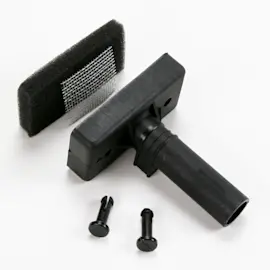
- Keep the intake/filter area clear so air delivery is not restricted
- Fix leaks promptly (fittings, regulator, hose, check valve)
A compressor usually “wears out” because it runs too hot or too long, or because moisture damages the tank and valves. Good ventilation and routine draining reduce run time, protect internal parts, and keep pressure recovery strong.
For troubleshooting that impacts longevity (hard starting, long run times), see air compressor won't build tank pressure and air compressor won't start.
Last updated: February 2026
What is the most common cause of air compressor failure?
For the Craftsman 919152910 air compressor, the most common cause of failure is preventable wear from poor maintenance and heat stress: restricted airflow (dirty intake filter, blocked ventilation) and moisture left in the tank lead to overheating, leaks, and premature valve, seal, and motor problems. See the safety and maintenance sections in the owner's manual.
- Restricted air intake or poor ventilation causing overheating and overload trips
- Water left in the tank causing internal corrosion and recurring air leaks
- Air leaks at fittings, hoses, or the pressure switch release valve
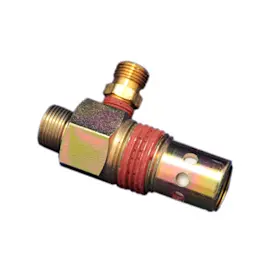
- Check valve or flapper valve problems that cause hard starting and constant leaking
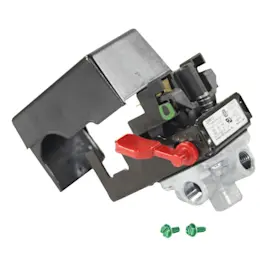
- Pressure switch issues (won’t shut off at cut-out, welded contacts)
- Drain the tank after use: water buildup is a top long-term killer of tanks and valves.
- Listen for leaks when it shuts off: a steady hiss often points to a check valve or flapper valve issue.
- Check airflow: keep the shroud and cooling air path clear; don’t run it in a tight, dusty corner.
- Inspect cords and extension cords: wrong gauge or long cords can cause low voltage and hard starts.
- Use soapy water on fittings: tighten only until the leak stops (do not overtighten).
| What you notice | Most likely cause | What to do first |
|---|---|---|
| Safety valve pops or tank pressure seems too high | Pressure switch not shutting off at cut-out | Turn switch OFF; stop using until the switch is corrected |
| Hissing at pressure switch area after shutdown | Pressure switch release valve, flapper valve, or check valve | Identify exact leak point; service the valve involved |
| Motor won’t restart with pressure in tank | Unloader not unloading, check valve stuck open, low voltage | Bleed tank pressure; verify power and valve operation |
| Tank won’t hold air | Tank leak or weld leak | Replace the tank; do not repair or modify it |
Overheating and moisture don’t just reduce performance; they trigger a chain reaction (leaks, valve damage, overload trips) that turns a small maintenance issue into a pump, pressure switch, or tank failure.
- Use our troubleshooting steps for air compressor won't start when the motor won’t run or restart.
- If pressure control is the issue, follow how to replace an air compressor pressure switch.
Last updated: February 2026