Owner’s manual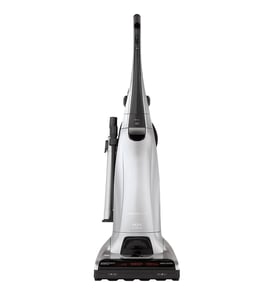

Where can I find the Kenmore vacuum model number?
Your Kenmore upright vacuum model number is printed on the model and serial number plate on the vacuum body. On model 11631810010, check the back or bottom of the main unit (often near the wheels or base) and record the full number exactly as shown.
Most Kenmore uprights place the model/serial plate in one of these spots:
- Bottom of the power nozzle (underside of the base)
- Back of the vacuum body near the lower cord wrap
- Behind the dust bag cover or near the bag chamber opening
- On the rear housing close to the wheels
- Near the handle release area
Use the complete model number (all digits) when you:
- Matching belts, filters, bags, and brush roll parts
- Looking up diagrams and part lists
- Confirming fit before ordering replacement parts
If the label is worn, use a flashlight and take a photo; zooming in usually makes faint printing readable.
| Item | What it tells you | How it’s used |
|---|---|---|
| Model number | The exact vacuum design/version | Ensures correct part fit |
| Serial number | Production identifier | Helpful for service records |
Kenmore vacuums often have similar-looking housings across different versions; using the exact model number prevents ordering the wrong bag, filter, or belt and saves time during troubleshooting.
For the official location and labeling details, follow the identification notes in the owner's manual.
Last updated: February 2026
Why is my Kenmore vacuum not suctioning?
Loss of suction on your Kenmore upright vacuum model 11631810010 is almost always caused by restricted airflow: a full dust bag, clogged filter, or a blockage in the hose or clean-out port. Restoring airflow typically restores suction.
- Replace the dust bag if it’s full or packed tight.
- Check the motor safety filter and exhaust filter; clean or replace if clogged.
- Inspect the hose and wand for a clog; remove any debris.
- Open the nozzle clean-out port and clear buildup (a coin or flat screwdriver helps).
- Make sure the vacuum is returned to the upright position before using the hose to prevent overheating.
- Dust bag first: A full bag is the most common cause of low suction.
- Filters next: A clogged filter restricts airflow and can trigger the motor protector.
- Then clogs: If bag and filters are clear, check the extension hose and the nozzle clean-out port.
- Listen for the motor protector: If you hear a noticeable change in sound (air rushing), the by-pass valve may be open due to a clog or restricted airflow.
Your vacuum includes a motor protector by-pass valve that opens to prevent overheating when airflow is blocked. Use this table to decide what to do next:
| What you notice | What it usually means | What to do |
|---|---|---|
| Suction drops and sound changes | Airflow is restricted; valve may be open | Clear clogs, replace bag, check filters |
| Vacuum stops after heavy use | Thermal protector tripped from overheating | Clear restriction; wait 40 to 50 minutes before restarting |
Running with low airflow can reduce cleaning performance and cause overheating. Fixing the bag, filters, and clogs protects the suction motor and helps the vacuum clean carpets and floors the way it should.
For model-specific maintenance steps and the clean-out port procedure, follow the owner's manual.
Last updated: February 2026
Why is my Kenmore 11631810010 upright vacuum brush not spinning?
On the Kenmore 11631810010 upright vacuum, the brush (agitator) will not spin if the control is set to FLOOR, if the handle is fully upright, or if the agitator is jammed and the overload protector trips. Switching to CARPET and clearing the brush area usually restores rotation; see the owner's manual.
- Set the ON/FLOOR/CARPET selector to CARPET (FLOOR turns the suction motor on only).
- Recline the handle; the manual notes the agitator does not rotate when the vacuum is in the upright position.
- Unplug the vacuum and remove hair, string, and debris from the brush area.
- Check for a clog in the nozzle, hose, or bag holder that can load the brush and trip protection.
- If the brush is worn or damaged, replace the agitator/brush roll.
Before servicing the brush area, unplug the vacuum to prevent the brush from starting unexpectedly.
- Unplug the vacuum.
- Clear the agitator and nozzle area.
- If the agitator overload tripped, reset it (follow the reset steps in the owner's manual).
- If the thermal protector tripped, let the vacuum cool 40 to 50 minutes, then try again.
| Selector position | What runs | What you will see |
|---|---|---|
| OFF | Nothing | No suction, no brush |
| FLOOR | Suction motor only | Brush does not spin |
| CARPET | Suction + brush motors | Brush spins when reclined |
A non-spinning brush roll reduces carpet agitation, so dirt pickup drops fast. Running with a jammed agitator can also trip the overload protector repeatedly, which points to a clog, wrapped debris, or a worn brush roll.
Last updated: February 2026
How to change the belt on a Kenmore vacuum?
To change the belt on your Kenmore upright vacuum model 11631810010, we remove the floor nozzle base plate, lift out the brush roll (agitator), slip the old belt off, install the new belt on the motor shaft and brush roll, then reassemble and test on CARPET.
- Unplug the vacuum before any disassembly (electrical shock hazard).
- Work on a flat surface with good lighting.
- Have a Phillips screwdriver ready.
- Clean hair and string off the brush roll while it is out.
- Confirm you have the correct belt style for your exact Kenmore model.
For model-specific diagrams and the exact disassembly order, use the owner's manual.
- Unplug the vacuum and set the handle upright.
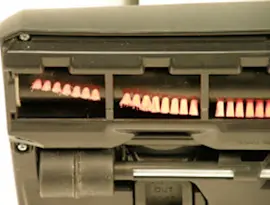
- Access the brush area: turn the vacuum over and remove the screws holding the bottom plate (or nozzle cover).
- Remove the brush roll: lift the brush roll out; note how the end caps sit in their slots.
- Remove the old belt from the brush roll and motor drive shaft.
- Install the new belt:
- Loop belt around the motor shaft first.
- Stretch belt over the brush roll belt groove.
- Re-seat the brush roll fully into its holders.
- Reinstall the bottom plate and tighten screws snugly (do not overtighten).
- Test: plug in, switch to CARPET, and verify the brush roll spins and the vacuum picks up normally.
- Brush roll is not fully seated in the end slots.
- Belt is routed off the brush roll groove.
- Brush roll is jammed by debris; clean it thoroughly.
- Pile height is set too low for thick carpet.
| Symptom | Most common cause | What to do |
|---|---|---|
| Burning rubber smell | Belt slipping on jammed brush | Clean brush roll; recheck seating |
| No brush movement | Belt off motor shaft | Reinstall belt on shaft and groove |
| Loud rattling | Bottom plate not seated | Refit cover; tighten screws evenly |
A properly installed belt transfers motor power to the agitator; that is what lifts dirt from carpet. A worn or misrouted belt reduces suction performance at the floor and can overheat from slipping.
Last updated: February 2026