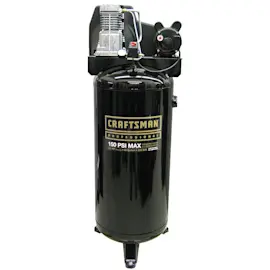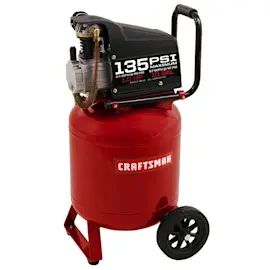

Are air compressor parts interchangeable?
Most air compressor parts are not interchangeable, especially on a Craftsman 106152581 twin-cylinder tank-type paint sprayer; major components are matched to the compressor’s design, airflow, and pressure range. Some external fittings can interchange only when the thread type and coupler style match exactly.
What usually is not interchangeable
These parts are typically model-specific because they must match mounting, rotation, electrical load, and pressure control:
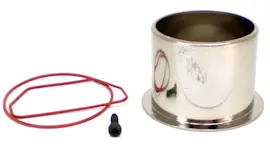
- Pump and cylinder/head assemblies
- Motor (HP, RPM, voltage, frame size, shaft)
- Flywheel and pulley sizes (affects pump speed)
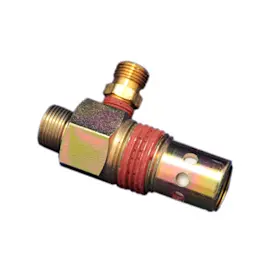
- Tank check valve and unloader tube routing
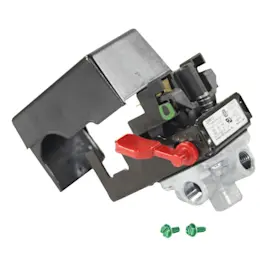
- Pressure switch style and pressure range
- Regulator/manifold assemblies and gauge layouts
What can be interchangeable (if specs match)
Some connection parts can cross over between brands when the thread standard, size, and sealing method match:
- Quick-connect couplers and plugs (industrial, automotive, ARO styles)
- NPT threaded fittings (common in the U.S.)
- Air hose ends and swivels
- Basic ball valves and drain valves
- Thread sealants (PTFE tape or pipe dope rated for air)
Quick compatibility checklist
Use this before swapping any part onto the Craftsman 106152581.
| Item to match | What to check | Why it matters |
|---|---|---|
| Thread type | NPT vs BSP (and male vs female) | Wrong thread type leaks or damages ports |
| Thread size | 1/4 in., 3/8 in., etc. | Size mismatch will not seal correctly |
| Coupler profile | Industrial (M), Automotive (T), ARO (A) | Different profiles will not connect |
| Pressure rating | PSI rating of fitting/valve/hose | Prevents failures under pressure |
Why it matters
Interchanging the wrong pump, motor, or pressure-control part can cause low CFM, overheating, nuisance tripping, or unsafe pressure behavior. Matching the correct specs keeps your compressor running efficiently and helps prevent leaks.
Helpful related DIY guidance
- Use how to use a multimeter to test electrical parts video when checking a motor circuit, pressure switch contacts, or power cord issues.
- Use how to tell if a fuse is blown if the compressor will not start and you suspect an electrical protection device.
Last updated: February 2026
Is it worth it to repair a compressor?
Yes, it’s often worth repairing a Craftsman 106152581 compressor when the problem is a single, serviceable failure (like a leaking check valve, bad pressure switch, or worn seals). It’s usually not worth it when the pump is heavily worn or damaged and the repair cost approaches the price of a comparable replacement unit.
Quick decision checklist
Use these points to decide whether repair makes sense for your twin-cylinder tank-type paint sprayer compressor:
- Repair is worth it if the unit still builds pressure, but has a leak, won’t restart, or trips a breaker intermittently.
- Repair is usually not worth it if the pump has loud knocking, metal debris in oil (if oil-lubed), or severe scoring and low compression.
- Repair is worth it if the tank is solid and the issue is external (regulator, gauge, safety valve, unloader line).
- Repair is usually not worth it if the tank is compromised (deep rust, pitting, or suspected weakness).
- Repair is worth it if you can confirm the exact model number and match parts correctly.
Typical repair vs. replace cost comparison
These ranges help you sanity-check a quote or parts list for a small tank-type compressor.
| Scenario | Typical cost range | Best choice |
|---|---|---|
| Minor air leak (fittings, valve, unloader) | Low | Repair |
| Electrical control issue (switch, cord, wiring) | Low to medium | Repair |
| Motor start issue (capacitor, centrifugal switch) | Medium | Repair if motor tests good |
| Pump rebuild (rings, cylinder, valves) | Medium to high | Replace if near replacement cost |
| Pump or motor replacement | High | Usually replace |
What to check first (fast troubleshooting)
Before spending money, we recommend these practical checks:
- Confirm the symptom: won’t start, won’t build pressure, leaks down, won’t restart, trips breaker.
- Listen for leaks at the check valve, regulator, drain valve, and fittings (soapy water helps).
- Verify power: correct outlet, no undersized extension cord, tight cord connections.
- Inspect wiring for heat damage or loose terminals.
- Test electrical parts (switch, capacitor, motor windings) with a meter.
A good walkthrough for safe electrical testing is how to use a multimeter to test electrical parts video.
Why it matters
A targeted repair can restore performance and extend the life of your Craftsman 106152581 without the cost of replacing the entire compressor. On the other hand, sinking money into a worn pump or unsafe tank leads to repeat failures and higher long-term cost.
Last updated: February 2026
What is the most common cause of air compressor failure?
The most common cause of failure on a Craftsman 106152581 twin-cylinder tank-type paint sprayer is poor maintenance that leads to overheating and lubrication-related wear. Dirty intake filtration, restricted cooling airflow, and contaminated or low oil (on oil-lubricated pumps) accelerate bearing and cylinder damage.
What fails first (and why)
Most “sudden” air compressor failures start as small issues that build heat and friction in the pump and motor.
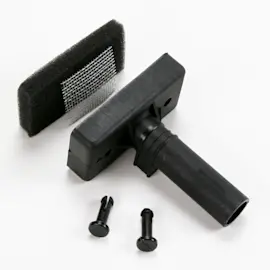
- Clogged intake filter: starves the pump of air, increases heat, and reduces output
- Restricted cooling airflow: dust buildup on shrouds/fins causes overheating
- Low or dirty oil (if oil-lubricated): increases friction and wears bearings and cylinders
- Moisture left in the tank: promotes internal corrosion and can contaminate air tools
- Loose wiring or weak electrical supply: causes hard starts, overheating, and nuisance trips
Quick checks you can do before it quits
Use these checks to catch problems early on your Craftsman 106152581.
| Symptom | Most likely cause | What to do next |
|---|---|---|
| Runs hot, shuts off | Poor ventilation, dirty cooling surfaces | Clean vents/fins; allow cool-down; improve airflow |
| Runs but won’t build pressure | Intake restriction, valve or seal wear, major leak | Check filter and fittings; listen for leaks |
| Slow to start, trips breaker | Extension cord/voltage drop, failing capacitor, tight pump | Plug into a proper outlet; reduce load; inspect wiring |
| Water spits from hose | Tank not drained | Drain tank after use; add moisture control if needed |
Maintenance habits that prevent most failures
These habits prevent the most common pump and motor damage.
- Keep the compressor in a clean, well-ventilated area
- Drain the tank after every use to remove condensation
- Clean or replace the intake filter on a regular schedule
- Check fasteners and fittings for vibration loosening and air leaks
- Inspect the power cord and wiring for heat damage or cracked insulation
Why it matters
Overheating and poor lubrication do not just reduce PSI; they permanently wear the pump (bearings, rings, valves) and can overwork the motor. Simple airflow, filtration, and moisture control steps prevent the majority of air compressor breakdowns.
For safe electrical testing during troubleshooting, we recommend following how to use a multimeter to test electrical parts video.
Last updated: February 2026