


What is the life expectancy of a Panasonic microwave?
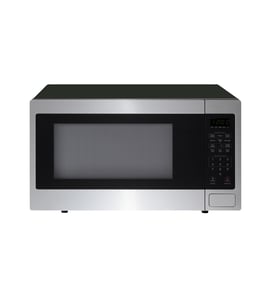
A Panasonic microwave like model NN-SN960S typically lasts about 7 to 10 years with normal household use. Heavy daily cooking, poor ventilation, and repeated door slamming can shorten lifespan; keeping the cavity clean and the door latching smoothly helps it reach the full average.
Typical lifespan and what changes it
Most countertop microwaves fall into a fairly consistent lifespan range; what varies is how quickly key wear items (door switches, latch parts, cooling airflow) get stressed.
- Light use (reheating only): often closer to the high end of the range
- Heavy use (multiple long cook cycles daily): often closer to the low end
- Power issues (surges/brownouts): can shorten control and inverter life
- Blocked vents or grease buildup: increases heat stress on internal components
- Door abuse or misalignment: accelerates switch and latch wear
Signs your microwave is nearing end of life
If you see these symptoms repeatedly, it usually points to a failing component or cumulative wear.
- Runs but does not heat consistently
- Intermittent operation when closing the door
- Loud buzzing or unusual fan noise during heating
- Display or keypad becomes unreliable
- Burning smell or visible arcing marks (stop using until inspected)
Repair vs. replace: quick decision guide
| What you notice | Common direction | Why |
|---|---|---|
| Door won’t start unless you push it | Repair | Often a door latch or switch issue |
| No heat but everything else works | Evaluate cost | Can involve inverter/magnetron circuitry |
| Random shutoff or dead unit | Evaluate cost | Could be fuse, wiring, or control-related |
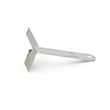
If the door is not latching cleanly, checking the latch mechanism and related safety switches is a practical first step; for this model, a common related part is the microwave door latch F30186P40CP.
Why it matters
Microwaves rely on door interlocks and cooling airflow for safe, consistent heating. When those systems wear, you can get no-heat complaints, intermittent starting, or overheating that shortens the life of higher-cost components.
Last updated: January 2026
Can I use an over-the-range microwave as a countertop?
No. An over-the-range microwave is designed to be installed in a cabinet space above a range with specific mounting and ventilation clearances; using it as a countertop unit is unsafe and can block airflow, overheat components, and create stability and cord-routing hazards.
Why over-the-range models should not sit on a counter
Over-the-range units are built around a fixed installation that supports the microwave’s weight and manages heat and steam from cooking.
- The bottom and rear airflow paths can be blocked by a countertop.
- The unit can be unstable without the correct mounting bracket and fasteners.
- The power cord and plug may not route safely when the unit is not mounted.
- Clearances to combustibles and nearby cabinets are different than countertop designs.
- The door and latch system can be stressed if the unit is moved or bumped.
What to do instead
If you want a microwave on the counter, use a true countertop model like Panasonic NN-SN960S.
- Choose a countertop microwave with feet and designed intake and exhaust vents.
- Leave open space around the sides and back (follow the product’s clearance guidance).
- Place it on a level, sturdy surface away from heat sources.
- Use a dedicated, properly grounded outlet.
- Avoid enclosing it in a tight cabinet unless the microwave is specifically rated for that.
Quick comparison
| Feature | Over-the-range microwave | Countertop microwave (NN-SN960S) |
|---|---|---|
| Intended installation | Mounted above range | Sits on counter |
| Venting design | Built around cabinet mounting and ducting/recirculation | Built around open-air countertop clearances |
| Stability | Requires bracket and upper bolts | Uses feet on a flat surface |
Why it matters
Microwaves rely on correct airflow to protect the magnetron, inverter, and internal wiring. Using the wrong installation style can shorten component life and increase the chance of overheating.
If your Panasonic NN-SN960S is not heating, use our troubleshooting steps in why is my microwave not heating.
Last updated: January 2026
What is the standard size of a countertop microwave?
Most countertop microwaves, including Panasonic models like NN-SN960S, fall into a “standard” size range rather than one exact dimension: about 1.0 to 2.2 cu. ft. capacity and roughly 21 to 25 in. wide, 12 to 15 in. tall, and 16 to 20 in. deep (door closed).
Typical countertop microwave size ranges
These ranges cover the majority of countertop units you will see in kitchens and on carts.
- Capacity: 1.0 to 2.2 cubic feet
- Width: 21 to 25 inches
- Height: 12 to 15 inches
- Depth (door closed): 16 to 20 inches
- Vent clearance: leave a few inches around the cabinet for airflow
Quick sizing guide (what fits where)
Use this as a practical way to choose a microwave size based on your space and how you cook.
| Size class | Typical capacity | Typical width | Best for |
|---|---|---|---|
| Compact | 0.7 to 1.0 cu. ft. | 17 to 20 in. | Dorms, small kitchens |
| Standard | 1.1 to 1.6 cu. ft. | 20 to 24 in. | Most households |
| Large | 1.7 to 2.2 cu. ft. | 24 to 25+ in. | Large plates, batch cooking |
How we recommend measuring your space
Measure first so the microwave door opens freely and the unit can vent heat.
- Measure the opening width where the microwave will sit
- Measure depth from the back wall to the front edge of the counter
- Confirm height to any cabinet above
- Allow room for the door swing and handle clearance
- Keep the microwave on a flat, stable surface
Why it matters
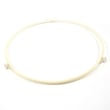
Correct sizing prevents blocked ventilation (overheating risk), avoids door clearance issues, and helps ensure your cookware (like the glass tray) fits and rotates properly. If you need a replacement tray for this model, match it to the exact part listing such as the Panasonic cook tray F06014M00AP.
Last updated: January 2026
What are common problems with Panasonic microwaves?
Common problems on Panasonic countertop microwaves like model NN-SN960S include not heating, the turntable not rotating, door-latch issues, sparking/arcing, and control panel glitches. Many symptoms trace back to door interlock switches, the inverter or magnetron circuit, or simple airflow and cleanliness problems.
Most common symptoms and what they usually mean
- Runs but does not heat: often a high-voltage/inverter-side failure, or a door interlock problem that prevents heating.
- Starts then stops, or blows power/fuse symptoms: commonly a shorted component, failing switch, or wiring issue.
- Turntable not turning: coupler or motor issue, or the tray is not seated correctly.
- Door will not latch or feels loose: latch/hook parts can wear or misalign.
- Sparking/arcing inside: usually food splatter, damaged waveguide cover area, or metal contact (foil, twist ties, rack).
- No interior light: failed lamp or door switch issue.
Quick checks we recommend before replacing parts
- Unplug the microwave for 1 minute, then restore power (clears many control glitches).
- Confirm the door closes firmly and evenly; do not slam it.
- Clean the door-latch area and interior; baked-on grease can cause arcing and poor door closure.
- Verify the cook tray is seated correctly and the coupler engages.
- Test with a cup of water for 60 seconds; note whether the fan runs, light turns on, and water warms.
Parts that commonly fix these problems on NN-SN960S
If symptoms point to a specific failure, these model-listed parts are common suspects:
| Symptom | Likely area | Example model-listed part |
|---|---|---|
| Won’t start or stops when door moves | Door interlock circuit | Switch 6600W1K001Q |
| Door won’t stay closed | Latch/hook mechanism | Microwave door latch F30186P40CP |
| No interior light | Lamp circuit | Panasonic lamp F612E5Y30AP |
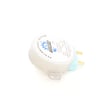
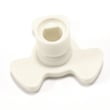
| Turntable not rotating | Coupler/drive | Panasonic tt couplng F21315Y00AP |
| Runs but won’t heat | Inverter/high-voltage system | Panasonic inverter F606Y8X00AP |
Why it matters
Microwave heating and safety depend on the door interlock system and the inverter-driven high-voltage circuit working correctly. Addressing door-latch and switch problems early helps prevent intermittent operation, arcing, and repeat failures.
Related DIY help: why is my microwave not heating
Last updated: January 2026