Owner’s manual
 Error Codes


Do Kenmore fridges have a filter?
Yes. Kenmore refrigerators like model 10657378700 can use a built-in water filter; this model’s manual references a base grille water filter and explains that a filter can affect water pressure and ice quality. Use the 10657378700 owner's manual to confirm your exact filter location and replacement steps.
How to tell if your 10657378700 has a water filter
Most side-by-side Kenmore units that support filtration will have a filter in one of these common spots:
- Behind the base grille at the bottom front (base grille water filter)
- Inside the fresh food compartment (upper corner or rear wall)
- In a filter housing near the lower hinge area
- In some setups, an external inline filter may be added to the water line
If you see a filter cap or a twist-in/push-in cartridge, the refrigerator is filter-ready.
What the filter does (and what you may notice)
A working water filter helps improve water and ice taste and can reduce sediment. The manual also notes that using a filter can reduce water pressure, especially if you also have a reverse osmosis system.
Quick symptom guide
| What you notice | Often points to | What to do first |
|---|---|---|
| Slow water from dispenser | Low supply pressure, clogged filter | Replace or remove filter temporarily for testing |
| Gray or dark ice | Filter needs flushing or replacement | Flush the system after installing a new filter |
| Off taste or odor in ice | Water minerals, old filter, new plumbing | Replace filter; discard old ice and wash bin |
Filter replacement tips that prevent leaks and weak flow
- Dispense water for several minutes after installing a new filter to flush air and carbon fines
- Check that the filter is fully seated and the cap (if used) is installed correctly
- Verify household water pressure is in a normal range (many refrigerators work best with steady pressure)
- If you have reverse osmosis, test flow with the filter removed to compare performance
Common replacement part for this model
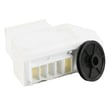
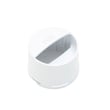
If your unit uses the cartridge shown for this model, the matching replacement is the genuine Kenmore refrigerator water filter EDR3RXD1.
Why it matters
A clogged or incorrectly installed refrigerator water filter can cause weak dispenser flow, poor ice production, and discolored ice. Keeping filtration current protects the inlet valve, ice maker, and water system performance.
Last updated: January 2026
How big is the Kenmore refrigerator model 10657378700?
The Kenmore 10657378700 is a full-size side-by-side refrigerator; the exact width, height, depth, and cubic-foot capacity are provided in the 10657378700 owner's manual. For planning your space, follow the manual’s required ventilation and door-swing clearances.
Key size specs to pull from the manual
When customers ask “how big,” these are the measurements that matter most:
- Overall width (cabinet and with doors)
- Overall height (to top of cabinet and hinge area)
- Overall depth (cabinet, with doors, and with handles)
- Total capacity (cubic feet)
- Door swing clearance next to a wall
Installation clearances for this model (from the manual)
The manual gives these baseline clearance requirements for the 10657378700:
- Leave 1/2 inch (1.25 cm) of space on each side and at the top for ventilation
- If installed next to a fixed wall, leave 2 inches (5.08 cm) minimum on the wall side so the doors can swing open
- Allow extra space at the back for water line connections if the refrigerator has an ice maker
| Clearance area | Minimum space | Why it matters |
|---|---|---|
| Sides and top | 1/2 in (1.25 cm) | Airflow and cooling performance |
| Next to a wall | 2 in (5.08 cm) | Door swing and bin access |
| Back (if plumbed) | Extra room for tubing | Prevents kinks and leaks |
Quick measuring checklist (before delivery or replacement)
Use these steps to avoid fit problems:
- Measure the opening width at the front and back
- Measure height to the lowest cabinet or soffit
- Measure depth to the front edge of counters; add handle clearance
- Confirm the path in (doorways, turns) is wider than the refrigerator
- Plan for water line routing if you use the dispenser or ice maker
Why it matters
Correct sizing protects airflow (steady temperatures), prevents doors from binding against walls, and avoids pinched water lines that can affect the dispenser and ice maker.
Last updated: January 2026
What is the average lifespan of 10657378700?
The average lifespan of the Kenmore 10657378700 side-by-side refrigerator is about 14 years with normal household use and basic maintenance. Keeping airflow clear, doors sealing tightly, and the water system maintained helps it reach that typical service life.
Typical lifespan and what affects it
Most side-by-side refrigerators land in a similar range, but these factors make the biggest difference:
- Condenser cleanliness and airflow around the cabinet
- Door gasket condition (air leaks force longer run times)
- Ice maker and water dispenser use (valves and lines wear)
- Power quality and compressor start components
- How often doors are opened and how full the compartments stay
Maintenance that helps you reach 14 years
Use the schedule below as a practical baseline; for model-specific care details, follow the owner's manual.
| Task | How often | Why it helps |
|---|---|---|
| Replace water filter | Every 6 months | Protects water flow and ice maker performance |
| Clean condenser area | Every 6 to 12 months | Improves cooling efficiency and reduces compressor strain |
| Inspect/clean door gaskets | Every 3 to 6 months | Prevents warm air leaks and frost buildup |
| Confirm temps | Monthly | Keeps food safe and reduces overworking |
Parts that commonly impact longevity
If performance drops, these are frequent wear items on refrigerators like this model:
- Water filter (use the correct fit, such as genuine Kenmore refrigerator water filter EDR3RXD1)
- Water inlet valve (can cause no ice, slow fill, or dispenser issues)
- Defrost components (can cause frost buildup and warm temps)
- Door gaskets (can cause sweating, frost, and long run times)
Why it matters
A refrigerator that runs longer than necessary uses more energy and wears the compressor faster. Simple upkeep (especially airflow, seals, and water filtration) is the most reliable way to get the full expected lifespan.
Last updated: March 2026