 Owner’s manual
 Error Codes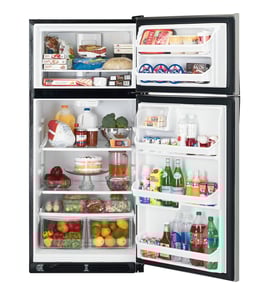


What is the top part of a refrigerator called?
In a Kenmore 11169339811 top-mount refrigerator, the top section is typically called the freezer compartment (or simply the freezer). It is the colder compartment designed to keep food frozen and, on some models, it can also support an optional ice maker.
Common names you will see
- Freezer compartment
- Freezer section
- Top freezer
- Freezer door (the door that covers the freezer compartment)
What the top freezer does (and what’s usually inside)
The freezer compartment is built to maintain freezing temperatures and circulate cold air through the appliance.
| Item | What it does | Where you’ll usually find it |
|---|---|---|
| Freezer shelves/bins | Holds frozen food | Inside the freezer compartment |
| Evaporator area (behind a panel) | Produces cold air | Rear of freezer compartment |
| Temperature control/thermostat (varies) | Helps regulate cooling | Fresh food section or control housing |
| Optional ice maker (if equipped) | Makes ice from a water supply | Freezer compartment |
Why it matters
When you are troubleshooting cooling problems, frost buildup, or ice maker issues, knowing the “top part” is the freezer helps you follow the right diagnostic steps and find the correct diagrams and safety notes in the documentation.
Safety note before servicing
This refrigerator uses R600a flammable refrigerant. If you are removing panels or working near sealed-system tubing, follow the safety guidance in the owner's manual and use a trained service technician for sealed-system repairs.
Last updated: February 2026
Can you still get parts for Kenmore refrigerators?
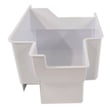
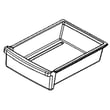
Yes. We still help customers get replacement parts for Kenmore refrigerators, including the Kenmore 11169339811 top-mount refrigerator. The key is matching parts to your exact model number so the fit, wiring, and mounting points are correct; use the parts list and diagrams in the 11169339811 owner's manual.
How to find the right part for your Kenmore 11169339811
Use your model number first, then narrow by the system you are repairing (cooling, doors, ice maker, or water system).
- Confirm the full model number on the rating label: 11169339811
- Identify the symptom (not cooling, leaking, noisy, ice maker not working)
- Use the exploded-view diagrams to match the part location and description
- Compare any markings on the old part (sticker numbers, connector style)
- Order the exact replacement listed for your model to avoid returns
Common Kenmore refrigerator parts people replace
These are the most frequent wear items and failure points on top-mount refrigerators.
| System | Common parts | Typical symptom |
|---|---|---|
| Cooling | Evaporator fan motor, defrost heater, thermostat | Warm fridge, frost buildup |
| Doors | Door gasket, hinges | Moisture, poor sealing, warm spots |
| Water/ice (if equipped) | Water filter, inlet valve, ice maker parts | No ice, slow fill, leaks |
| Controls | Thermistor, control board | Erratic temps, error codes |
Why it matters to match the exact model
Kenmore model families can look similar but use different electrical connectors, door seals, and ice maker configurations. Ordering by 11169339811 prevents fit issues and helps restore proper temperatures and energy efficiency.
If you see an error code
For Kenmore 111 model refrigerators, use our error code reference to translate the display code into the most likely failed component and checks.
- Start with the code definition
- Perform the basic checks (door closure, airflow blockage, frost buildup)
- Replace only the part tied to the confirmed failure
Related help: Kenmore 111 model top freezer refrigerator error codes
Last updated: February 2026
What's the average lifespan of a Kenmore refrigerator?
Kenmore refrigerators typically last 12 to 15 years with normal household use. For your Kenmore 11169339811 top-mount refrigerator, regular maintenance (cleaning condenser coils, keeping door seals tight, and maintaining airflow) is what most directly determines whether you land closer to 12 years or push beyond it.
Typical lifespan and what affects it most
A refrigerator’s life is usually limited by heat stress, airflow restrictions, and wear on moving parts like fans and the compressor.
- Condenser coil cleanliness (dust and pet hair raise operating temperatures)
- Door gasket condition (air leaks force longer run times)
- Vent and airflow management (blocked vents cause warm spots and icing)
- Room temperature and placement (tight cabinets and hot garages shorten life)
- Power quality (frequent outages or surges increase control and compressor stress)
Maintenance checklist (best return for the effort)
Use this schedule to keep a top-mount refrigerator like model 11169339811 running efficiently.
| Task | How often | Why it matters |
|---|---|---|
| Vacuum/brush condenser area | Every 6 months | Reduces heat load and compressor run time |
| Clean and inspect door gaskets | Every 3 months | Prevents warm air leaks and frost buildup |
| Confirm interior vents are clear | Monthly | Maintains even cooling and proper defrost performance |
| Level the refrigerator | Once, then as needed | Helps doors close fully and seal consistently |
Signs you are nearing end-of-life
These symptoms often show up more as the unit ages, even if temperatures still seem “okay.”
- Compressor runs almost constantly or cycles very frequently
- Freezer stays cold but refrigerator section warms (airflow or fan issues)
- Repeated heavy frost on the freezer back wall (defrost system stress)
- Water puddles under or inside the refrigerator (drain or defrost-related)
- Door won’t stay shut or you feel air leaking around the gasket
Why it matters
A refrigerator that is struggling to cool usually runs longer and hotter, which accelerates wear on the sealed system and fans. Keeping coils clean and seals tight is the simplest way to extend lifespan and reduce energy use.
For model-specific specifications and safety notes (including flammable refrigerant handling warnings), follow the owner's manual.
Last updated: February 2026
How to tell cubic feet of Kenmore refrigerator by model number?
For Kenmore model 11169339811, the capacity is listed as 14.2 cu ft in the specifications section of the owner's manual. If you cannot access the manual, you can also confirm capacity on the refrigerator’s rating label or estimate it by measuring the usable interior space.
Fast ways to find cubic feet
- Check the specifications in the owner's manual for model 11169339811.
- Look for the rating label inside the fresh food compartment (commonly on a side wall near the crisper area); it often lists capacity in cu ft.
- Use a measurement-based estimate when labels are missing or unreadable.
How to estimate cubic feet by measuring
Measure the usable interior (not the outside cabinet). For the most accurate estimate, measure the refrigerator and freezer sections separately, then add them.
- Measure height, width, and depth in inches
- Multiply: H × W × D = cubic inches
- Convert: cubic feet = cubic inches ÷ 1728
| Step | What to measure/do | Result |
|---|---|---|
| 1 | H × W × D (inches) | cubic inches |
| 2 | Divide by 1728 | cubic feet (approx.) |
Why the model number alone is not enough
Kenmore model numbers (including the 111 prefix) identify the product line and configuration, but they do not reliably encode the exact storage capacity. The rating label and the owner's manual provide the definitive number.
Related help for Kenmore 111 refrigerators
If you are checking capacity because the display is showing an error or the unit is not cooling correctly, use the Kenmore 111 model top freezer refrigerator error codes guide to interpret any codes before troubleshooting further.
Last updated: February 2026
What are the common problems with Kenmore 11169339811 refrigerators?
Common problems we see with the Kenmore 11169339811 top-mount refrigerator are weak or uneven cooling, frost buildup from defrost issues, water leaks (often from a clogged defrost drain), ice maker or water supply problems (if equipped), and unusual fan or compressor noise. For model-specific operating checks and safety notes, use the 11169339811 owner's manual.
Most common symptoms and what they usually point to
- Refrigerator warm, freezer OK (or vice versa): evaporator fan issue, airflow blockage, or frost-packed evaporator
- Both sections warm: dirty condenser coils, condenser fan problem, start device/control issue, or sealed-system trouble
- Heavy frost on back wall/freezer: defrost heater, defrost sensor/thermostat, or control/defrost timing problem
- Puddles inside or under the unit: defrost drain clogged, drain tube issue, or drain pan not evaporating normally
- No ice or slow ice (optional ice maker): low inlet water pressure, frozen fill tube, water inlet valve issue, or ice maker module problem
- Buzzing, rattling, or clicking: fan blade hitting ice, loose panels, or compressor start attempts
Quick checks we recommend first
- Set temps to 0°F freezer and 37°F fresh food; wait 24 hours to stabilize
- Make sure vents are not blocked by food packages
- Check door gaskets for gaps and confirm doors close on their own
- Clean the condenser area (unplug first); dust buildup causes warm temps and longer run times
- Look for a solid frost sheet on the freezer back wall; it points to a defrost or airflow problem
Specs and safety notes that affect troubleshooting
This model uses R600A refrigerant, which is flammable; avoid puncturing any sealed-system tubing and do not use mechanical devices to speed up defrosting.
| Item | What to use for this model |
|---|---|
| Refrigerant | R600A (flammable) |
| Ice maker | Optional on some configurations |
| Dimensions, capacity, weight | Confirm in the 11169339811 owner's manual for your exact configuration |
Why it matters
Cooling, frost, and leak complaints often share the same root causes: restricted airflow, a defrost failure, or a blocked drain. Fixing the underlying cause prevents food spoilage, ice buildup, and floor damage.
If you see a display code or suspect an electronic fault, use our Kenmore 111 model top freezer refrigerator error codes guide.
Last updated: February 2026





