Error Codes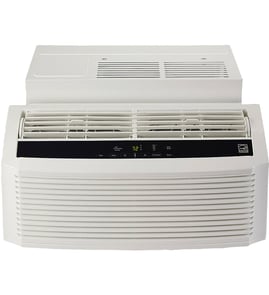




How many sq ft will a 10,000 BTU AC cool?
A 10,000 BTU room air conditioner like the GE AHC10LYQ2 typically cools about 400 to 550 sq ft in average conditions. Real coverage depends most on sun exposure, insulation, ceiling height, and how well air can circulate through the space.
Quick sizing guide (10,000 BTU)
- Best fit: 400 to 450 sq ft (more consistent comfort)
- Possible range: up to about 550 sq ft (milder climates, shaded rooms, good insulation)
- If the room is very sunny or poorly insulated: plan closer to 350 to 400 sq ft
- If you have high ceilings (9 ft+): reduce the effective sq ft target
- If the space is open to hallways/other rooms: treat it like a larger room
Factors that change the square-foot coverage
- Direct sun through large windows can reduce cooling performance
- Poor insulation or air leaks (gaps around windows/doors) increase load
- Heat sources (kitchen nearby, many people, electronics) add BTUs
- Airflow restrictions (dirty filter, blocked grille) reduce output
- Humidity level affects comfort; higher humidity can make a room feel warmer
Simple reference table
| Room conditions | Expected coverage for 10,000 BTU |
|---|---|
| Shaded, well insulated, normal ceiling | 450 to 550 sq ft |
| Average home conditions | 400 to 450 sq ft |
| Very sunny, leaky, high ceiling, or open layout | 350 to 400 sq ft |
Why it matters
Right-sizing helps the GE AHC10LYQ2 run longer, steadier cycles for better comfort and humidity control. An undersized unit runs constantly and struggles to keep up; an oversized unit can cool fast but leave the room feeling clammy.
If cooling feels weak in the right-size room
Before assuming the unit is too small, we recommend these checks:
- Clean or replace the room air conditioner air filter WJ85X24905
- Make sure the front grille and vents are not blocked by curtains or furniture
- Confirm the mode is set to Cool and the temperature is set low enough
- Seal air leaks around the window installation
- Review common fault indicators in GE error codes
Last updated: January 2026
Which AC is best for a 10 by 10 room?
For a 10 by 10 room (about 100 sq. ft.), the best choice is typically a window or room air conditioner in the 5,000 to 6,000 BTU range. Your GE AHC10LYQ2 is a room air conditioner model; for a small room like this, correct sizing plus clean airflow (especially the filter) matters most.
Recommended size for a 10 by 10 room
Most rooms around 100 sq. ft. cool efficiently with:
- 5,000 to 6,000 BTU for average insulation and sun exposure
- 6,000 to 7,000 BTU if the room gets strong afternoon sun or has poor insulation
- 4,000 to 5,000 BTU if the room is shaded and well insulated
Quick sizing table
| Room size | Typical BTU range | Best fit |
|---|---|---|
| 100 sq. ft. (10x10) | 5,000 to 6,000 | Bedroom, office |
| 150 sq. ft. | 6,000 to 8,000 | Larger bedroom |
| 250 sq. ft. | 8,000 to 10,000 | Living area |
What to choose: window vs. portable
For a 10x10 room, we typically recommend a window (room) air conditioner over a portable unit.
- Window units usually cool more efficiently for the same BTU
- Portables often need venting and can feel less effective in humid weather
- Window units free up floor space
Why airflow and maintenance matter (especially on AHC10LYQ2)
Even a correctly sized AC will struggle if airflow is restricted. Start with the filter and front intake area.
- Clean or replace the air filter regularly (monthly during heavy use)
- Keep supply and return airflow clear (no curtains or furniture blocking)
- Confirm the unit is level and draining correctly to avoid moisture issues
- Use a reasonable set temperature (for example, 72 to 76 F) and let it run steadily
If you need a replacement filter for this model, use the exact match room air conditioner air filter WJ85X24905.
Why it matters
An oversized AC can short-cycle (turn on and off too often), leaving the room clammy; an undersized AC can run constantly and still not keep up. Correct BTU sizing plus a clean filter gives the best comfort and efficiency.
Last updated: January 2026
How do I find the model number on my AHC10LYQ2?
For your GE room air conditioner, the model number is printed on the unit’s rating label. On AHC10LYQ2, you’ll typically find that label on the side of the cabinet, behind the front grille, or near the air filter area; match it exactly when ordering parts.
Where to look on a GE room air conditioner
Check these common label locations (use a flashlight):
- Side panel of the unit cabinet (often right side)
- Behind the front panel or front grille
- Near the air filter compartment
- Along the upper front frame, just inside the grille opening
- On the back near the condenser coil area (less common)
If your front grille needs to come off to see the label, handle it carefully to avoid breaking tabs; replacement cosmetic parts are model-specific, such as the room air conditioner front panel assembly WJ71X24904.
What the label looks like and what to copy
The rating label usually includes several identifiers. Copy them exactly (including dashes and letters):
- Model number (example: AHC10LYQ2)
- Serial number
- Electrical ratings (volts, amps)
- Cooling capacity information
Quick ID checklist
| Item to record | Why it matters |
|---|---|
| Model number | Ensures correct diagrams and part fit |
| Serial number | Helps confirm production version |
| Brand (GE) | Narrows parts catalog |
Why it matters
Room air conditioner parts can change by production run. Using the exact model number from the rating label helps us match the correct air filter, remote, front panel, and control overlay for your GE AHC10LYQ2.
Last updated: March 2026