Owner’s manual
 View engine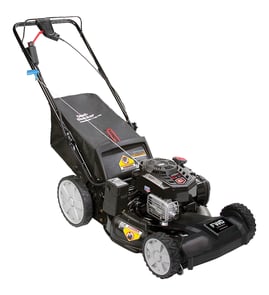


How to find Craftsman model number?
On the Craftsman walk-behind mower model 917370661, the model number is printed on the mower’s ID label, typically on the rear of the deck near the lower handle mounting points. Use that exact number when ordering parts or checking specifications in the 917370661 owner's manual.
Check these common label locations first:
- Back of the mower deck, between the lower handle mounts
- Rear deck area near the discharge opening or rear door
- Top of the deck near the engine mounting area (less common)
- Under the rear flap or bagging door area (if equipped)
Model labels can be dirty or faded from grass and debris. To get a clean read:
- Brush off dry grass and wipe the label with a damp rag
- Use a flashlight at a low angle to make stamped or faded text easier to see
- Write the model number exactly as shown (include dots or dashes if present)
- Take a photo before the label wears further
| What you’re looking at | What it identifies | Used for |
|---|---|---|
| Mower model number (example: 917370661) | The Craftsman mower and its chassis/deck | Ordering mower parts like blades, cables, wheels |
| Engine model/type/code | The Briggs & Stratton engine | Engine-specific parts like carburetor, ignition, air filter |
The model number ties to the exact parts list and diagrams for your mower. For example, model 917370661 uses a 22-inch blade shown in the parts list; matching the model helps ensure you get the correct blade, hardware, and drive components.
Last updated: January 2026
Should I use 87 or 91 gas for lawn mower?
For the Craftsman 917370661 gas walk-behind mower, use regular 87-octane unleaded gasoline; higher octane (like 91) does not improve performance in small mower engines. Use fuel with no more than 10% ethanol (E10) to protect the fuel system and warranty guidance in the 917370661 owner's manual.
- Octane: 87 (regular) is the right choice for normal mowing.
- Ethanol content: Up to 10% ethanol (E10) is acceptable.
- Avoid: Any fuel above E10 (for example E15 or E85).
- Freshness: Use fresh gas; stale fuel is a common no-start cause.
- Storage: If fuel will sit, use a stabilizer and store gas in a clean, non-rusting can.
| Fuel choice | What you get | What you do not get |
|---|---|---|
| 87 octane (regular) | Normal starting, power, and reliability | No loss of engine protection when used correctly |
| 91 octane (premium) | Usually nothing noticeable in a mower | Extra power, cleaner running, or longer engine life |
Stale or contaminated fuel causes more problems than octane rating. Check these first:
- Drain old fuel and refill with fresh, clean gasoline
- Inspect and service the air filter
- Check the spark plug connection and condition
- Make sure the operator presence control bar is held correctly for starting
- If the blade hit something, inspect for a loose blade or damaged adapter
Using the correct fuel (fresh 87 octane, E10 or less) helps prevent hard starting, surging, and carburetor varnish. It also reduces downtime and protects key wear items like the ignition and fuel system.
Last updated: January 2026
What are the common problems with Craftsman lawn mowers?
Common problems on the Craftsman 917370661 walk-behind mower are no-start conditions (stale fuel, dirty air filter, bad spark plug, disconnected plug wire), loss of power from grass and debris buildup under the deck, excessive vibration from a worn or loose blade, and self-propel issues when the drive wheels or drive system are dirty or worn. See the 917370661 owner's manual for the model’s troubleshooting chart and maintenance steps.
- Won’t start: stale fuel, water in fuel, dirty air filter, bad spark plug, control bar not held to the handle
- Loss of power: cutting too much grass, clogged underside of deck, dirty air filter, oil level issues
- Excessive vibration: bent/worn blade, loose blade bolt, damaged blade adapter
- Hard to push or won’t self-propel: grass packed in drive wheel area, worn/broken drive cable, belt off pulley
- Starter rope hard to pull: control bar not engaged, blade dragging in grass
- Fuel and air: drain stale gas and refill with fresh fuel; clean or replace the air filter.
- Ignition: confirm the spark plug wire is firmly seated; replace the spark plug if fouled.
- Deck and blade area: clean packed grass from under the mower deck; inspect the blade for bends and tightness.
- Drive wheels: make sure both front drive wheels turn freely; clean grass and debris from the dust cover and gear teeth.
- Controls: hold the control bar to the handle when starting; a released control bar can keep the brake engaged.
| Symptom | Common fix | Example part for this model |
|---|---|---|
| Poor cut, vibration | Replace a worn/bent blade | Husqvarna lawn mower 22-inch deck 3-in-1 blade 532421825 |
| Mower won’t move | Replace worn/broken drive cable | Lawn mower drive cable 586638001 |
| Side discharge problems | Replace damaged deflector | Lawn mower clipping deflector 532426129 |
Most “big” mower problems start as simple maintenance issues: stale fuel, airflow restriction, or grass buildup that overloads the engine and drive system. Keeping the deck clean and the drive wheels free-moving helps the Craftsman 917370661 cut better, start easier, and last longer.
Last updated: January 2026