Installation guide
 Owner’s manual
 Error Codes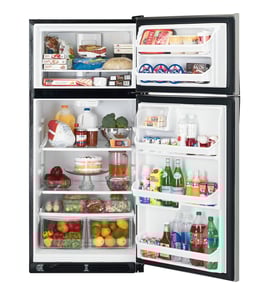


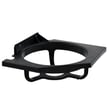
What is a top mount refrigerator?
A top-mount refrigerator is a classic layout where the freezer compartment is on top and the fresh-food (refrigerator) section is below. On the Frigidaire LFHT2131QP2, this design keeps everyday refrigerated items at a comfortable reach while still providing full freezer storage above.
In a top-mount refrigerator like the Frigidaire LFHT2131QP2:
- The freezer is the upper door and compartment
- The refrigerator section is the lower door and compartment
- Cold air is produced at the evaporator and circulated through the cabinet
- Door seals and proper leveling help the doors close fully and maintain temperatures
- Airflow at the toe grille area is important for normal operation
For model-specific setup and positioning details (including clearances and leveling), use the LFHT2131QP2 installation guide.
| Feature | What it means in daily use |
|---|---|
| Freezer on top | Frozen foods are at eye level; fresh foods are lower |
| Simple design | Fewer complex features; straightforward storage |
| Space needs | Requires clearance around the cabinet for airflow |
| Door sealing | Leveling helps doors close and seal properly |
Knowing you have a top-mount design helps with installation planning (clearances, door swing space, and leveling) and troubleshooting basics like warm temperatures caused by blocked airflow or doors not sealing.
- Keep the toe grille area unblocked for proper air circulation
- Allow typical installation clearances (sides/top and back) for airflow and connections
- Level the cabinet so doors close and seal correctly
- Recheck water connections after installation if your unit has an ice maker hookup
Last updated: January 2026
How to fix a Frigidaire refrigerator door alignment?
On the Frigidaire LFHT2131QP2, door alignment is corrected by leveling the cabinet first, then adjusting the hinges so the doors sit level and seal evenly. A properly leveled refrigerator should tilt slightly from front to back so the doors close on their own and the gaskets seal.
- Confirm the refrigerator is stable: all four cabinet corners must rest firmly on the floor.
- Level front-to-rear: set the cabinet level at the front and rear, with a slight tilt of about 1/4 inch (6 mm) from front to back to help doors close and seal.
- Check door height and alignment: the freezer and fresh food doors should align with each other and be level.
- If alignment is still off, adjust hinge positioning:
- Remove the toe grille (if needed for access).
- Loosen hinge screws slightly, shift the hinge as needed, then retighten.
- When reinstalling a hinge, tracing around the hinge before removal helps you put it back in the same position.
For model-specific diagrams and the exact hinge locations, use the LFHT2131QP2 owner’s manual.
- Make sure the refrigerator is not rocking on the floor.
- Verify the cabinet has the slight front-to-back tilt (about 1/4 inch).
- Confirm shelves and door bins are not overloading one side of the door.
- Inspect hinge bushings and hinge pins for wear or looseness.
- Check that the door gasket is not folded, torn, or pulling away from the liner.
| What you see | Most likely cause | What to do |
|---|---|---|
| Doors don’t line up at the top | Cabinet not level | Re-level the cabinet first |
| Door swings open or won’t self-close | No front-to-back tilt | Add slight tilt so doors close |
| Door rubs or binds | Hinge shifted | Loosen, reposition, retighten hinge |
| Warm spots or moisture near door | Poor gasket seal | Inspect gasket and alignment |
When the doors are level and the cabinet is set with the correct tilt, the gaskets seal properly. That prevents warm air leaks, reduces frost buildup, and helps the compressor run less often.
Last updated: January 2026
What is the most common problem with a Frigidaire refrigerator?
The most common problem we see with Frigidaire refrigerators like model LFHT2131QP2 is a cooling complaint: the fresh food section gets warm, temperatures swing, or the unit seems to run too long. In many cases, the root cause is airflow or heat-transfer related (condenser coils, fan operation, or door sealing).
Start with the items that most often create “not cold enough” symptoms and are easiest to confirm.
- Make sure the temperature controls are set to a normal starting point; after changes, allow about 24 hours to stabilize.
- Allow a proper cool-down period after startup; the manual recommends running with doors closed for at least 8 hours before loading food.
- Check door sealing and closing; a leaking gasket can cause warm temps, frost, and long run times.
- Listen for fan operation; a failed evaporator fan can leave the refrigerator section warm even if the freezer seems colder.
- Verify the unit is not stuck in a defrost-related situation; the manual notes a defrost cycle can temporarily stop cooling.
If basic checks point to airflow or sealing, these are common repair paths for this model.
| Symptom | Likely area | Example part for LFHT2131QP2 |
|---|---|---|
| Fresh food warm, freezer cold | Evaporator airflow | Refrigerator evaporator fan motor 242077705 |
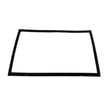
| Frost buildup, moisture, warm temps | Door sealing | Frigidaire refrigerator door gasket (white) 242193213 |
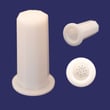
| Poor cooling after sealed-system work | Refrigerant moisture control | Refrigerator filter dryer 5303305677 |
Cooling issues are usually progressive: small air leaks or weak airflow force the compressor to run longer, which can lead to food safety problems and higher energy use. Catching a gasket or fan problem early typically prevents bigger temperature swings.
Last updated: January 2026
Why is my Frigidaire top mount freezer not freezing?
If your Frigidaire LFHT2131QP2 top-mount freezer is not freezing, the most common causes are incorrect control settings (including being set to “0/OFF”), blocked air vents, or a fan or sealed-system cooling problem. Start by confirming the controls are set to a cooling position and allow 24 hours for temperatures to stabilize.
- Make sure the refrigerator/freezer control is not set to “0” or “OFF” (that turns the compressor off).
- Confirm the doors close fully and the gaskets seal all the way around.
- Do not block the cold air vents with food; airflow is required to cool both compartments.
- After any adjustment, wait 24 hours for temperatures to stabilize.
- If the unit was just plugged in or moved, run it with doors closed for at least 8 hours before loading food.
The LFHT2131QP2 uses a main refrigerator/freezer control that changes temperatures in both compartments, plus an auxiliary freezer control that fine-tunes freezer temperature.
| Control or condition | What it affects | What to do |
|---|---|---|
| Refrigerator/freezer control set to “0/OFF” | Compressor stops; no cooling | Move to a cooling setting (often “Normal” to start) |
| Auxiliary freezer control | Freezer temperature only | Adjust warmer or colder as needed |
| Blocked vents | Air circulation between compartments | Rearrange food to keep vents clear |
For the exact control locations and recommended starting settings, follow the LFHT2131QP2 owner's manual.
If the controls are set correctly and vents are clear, a freezer that will not freeze often comes down to airflow or refrigeration-system issues.
- If you do not hear the evaporator fan running when the freezer door switch is pressed, the fan motor or blade can be the issue.
- If the refrigerator runs constantly but temperatures stay warm, the sealed system (compressor, refrigerant, restriction) is a likely direction.
- If the compressor is not starting reliably, a start device or capacitor can be involved.
Model-matched parts that commonly relate to “not freezing” symptoms include the refrigerator evaporator fan motor 242077705, refrigerator compressor 240550946, and electrolux refrigerator compressor start relay 241941005.
A freezer that is not freezing is usually an airflow or compressor-run issue; catching it early helps prevent food loss and reduces strain on the compressor and control system.
Last updated: January 2026