
Is pulsed MIG worth the money?
Yes, pulsed MIG is worth the money when you regularly weld thin material, aluminum, or stainless, or you need better control in out-of-position work; it typically reduces spatter, lowers heat input, and improves bead appearance. For straightforward mild-steel PROjects on thicker material, standard MIG usually delivers the best value.
Pulsed MIG (a controlled current waveform) helps you stay in a stable spray-like transfer at lower average heat. That matters most when you are trying to avoid burn-through, warping, or excessive cleanup.
- Thin sheet metal where distortion is a PROblem
- Aluminum MIG where consistent arc control is critical
- Stainless steel where heat tint and warping are concerns
- Out-of-position welding where puddle control is harder
- PROduction or repeat work where time savings add up
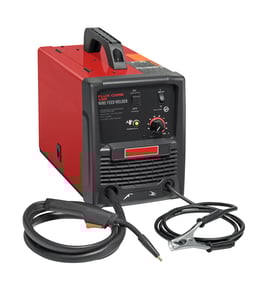
If your Lincoln PRO weld pak 155 (model PRO) is mainly used for basic steel fabrication, pulsed MIG can be more capability than you will actually use.
- Mostly mild steel, moderate to thicker gauges
- Short, occasional welds where cleanup time is not a big cost
- Budget is better spent on consumables, gas, and practice time
- Your current machine already meets your penetration and appearance needs
| Feature | Standard MIG (CV) | Pulsed MIG |
|---|---|---|
| Spatter | More likely | Typically less |
| Heat input | Higher average | Lower average |
| Thin metal control | Good with practice | Typically easier |
| Aluminum/stainless | Works, more tuning | Often smoother |
| Equipment cost | Lower | Higher |
On a welder setup, the real cost is often rework: grinding spatter, fixing burn-through, and correcting distortion. If pulsed MIG reduces those steps for the materials you weld most, it can justify the upgrade faster than you would expect.
- Confirm your wire type and diameter (solid vs flux-cored) match the PROcess you plan to run
- Make sure your shielding gas options fit your materials (steel vs stainless vs aluminum)
- If you are upgrading machines, compare duty cycle and input power requirements for your shop
- For parts and accessories that fit your Lincoln PRO model PRO, start with the model parts list; you can also search by model on Sears PartsDirect
Last updated: February 2026
What's the best welder for beginners?
For most beginners, a small MIG (or flux-core MIG) welder is the best choice because it is the easiest PROcess to learn and PROduces consistent results quickly. If you already own a Lincoln model like the Lincoln PRO weld pak 155 (model PRO), focus on dialing in wire size, polarity, and settings before upgrading; you can also shop by model on Sears PartsDirect.
- MIG with shielding gas: clean welds on mild steel; great for garage fabrication
- Flux-core MIG (no gas): better outdoors and on slightly dirty steel; more spatter
- Stick (SMAW): strong on thicker steel; steeper learning curve on thin metal
- TIG: best appearance and control; slowest and most skill-intensive
| PROcess | Easiest to learn | Best for thin metal | Outdoor friendly | Typical beginner use |
|---|---|---|---|---|
| MIG (gas) | Yes | Yes | No | Auto body, light fab |
| Flux-core | Yes | Fair | Yes | Fences, farm repairs |
| Stick | No | No | Yes | Heavy steel repairs |
| TIG | No | Yes | No | Precision, stainless |
- Input power: 120V for light work; 240V for thicker material and longer duty cycles
- Amperage range: enough output for your thickest steel (common beginner range is 30A to 140A)
- Duty cycle: higher duty cycle means fewer cool-down breaks
- Consumables availability: common wire sizes and contact tips are easier to keep stocked
- Simple controls: tapped voltage settings or clear charts reduce setup time
- Match wire diameter to material thickness (thin sheet metal needs smaller wire)
- Confirm polarity (flux-core often uses DCEN; MIG with gas often uses DCEP)
- Use the right shielding gas for MIG (common mix for mild steel is argon/CO2)
- Prep metal: remove paint, rust, and oil near the weld
- Practice on scrap with the same thickness before welding the real part
Choosing the right PROcess prevents burn-through on thin steel, reduces spatter cleanup, and helps you build repeatable technique faster. For a Lincoln weld pak 155 like model PRO, correct setup and consumables typically improve results more than moving to a different machine.
Last updated: February 2026
How do I find the model number on my PRO?
The model number for your Lincoln welder is printed on the rating label (nameplate) on the machine; on many PRO 155 style units it’s on the back, side panel, or near the input power cord. Use that exact model number when searching parts and diagrams.
Check these common label locations first:
- Back panel near the power cord entry
- Side panel near the handle or case seam
- Inside the wire compartment door (if your unit has one)
- Near the cooling fan vents
- Bottom of the case near the feet
The nameplate usually includes several identifiers. Record them exactly as shown.
| Label item | What it’s used for | Example format |
|---|---|---|
| Model number | Matching diagrams and parts | PRO 155, PRO-155 |
| Code number | Identifies PROduction version | 6 digits (varies) |
| Serial number | Traceability and service history | letters and numbers |
Small differences in the model or code number can change internal components like the drive assembly, gun/torch connection, switch, or wiring.
- Copy the model number character-for-character (including dashes)
- Also capture the code number if it’s listed
- If the label is worn, use a flashlight and take a close-up photo
- Search using the full model number, not just “PRO”
Lincoln welders often have multiple versions under similar names; the correct model and code number ensure you get the right replacement parts and wiring information.
For a quick walkthrough on locating and understanding model numbers, use [how to find your appliance model number (and what it means for parts)].
Last updated: March 2026