Owner’s manual
 View engine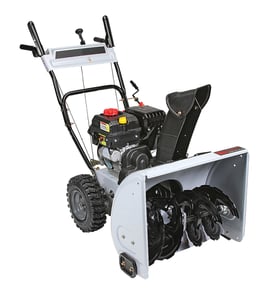


How do I tell what year my snowblower is?
For Craftsman snow thrower model 917881050, the most reliable way to determine the year is to use the engine date code (stamped on the engine) and match it to the manufacturer’s date-code format; your serial number decal on the rear housing also helps confirm the unit’s identity. See the 917881050 owner’s manual for where to find the model and serial decal.
Where to look on the snowblower
Check these common locations before you start decoding:
- Rear housing decal: model and serial number are on a decal attached to the rear of the snow thrower housing
- Engine shroud or valve cover area: engine model, type, and code are often stamped or printed on a label
- Recoil starter housing: sometimes the engine code is near the pull-start assembly
- Frame near the wheels: occasional secondary ID labels
How the engine code tells the year
Many small engines use a numeric date code where the first two digits represent the year and the next digits represent the month and day.
Example format (common on many engines):
| Sample code | What it means | Result |
|---|---|---|
| 99011556 | First two digits = year; next four digits = month/day | Built Jan 15, 1999 |
If your engine uses a different format, use the engine brand’s decoding chart for that exact engine family.
Quick tips to avoid mix-ups
- Record the full engine code exactly as shown (include leading zeros)
- Compare the engine build date to the snowblower’s purchase date if you still have it
- Use the model/serial decal to ensure you are decoding the correct machine (especially if the engine was replaced)
Why it matters
Knowing the build year helps us match the correct parts and specs for maintenance items like belts, cables, and wear components. For example, if you are troubleshooting auger engagement, the correct replacement belt for this model is the snowblower auger drive belt 532408007.
Last updated: January 2026
Should I use 87 or 91 for snowblower?
For the Craftsman snow thrower model 917881050, we use fresh 87-octane (regular) gasoline unless your 917881050 owner's manual specifies otherwise. Moving up to 91 octane does not improve power or snow-throwing performance in typical small engines; fuel freshness and proper storage matter more.
What to use (and what to avoid)
- Use 87 octane or higher from a busy station (fresher fuel).
- Use fresh fuel; replace gas that is more than 30 days old if it was not stabilized.
- Use a fuel stabilizer for any fuel that may sit between storms.
- Avoid stale gas (hard starting, surging, poor power).
- Avoid fuel spills on painted/plastic surfaces; wipe up immediately.
Quick decision guide
| Situation | Best choice | Why |
|---|---|---|
| Normal operation in cold weather | 87 octane | Meets typical small-engine needs |
| You only have 91 available | 91 octane | Safe to use, but no added benefit |
| Fuel will sit for weeks | 87 + stabilizer | Helps prevent varnish and gumming |
| Off-season storage | Drain or stabilize | Reduces carburetor and starting issues |
Why octane is not the main issue
Octane mainly measures resistance to knock. Most snowblower engines are designed to run correctly on regular fuel; problems that feel like “needs premium” are usually caused by old fuel, water contamination, or carburetor varnish, not low octane.
Helpful maintenance steps that prevent fuel problems
- Before service or adjustments, follow the safety steps in the 917881050 owner's manual (key off, moving parts stopped, disconnect spark plug wire).
- At season start, check ignition and tune-up basics; how to check a snowblower spark plug video.
- If performance drops under load, inspect the auger drive system; a worn snowblower auger drive belt 532408007 can mimic an engine power problem.
Last updated: January 2026
What is the most common problem with snow blowers?
The most common problem we see on the Craftsman 917881050 snow thrower is a no-start or hard-start condition, usually tied to fuel issues (stale gas or water in fuel) or ignition issues (spark plug or spark plug wire). Clogged discharge chutes and drive or auger problems are also frequent.
Most common issues (and what to check first)
- Won’t start: verify the safety ignition key is inserted, fuel valve is ON (if equipped), and you have fresh fuel.
- Runs rough or loses power: stale fuel, water in fuel, choke set wrong, or a restricted muffler.
- Poor snow discharge: discharge chute or impeller area packed with snow.
- Auger not turning: belt or drivetrain issue; inspect the auger drive system.
- Drive slipping or no traction: drive control adjustment, worn friction components, or linkage issues.
For model-specific operating and troubleshooting steps, follow the 917881050 owner's manual.
Safe way to clear a clogged chute (most common snowblower hazard)
The manual calls out chute clearing as a major injury risk. Use this exact process:
- Shut the engine off.
- Wait 10 seconds for the impeller to stop.
- Use a clean-out tool; never use your hand.
If your chute deflector is not holding position or feels loose, inspect the chute hardware and spring tension; the chute deflector tension spring 532184505 is a common wear item on this model.
Quick symptom-to-cause guide
| Symptom | Most likely cause | Best first step |
|---|---|---|
| Engine won’t start | Stale fuel, spark plug issue, key not inserted | Fresh fuel, check key, inspect spark plug/wire |
| Engine runs rough | Water in fuel, choke setting, fuel restriction | Drain/replace fuel, set choke correctly |
| Snow discharge slows | Chute/impeller packed | Clear chute safely (engine off, wait 10 seconds) |
| Auger stops under load | Belt slipping/worn | Inspect/replace belt (common wear item) |
Why it matters
Most “snowblower problems” are simple maintenance items that prevent bigger repairs. Fresh fuel, correct storage, and safe chute clearing reduce downtime and help protect the auger, impeller, and drive system.
Last updated: January 2026
Is it cheaper to repair or replace a snowblower?
Repairing a Craftsman snow thrower like model 917881050 is usually cheaper when the problem is a normal wear item (belt, spark plug, adjustments, lubrication). Replacing the machine makes more sense when the repair involves major drivetrain or engine work and the total cost approaches about half the price of a comparable new snowblower.
Quick decision checklist
- Repair when the issue is maintenance-related (oil change, spark plug, lubrication, minor adjustments).
- Repair when the machine is otherwise reliable and the frame and auger housing are solid (no severe rust or cracks).
- Replace when you have repeated breakdowns in the same season.
- Replace when the repair is a major assembly (gearbox, auger weldment, engine-level work) plus labor.
- Replace when parts and labor together are near 50% or more of the cost of a new unit.
Common repairs vs. “big ticket” repairs
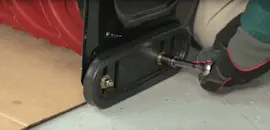
The 917881050 operator guidance calls out routine upkeep and seasonal replacement of wear items (spark plug, belt checks) and shows that belt replacement is a more involved service that can require separating the unit. Use the 917881050 owner's manual to match your symptom to the maintenance and troubleshooting sections.
| Repair type | Typical cost level | Notes |
|---|---|---|
| Spark plug, oil change, lubrication | Low | Often restores starting and performance issues. |
| Belt replacement | Medium | Belts are not adjustable; replace if worn or slipping. |
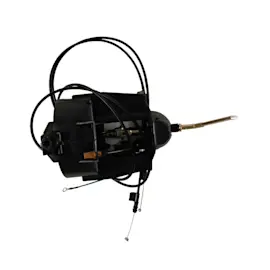
| Control cable replacement | Medium | Helps when drive or auger engagement is inconsistent. |
| Gearbox or auger assembly work | High | Often parts-heavy and labor-heavy. |
Parts that often make repair worthwhile
If your issue matches a common wear failure, repairing is usually the value move.
- Snowblower auger drive belt 532408007 (slipping auger, poor throwing)
- Control cable 532428272 (drive or auger control not engaging correctly)
- Snowblower gearbox 598831601 (grinding, seized auger drive, internal failure)
Why it matters
A well-maintained snowblower lasts longer and costs less per season. The manual’s maintenance schedule (oil, spark plug, belt inspection, lubrication) helps prevent the expensive failures that push the decision toward replacement.
Last updated: January 2026