Owner’s manual
 View engine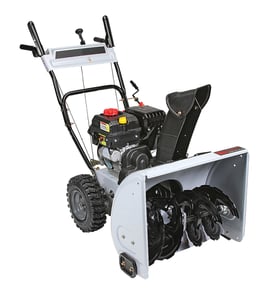



How to read Craftsman snowblower serial number?
On the Craftsman gas snow thrower model 536889251, the serial number is on the product identification label on the machine; we use it to identify the exact production run so you get the right parts and diagrams. For label location and number format, use the 536889251 owner's manual.
Where to find the model and serial label
Most Craftsman snow throwers place the identification label on the rear or lower frame area where it stays protected but readable.
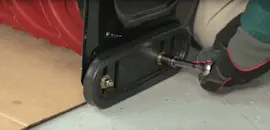
- Look on the rear of the unit near the axle and wheel area
- Check the back of the metal base between the rear wheels
- Inspect the frame near the engine mounting plate
- Wipe off packed snow, salt residue, and grease so the numbers are legible
- Take a photo of the label before ordering parts
How to read the numbers (what they mean)
Craftsman identification labels typically include a model number and a serial number.
| Item | What it’s used for | Example (format) |
|---|---|---|
| Model number | Matches parts diagrams and part lists | 536889251 |
| Serial number | Identifies the build run for revisions | Letters and numbers (varies) |
Tips to avoid ordering the wrong part
Even small production changes can affect belts, chute hardware, and controls.
- Match the model number exactly (all digits)
- Use the serial number when a diagram lists multiple versions
- If you’re replacing drive components, confirm belt routing and pulley style in the manual
- For common wear items, compare the old part to the diagram before ordering
Common parts that can vary by version
- Auger and traction belts (example: snowblower gas belt 585416MA)
- Chute rotation and retainer rings
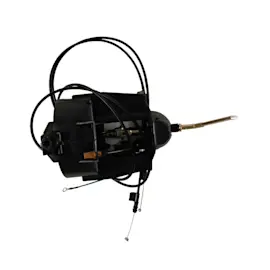
- Control cables and handle hardware
Why it matters
Using the correct model and serial information prevents fit issues, repeat repairs, and downtime during snow season, especially on a 33-inch, 13 HP unit like model 536889251.
Last updated: January 2026
How do I tell what year my snowblower is?
For a Craftsman gas snow thrower model 536889251, the most reliable way to tell the year is to read the engine manufacture date code (stamped on the engine) and decode it into a calendar date. Your 536889251 owner's manual helps you locate key engine controls and service access points so you can safely find that code.
Where to look for the date code
On most snowblower engines, the manufacture code is stamped or printed on the engine itself, not on the chute or handlebar area.
Check these common spots:
- Blower housing near the recoil starter
- Valve cover area
- Engine shroud (metal or plastic cover)
- Muffler side of the engine block
- Near the spark plug area (you may need to remove the hood)
How to decode the engine code into a year
Many small-engine date codes start with the year.
A common example format is:
- 99011556
- 99 = year (1999)
- 01 = month (January)
- 15 = day (15th)
- Remaining digits often identify the production line or sequence
Quick decode table (common pattern)
| Code segment | Meaning | Example from 99011556 |
|---|---|---|
| First 2 digits | Year | 99 = 1999 |
| Next 2 digits | Month | 01 = January |
| Next 2 digits | Day | 15 = 15th |
If the snowblower tag and engine code do not match
That can happen if the engine was replaced at some point. In that case:
- The engine code date tells you the engine’s build date
- The snowblower model number (536889251) identifies the correct parts diagrams and assemblies
- Use the earlier of the two dates as a practical “age” estimate for maintenance planning
Why it matters
Knowing the build year helps us match the right maintenance parts (belts, pulleys, cables) and avoid ordering look-alike parts that fit a different production run. For example, a worn auger drive belt is a common wear item on snow throwers like this; the correct replacement is the snowblower gas belt 585416MA.
Last updated: January 2026
Is it cheaper to repair or replace a snowblower?
For the Craftsman gas snow thrower model 536889251, it’s usually cheaper to repair when the problem is a normal wear item (belt, cable, fastener, tune-up). Replacing the machine makes more sense when repair costs add up to about half the price of a comparable new snowblower.
Quick decision checklist
- Repair when the issue is maintenance or a single failed part (belt, pulley, spring, key).
- Repair when the engine runs well and the auger and traction systems engage normally.
- Replace when the engine has major internal damage or the machine has repeated major failures.
- Replace when the frame, auger housing, or key structural areas are heavily rusted or cracked.
- Replace when multiple big-ticket systems need work at the same time (engine plus drive plus auger).
Common “repair-first” fixes for this model
These are typical, cost-effective repairs on model 536889251 that often restore performance quickly:
- Replace the auger drive belt (a damaged belt can stop snow discharge)
- Adjust belts and cables after belt service (the manual notes cable adjustment is needed after belt work)
- Replace worn idler or tension components that prevent proper belt deflection
Helpful parts to consider
| Symptom | Likely area | Example part for this model |
|---|---|---|
| Auger won’t throw snow | Auger belt slipping/broken | Snowblower gas belt 585416MA |
| Belt won’t stay tight | Idler system wear | Idler pulley 1502120MA |
| Controls feel weak/loose | Springs/spacers out of spec | Tension spring 165X159MA |
Cost rule we use (simple and practical)
Use this quick comparison to decide:
- Repair if the estimate is under ~50% of the cost of a similar new unit.
- Replace if the estimate is over ~50%, especially if the snowblower is older and needs multiple major repairs.
Why it matters
A snowblower that only needs wear-item service can be reliable for many more seasons. On the other hand, once you’re paying for multiple major repairs, you often spend more and still end up with downtime during the next storm.
Safety and planning tips before you decide
- Disconnect the spark plug wire before inspections or repairs.
- Stop the engine and remove the key before clearing clogs or checking the auger/impeller area.
- Use the maintenance schedule to reduce repeat failures and extend service life.
For model-specific maintenance intervals and belt procedures, follow the 536889251 owner’s manual.
Last updated: January 2026
What is the most common problem with snow blowers?
The most common problem we see with snow blowers is a no-start or hard-start condition, usually tied to fuel and ignition maintenance. On the Craftsman 536889251 gas snow thrower, the next most common issues are chute clogs and the auger not moving due to belt or drive-related problems.
Most common causes (and what to check first)
- Old or contaminated fuel: Drain old gas, refill with fresh fuel, and use fuel stabilizer for storage.
- Spark plug or ignition issue: Inspect the plug, check the wire connection, and replace the plug if fouled.
- Chute or auger housing clog: Shut the engine off, remove the key, disconnect the spark plug wire, and clear the clog with a tool (not your hands).
- Auger drive belt loose or worn: If the unit runs but will not discharge snow, the manual points to checking cable adjustment and then belt condition.
- Drive system wear: Slipping, poor traction, or inconsistent movement can point to belt, idler, or linkage issues.
Quick symptom-to-cause guide
| Symptom | Most likely cause | Best first step |
|---|---|---|
| Won’t start | Stale fuel, dirty carburetor, bad spark plug | Fresh fuel, inspect spark plug |
| Starts then dies | Fuel restriction, carburetor varnish | Check fuel flow, clean carburetor |
| Runs but won’t throw snow | Clog, cable out of adjustment, loose belt | Clear clog safely, check belt tension |
| Auger won’t turn | Belt issue, engagement problem | Inspect belt and idler movement |
Model-specific tip for the 536889251
Your 536889251 owner's manual calls out a common “runs but won’t discharge snow” scenario: verify the auger control cable adjustment first, then inspect the auger drive belt. It also specifies a belt deflection check (about 1/2 inch with moderate pressure when engaged), which is a fast way to spot a loose belt.
If the belt is damaged or stretched, replacing the snowblower gas belt 585416MA is a common fix for loss of auger performance.
Why it matters
Most snowblower failures happen at the first storm because fuel degrades during storage and belts and cables slowly go out of adjustment. A quick pre-season check prevents no-start problems, reduces clogging, and keeps the auger and impeller moving snow efficiently.
Last updated: January 2026