Installation guide
 Owner’s manual
 Error Codes


How wide is a Kenmore side by side refrigerator?
Most Kenmore side-by-side refrigerators are about 32 to 36 inches wide; for your Kenmore 10652609100, confirm the exact cabinet width and required clearances in the 10652609100 owner's manual.
Typical width ranges (what you can expect)
Side-by-side models commonly fall into these width bands:
| Refrigerator type | Typical width | Notes |
|---|---|---|
| Compact / apartment side-by-side | 32 to 33 in. | Smaller capacity, tighter kitchens |
| Standard side-by-side | 35 to 36 in. | Most common size |
| Counter-depth side-by-side | 35 to 36 in. | Shallower depth, similar width |
Don’t forget installation clearance
Even if the cabinet is 32 to 36 inches wide, you need extra space so the refrigerator can breathe and the doors can open.
- Plan for 1/2 inch of space on each side and at the top for ventilation.
- If the refrigerator sits next to a fixed wall, allow at least 2 inches on the hinge side (varies by setup) so the door can swing.
- If you have an ice maker, leave extra room behind for the water line connection.
- Avoid installing near heat sources; performance drops when the area is too warm.
How we recommend measuring width at home
Use a tape measure and check both the appliance and the opening.
- Measure the refrigerator cabinet at the widest point (not the doors).
- Measure the doors/handles separately if you need to pass through a doorway.
- Measure the opening width in 3 places (top, middle, bottom).
- Confirm the floor is level; a tilt can change door swing and gaps.
- Compare your measurements to the specs in the 10652609100 installation guide.
Why it matters
Width affects fit, airflow, and door swing. Too-tight installs can cause warm temperatures, noisy operation, and door seal problems over time.
Last updated: February 2026
How do I reset a Kenmore refrigerator?
To reset a Kenmore refrigerator like model 10652609100, turn the refrigerator control to OFF, disconnect power for about 5 minutes, then restore power and set the controls back to your normal settings. For models with digital controls, turning the unit OFF then ON performs a reset (see the 10652609100 owner's manual).
Quick reset options (use the one that matches your controls)
- Control OFF, then unplug: Set the refrigerator or freezer control to OFF, unplug the power cord, wait 5 minutes, plug back in, then reset temperatures.
- Digital control reset: Turn the unit OFF, wait about 1 minute, then turn it ON again.
- Breaker reset (if needed): If the unit is unresponsive, reset the household circuit breaker, then confirm the refrigerator is powered.
Step-by-step: control OFF and power cycle reset
- Turn the refrigerator control (thermostat or refrigerator/freezer control) to OFF.
- Unplug the refrigerator from the wall outlet (use an outlet that cannot be switched off).
- Wait 5 minutes.
- Plug back into a grounded 3-prong outlet.
- Set the refrigerator and freezer controls back to the desired settings.
- Allow 30 minutes to confirm operation; cooling performance can take several hours to stabilize.
What to check if the reset does not help
- Confirm the outlet has power; try a small lamp or phone charger.
- Check the house fuse or circuit breaker.
- Make sure the controls are not still set to OFF.
- If the refrigerator is in an automatic defrost cycle, recheck operation in 30 minutes.
| Symptom after reset | Most common cause | What to do next |
|---|---|---|
| No lights, no sound | No power to unit | Check outlet, breaker, cord seating |
| Runs but not cooling | Controls not set correctly | Reset temps; allow several hours |
| Cooling comes and goes | Defrost cycle | Wait 30 minutes and recheck |
Why it matters
A proper reset clears minor control glitches and restores normal operation after power interruptions, cleaning, or bulb replacement. It also helps you confirm whether the issue is power-related or a cooling-system problem.
Last updated: February 2026
Where is the model number on a Kenmore side by side refrigerator?
On Kenmore side-by-side refrigerator model 10652609100, the model number is printed on the model and serial number label located on the inside wall of the refrigerator (fresh food) compartment. Use that label any time you order parts or schedule service; see the 10652609100 owner's manual.
Where to look (fast checklist)
- Open the fresh food (refrigerator) door, not the freezer door.
- Look along the inside side wall of the refrigerator compartment.
- Check near the upper area where labels are easiest to read.
- If you do not see it right away, look behind bins or shelves that may block the view.
- Write down both the model number and serial number exactly as shown.
What you will see on the label
The label typically includes both identifiers. Use the model number to match parts diagrams; use the serial number for date and production details.
| Item on label | What it’s used for | Example for this unit |
|---|---|---|
| Model number | Matching parts to your exact refrigerator | 10652609100 |
| Serial number | Identifying the specific unit | Varies by unit |
Why it matters
Kenmore refrigerators can look similar across multiple model families. Using the exact model number from the inside-wall label helps ensure you get the correct parts (such as an ice maker, water inlet valve, or door gasket) the first time.
Last updated: February 2026
How to tell if a Kenmore refrigerator compressor is bad?
A bad compressor on Kenmore model 10652609100 usually shows up as poor or no cooling even though the refrigerator seems to be running, often with repeated clicking (start attempts) or unusual compressor noise patterns. Before condemning the compressor, we verify airflow, control settings, and the sealed-system start components.
Quick symptoms that point to a compressor problem
- Refrigerator and freezer both warm, and temperatures do not recover after several hours
- Compressor repeatedly clicks on and off (start device overload cycling)
- Compressor runs but cooling is weak (little to no frost pattern on the evaporator)
- Compressor is very hot to the touch after trying to run (use caution)
- You hear normal fans, but there is no steady cooling improvement
Checks to do first (often not the compressor)
Use the 10652609100 owner’s manual to confirm control settings and basic troubleshooting steps.
- Make sure air vents are not blocked by food packages
- Confirm the temperature controls are set correctly for room conditions
- If your model has digital controls, turn the unit OFF then ON to reset
- Listen for normal operating sounds; efficient compressors can run longer and sound different than older units
- Verify the condenser area is clean and airflow around the cabinet is not restricted
What a technician tests to confirm a bad compressor
A compressor diagnosis is electrical and sealed-system based; these checks confirm whether the compressor itself is failing or if a start component is the real issue.
| Test or observation | What it indicates | Typical next step |
|---|---|---|
| High amp draw then click-off | Hard start or locked rotor | Test start device/capacitor, then compressor |
| No continuity (open windings) | Compressor motor failure | Replace compressor |
| Runs but poor cooling | Sealed-system restriction or refrigerant issue | Sealed-system service |
| Normal amps but warm cabinet | Airflow/defrost/control issue | Diagnose fans, defrost, baffle |
Why it matters
The compressor is part of the sealed refrigeration system; misdiagnosing it can lead to unnecessary cost. Many “not cooling” complaints are caused by airflow problems, defrost issues, or start components rather than the compressor itself.
If testing confirms compressor failure for this model, the correct replacement is the refrigerator compressor W10309994.
Last updated: February 2026
What causes a side-by-side refrigerator to stop cooling?
On the Kenmore 10652609100 side-by-side refrigerator, a “not cooling” problem is most often caused by a power interruption, controls being set to OFF or needing a reset, or blocked air vents that stop cold air from moving between the freezer and fresh food sections. See the 10652609100 owner's manual for control and airflow checks.
Quick checks we recommend first
- Confirm the power cord is fully plugged into a grounded 3-prong outlet.
- Check the house breaker or fuse; reset or replace if tripped.
- Make sure the refrigerator and freezer controls are not set to OFF.
- If your model has digital controls, turn the unit OFF, then ON to reset.
- Look for blocked air vents in either compartment; move packages away from vent openings.
- Close doors firmly and limit door openings while troubleshooting.
What “normal operation” can look like
Some customers think cooling stopped when the refrigerator is actually running normally. These sounds are typical during cooling and defrost:
| What you notice | What it usually means |
|---|---|
| Fan noise in freezer or fresh food section | Evaporator fan circulating cold air |
| Sizzling or dripping sounds | Water hitting the defrost heater during defrost |
| Gurgling or popping | Refrigerant movement and normal expansion/contraction |
| Buzzing during ice cycles | Water valve opening to fill the ice maker |
Common causes that require deeper troubleshooting
If the quick checks do not restore cooling, these are common next suspects in a side-by-side design:
- Heavy frost buildup restricting airflow (defrost system issue)
- Evaporator fan problem (no air movement)
- Sealed system or compressor issue
- Water/ice issues that point to supply problems (less common for “no cooling,” but can occur alongside)
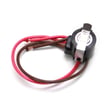
If you find heavy frost on the back freezer panel, a failed defrost component is a frequent cause; the refrigerator defrost bi-metal WPW10225581 is one of the defrost parts used on this model.
Why it matters
A side-by-side relies on strong airflow from the freezer to cool the refrigerator section. When vents are blocked, doors are left open, or the unit is in a defrost cycle or control-off state, temperatures rise quickly and food safety can be affected.
Last updated: February 2026
What are the most common problems with Kenmore refrigerators?
The most common problems we see on Kenmore refrigerators like model 10652609100 are warm temperatures, water leaks, ice maker or dispenser failures, and unusual noises. These issues usually trace back to airflow, defrost performance, or water supply and filter setup covered in the 10652609100 owner's manual.
Most common problems and likely causes
- Not cooling or warm fridge/freezer: dirty condenser coils, blocked vents, evaporator fan not moving air, frost buildup from a defrost issue
- Water puddles or leaks: clogged defrost drain, loose or cracked water tubing, seepage at the filter housing
- Ice maker not making ice: low water pressure, clogged filter, failed ice maker module
- Slow or no water from dispenser: kinked supply line, clogged filter, inlet valve not opening fully
- Buzzing, clicking, rattling: fan blade hitting ice, debris near a fan, compressor start components cycling
Quick checks we recommend first (safe, no tools)
- Set temperatures to normal mid-range and give the unit 24 hours to stabilize
- Keep interior air vents clear of food packages
- Clean condenser coils and the area around the base grille
- Clean sticky or dirty door gaskets so doors seal correctly
- Confirm the shutoff valve is fully open and the home water line is not kinked
Water and ice issues: what to focus on
The manual troubleshooting points to water basics first: correct filter installation, no kinks, and a clear supply path. If those check out, the most common repair parts are:
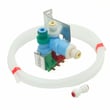
- Refrigerator inlet valve W10408179 (controls water flow to the dispenser and ice maker)
- Refrigerator ice maker 2198597 (produces ice)
Symptom-to-system guide
| Symptom | System to check first | Common next step |
|---|---|---|
| Warm temps | Airflow and coils | Check for frost buildup and fan operation |
| Leaks | Drain and water line | Inspect tubing and filter area |
| No ice | Water supply and filter | Test inlet valve, then ice maker |
Why it matters
Fixing airflow, defrost, and water supply problems early protects food temperatures, prevents ice buildup that can block fans, and reduces leak damage.
Last updated: February 2026