Owner’s manual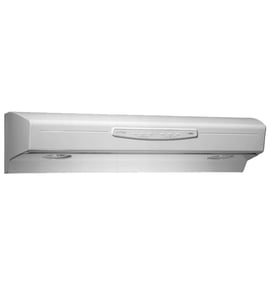

How to find range hood model number?
On the Broan RM52000 range hood, the model number is printed on the product specification label. You’ll typically find that label on the top of the hood, on the underside, or behind a grease filter after you remove it.
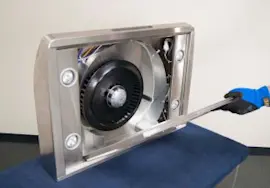
- Behind the grease filter: remove the filter and look on the inner frame or housing
- Underside of the hood: check near the controls or light area
- Top of the hood: easiest to see if the hood is accessible from above cabinets
- Inside the flue area (chimney models): look after removing the decorative flue cover
- Turn off power to the hood at the breaker (recommended).
- Remove the grease filter by pushing it toward the back of the hood and rotating it downward.
- Use a flashlight to scan for a sticker or metal tag that lists MODEL and sometimes SERIAL.
- Write the model number exactly as shown (for this unit, it should read RM52000).
| Label item | What it’s used for |
|---|---|
| Model number | Matching parts and diagrams to your exact hood |
| Serial number | Identifying production run details for service |
| Electrical ratings | Confirming voltage and amperage requirements |
We use the model number to match the correct Broan RM52000 parts and specs, such as the correct grease filter size and the right blower components. The manual also notes to read the product specification label for additional requirements. See the RM52000 owner’s manual for diagrams and access details.
Last updated: February 2026
What are the parts of a range hood called?
A Broan range hood like model RM52000 is made up of the hood body (canopy), a blower and blower wheel, grease filters, lighting, controls, and venting pieces (duct collar and damper). These parts work together to capture smoke and grease and move air outside.
- Hood canopy (hood body): the main shell that mounts to the wall and covers the cooktop area
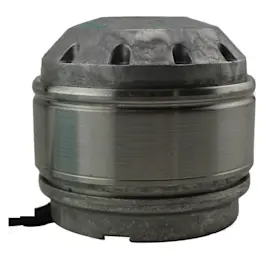
- Blower assembly: the motor-driven fan that moves air through the hood
- Blower wheel: the spinning wheel that actually pushes air (inside the blower housing)
- Grease filter: traps grease before it reaches the blower and ductwork
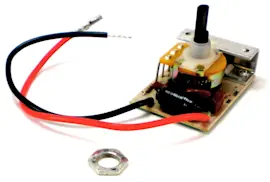
- Controls: switches that run the lights and set blower speed (often slide switches)
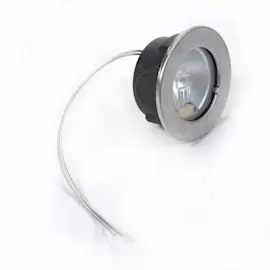
- Lights and lamp hardware: bulbs and sockets that illuminate the cooktop
- Duct collar and damper: connects to ducting and helps prevent backdrafts
- Flue (duct cover): decorative cover that hides ducting on chimney-style hoods
Here are examples of the names you will commonly see on RM52000 parts diagrams and parts lists:
| Part name on parts list | What it affects | When it’s commonly replaced |
|---|---|---|
| Range hood blower assembly SB06001991 | Fan power and airflow | Fan won’t run, hums, or runs weak |
| Range hood grease filter SB08087294 | Grease capture, odor control | Grease buildup, poor airflow, rattling |
| Range hood round damper, 6-in SB08088378 | Backdraft prevention, venting | Flapping noise, cold air coming in |
| Flue cover (upper) | Appearance, duct concealment | Dented, scratched, missing |
Range hood parts are easy to mix up because “fan,” “motor,” and “blower” are used interchangeably. Using the exact part name and ID from the diagram helps you match mounting points, wiring connections, and vent size.
- Check the model number label first: RM52000
- Compare your hood to the exploded-view diagram in the RM52000 owner’s manual
- For venting parts, confirm whether your hood is ducted to outdoors (recommended) or set up for recirculation
- If airflow is poor, start with the grease filter cleaning routine before replacing the blower
Last updated: February 2026
Is Broan a good brand for range hoods?
Broan is a good, reliable brand for range hoods, and the Broan RM52000 is built around the same practical strengths: effective ventilation, straightforward installation, and easy-to-maintain filters. Long-term satisfaction usually comes down to correct venting, proper mounting height, and routine grease-filter cleaning.
A range hood brand performs well when it consistently handles smoke and odors, stays reasonably quiet for its airflow, and is easy to service.
Key things we look for:
- Solid airflow when ducted to the outdoors (best performance)
- Easy access to grease filters for frequent cleaning
- Common replacement parts available (filters, blower components)
- Clear safety and installation requirements
Installation and maintenance have a bigger impact than the logo on the hood.
From the RM52000 guidance in the RM52000 owner’s manual:
- Mounting height: keep the bottom of the hood about 24 to 30 inches above the cooking surface.
- Ducted fans should be vented outdoors for best results.
- Clean grease buildup frequently; grease should not accumulate on the fan or filter.
| Item | What to do | Typical frequency |
|---|---|---|
| Grease filter | Wash with warm detergent solution (dishwasher-safe on many hoods) | Monthly or as needed |
| Charcoal filter (recirculating setups) | Replace | Every 6 months |
| Hood surfaces | Wipe down to prevent grease film | Weekly |
If airflow drops or noise increases, these are the usual suspects:
- A clogged grease filter (consider the range hood grease filter SB08087294)
- A damaged or sticking damper (consider the range hood round damper, 6-in SB08088378)
- A worn blower or wheel (consider the range hood blower assembly SB06001991 or range hood blower wheel assembly SB03295076)
A properly installed, well-maintained hood clears heat, smoke, and grease more effectively, which helps keep cabinets cleaner and reduces lingering cooking odors. In most homes, that is the difference between a hood that feels “great” and one that feels disappointing.
Last updated: February 2026