Installation guide
 Owner’s manual
 Error Codes





What is the average lifespan of a KitchenAid dishwasher?
A KitchenAid dishwasher typically lasts 10 to 14 years with normal household use. For your KitchenAid KUDK03ITWH3, consistent cleaning, correct loading, and quick attention to draining or wash issues are the biggest factors that help it reach the upper end of that range.
- Water quality and temperature: hard water and low incoming water temperature increase cycle time and wear.
- Maintenance habits: routine cleaning helps prevent pump, sump, and spray issues.
- Loading and detergent use: overloading and excess detergent can cause poor washing and residue.
- Drain performance: slow draining strains the drain system and can leave standing water.
- Door use and seals: slamming the door and ignoring leaks shortens seal and hinge life.
The KUDK03ITWH3 care guidance includes running a cleaning cycle with vinegar periodically.
- Place 2 cups (500 mL) white vinegar in a dishwasher-safe cup on the bottom rack
- Run a complete cycle using air-dry or an energy-saving dry option
- Do not use detergent during that cleaning cycle
- In seasonal homes, turn off water and power when not in use; have it winterized if freezing is possible
For cycle and care details specific to this model, use the KUDK03ITWH3 owner’s manual.
| Symptom | What it usually means | What we check first |
|---|---|---|
| Won’t drain or leaves water | Drain restriction or failing drain pump | Drain hose routing, air gap/disposal inlet, drain pump |
| Poor cleaning | Spray or filtration issue, loading issue | Spray arm, filter area, correct loading |
| Stops mid-cycle | Door latch/power issue or motor overload reset | Door closure, breaker/fuse, error codes |
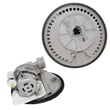
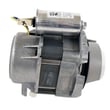
If draining is the main problem, the dishwasher drain pump WPW10348269 is a common fix when the pump is weak or seized.
Dishwashers often show “end-of-life” symptoms (poor draining, weak wash action, repeated stopping) before a full failure. Catching those early helps protect the motor, electronic controls, and racks, and can add years of reliable service.
Last updated: February 2026
What is the most common problem with a KitchenAid dishwasher?
The most common KitchenAid dishwasher problem we see is poor cleaning (dishes come out dirty) caused by blocked spray paths, loading issues, or low incoming water temperature. On the KitchenAid KUDK03ITWH3, drainage problems and “won’t run” symptoms are also common when the door is not latching or power is interrupted (breaker or fuse).
- Dirty dishes or grit left behind: spray arm holes blocked, filter area dirty, or items loaded so they block water flow
- Standing water after the cycle: drain path restriction, kinked hose, or a weak drain pump
- Won’t start or stops mid-cycle: door not fully latched, tripped breaker, blown house fuse, or motor overload reset
- Not filling: overfill float stuck up and not moving freely
- Long cycle times: the dishwasher adds time/heat when incoming water is cooler or soils are heavy
- Confirm the door closes firmly and latches.
- Check the home breaker or fuse; reset/replace if needed.
- Make sure the water shutoff valve is fully open.
- Press the overfill float down to ensure it moves freely.
- Clean for odor and light buildup: place 2 cups of white vinegar in a cup on the bottom rack and run a full cycle with air-dry (no detergent).
For model-specific operating steps and the built-in troubleshooting section, use the KUDK03ITWH3 owner’s manual.
If the dishwasher won’t drain and you have standing water, the drain system is the first place we look.
| Symptom | Most likely area | Example part for KUDK03ITWH3 |
|---|---|---|
| Standing water | Drain pump or drain hose restriction | Dishwasher drain pump WPW10348269 |
| Not filling | Water supply or inlet valve | Dishwasher water inlet valve (check wiring and screen) |
| Won’t run | Power, latch, control | House power checks first, then controls |
Cleaning and drain issues often start as simple restrictions (blocked spray, float stuck, kinked hose). Catching them early helps prevent repeat wash cycles, odors, and water left in the tub.
Last updated: February 2026
Which is quieter, 39 or 42 DBA?
39 dBA is quieter than 42 dBA. On a KitchenAid dishwasher like model KUDK03ITWH3, both ratings are considered very quiet, but 39 dBA will sound slightly softer because decibels increase as the number goes up.
Decibels (dBA) are measured on a logarithmic scale, so small number changes can still be noticeable in a quiet kitchen.
- 39 dBA: quieter, closer to a soft background sound
- 42 dBA: still very quiet, but a touch more audible
- The difference is most noticeable in open-concept homes or when the dishwasher runs at night
- Other noises (spray, drain, water fill) can stand out more than the published dBA rating
| Rating | Which is quieter? | What you typically notice |
|---|---|---|
| 39 dBA | Quietest | Harder to hear from the next room |
| 42 dBA | Very quiet | Slightly more “present” in a silent kitchen |
If you are choosing between two dishwashers that are both in the 30s to low 40s dBA range, these factors often matter more day to day:
- Wash performance on baked-on soil
- Drying method and whether you use rinse aid
- Cycle time (some quiet models run longer)
- Rack layout and adjustability
- Filter cleaning and maintenance needs
A 39 dBA dishwasher is the better pick when noise sensitivity is the top concern, but both 39 and 42 dBA fall into the “quiet dishwasher” category. For setup and operating details that can also affect perceived noise (leveling, securing the unit, and hose routing), follow the KUDK03ITWH3 installation guide.
Last updated: February 2026
What does 03 mean on a dishwasher?
On a KitchenAid dishwasher like model KUDK03ITWH3, “03” is most often shown as part of an error display (such as F03) that points to a drain or water-removal problem. In practice, that means the dishwasher is detecting that water is not leaving the tub as expected.
- Cancel the cycle and let the unit try to drain; listen for the drain pump running.
- Check the sink drain and garbage disposal inlet (a clog there can stop dishwasher draining).
- Inspect the drain hose for kinks, crushing, or a low loop that is missing.
- Look for standing water in the tub at the end of the cycle (a key symptom).
- If the dishwasher pauses during wash, remember brief pauses can be normal on some cycles.
| What you notice | Most common cause | What we do next |
|---|---|---|
| Water left in bottom after cycle | Clogged drain path or restricted hose | Clear the drain path; verify hose routing per the guide |
| You hear humming but little or no draining | Drain pump jammed or failing | Check for debris; replace pump if needed |
| Dishwasher stops mid-cycle and won’t finish | Control detecting a drain fault | Reset power, then re-test; check for drain restriction |
| Drains slowly | Partial blockage in hose or plumbing | Clean hose and air gap (if used); confirm disposal knockout is removed |
If your checks point to a drain component problem on KUDK03ITWH3, these model-matched parts are common suspects:
- Dishwasher drain pump WPW10348269 (pump that pushes wastewater out)
- Dishwasher drain hose 8269144A (hose routing and restrictions are frequent causes)
A drain fault can leave dirty water in the tub, reduce cleaning performance, and cause the dishwasher to stop before completing the cycle. Fixing the drain path first prevents unnecessary part replacement.
Use the KUDK03ITWH3 owner’s manual for troubleshooting steps and the KUDK03ITWH3 installation guide to confirm correct drain hose routing and high-loop requirements.
Last updated: February 2026