
Do I load a stapler with the prongs down or up?
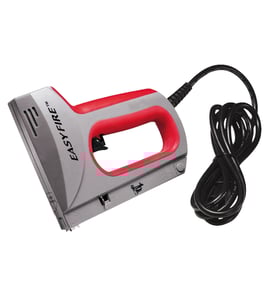
Load staples with the prongs (points) facing down in the magazine channel so the flat crown faces up. On the Craftsman model 193684810 electric stapler/nailer, this orientation lets the pusher spring feed staples correctly and drives the points toward the work surface.
How to load staples correctly
- Unplug the stapler/nailer before loading to prevent an accidental fire.
- Open the magazine (typically by releasing the latch and sliding the magazine open).
- Place a full stick of staples into the channel with the points down.
- Make sure the staples sit flat and straight; crooked staples cause jams.
- Close and latch the magazine fully; a partially latched magazine can misfeed.
Quick orientation check
If you are unsure, use this simple check before closing the magazine.
| What you see in the magazine | Correct? | What it means |
|---|---|---|
| Sharp points facing the nose/exit side and down toward the base | Yes | Staples will drive into the material |
| Flat crown facing down toward the base | No | Staples will not feed or drive correctly |
If it still will not staple (common causes)
- Wrong staple size for the tool; electric staplers are picky about leg length and crown width.
- Staples loaded backwards or not seated flat in the track.
- Magazine not fully closed or latch not engaged.
- Jam at the nose; clear the jam with the tool unplugged.
- Weak feed spring or debris in the magazine track.
Why it matters
Correct staple orientation prevents misfeeds and nose jams, and it protects the driver blade from striking a staple crown the wrong way. That keeps fastening consistent and reduces wear on internal parts.
For staple compatibility and replacement parts lookup by model number, start with the parts list for Craftsman 193684810, or search by model on Sears PartsDirect.
Last updated: February 2026
Does Craftsman make a cordless stapler?
Yes. Craftsman makes cordless staplers, including 20V-class models designed for trim and light fastening work. Your Craftsman model 193684810 is an electric stapler/nailer (corded style), so cordless options are a different tool line you would shop by model and battery platform on Sears PartsDirect.
What to look for in a Craftsman cordless stapler
When you compare cordless staplers, focus on the fastener type and the jobs you actually do.
- Gauge and crown: Narrow crown staplers (often 18-gauge) are common for trim and paneling.
- Staple or brad capability: Some tools shoot staples only; others shoot brads or both.
- Fastener length range: Match the tool to the material thickness you typically fasten.
- Depth adjustment: Tool-free depth control helps prevent overdriving into soft wood.
- Jam clearing: Quick-access nose latches save time on misfeeds.
Corded vs cordless: quick comparison
| Feature | Corded electric stapler/nailer (like 193684810) | Cordless stapler |
|---|---|---|
| Power source | Wall outlet | Battery pack |
| Best for | Bench work, steady indoor use | Portability, jobsite and ladder work |
| Common issues | Cord damage, switch wear | Battery runtime, driver wear |
Why it matters
Using the right stapler type reduces jams, improves drive consistency, and helps you avoid damaging trim, upholstery backing, or thin sheet goods.
Buying and compatibility tips
- Confirm the exact fastener spec (gauge, crown width, and length) before you buy staples.
- If you already own Craftsman batteries, choose a cordless stapler in the same battery platform.
- For your 193684810, match staples to the tool’s required size to prevent misfeeds.
Last updated: February 2026
Is an electric stapler worth it?
Yes. For most DIYers using a Craftsman electric stapler/nailer like model 193684810, an electric stapler is worth it when you have repetitive fastening to do; it drives staples faster and more consistently than a manual stapler while reducing hand and wrist fatigue.
When an electric stapler is the better choice
- You’re stapling a lot of material in one session (upholstery, fabric, housewrap, light trim work).
- You want more consistent staple depth with less effort.
- You have hand strength or wrist comfort concerns.
- You need faster production for projects like insulation facing or screening.
- You want a tool that can often shoot both staples and brads (varies by tool design).
When a manual stapler can be the better value
- You only staple occasionally (small crafts, quick repairs).
- You need maximum maneuverability in tight corners.
- You’re working on very thin materials where over-driving is a concern.
- You prefer the simplest tool with the least setup.
Quick comparison
| Feature | Electric stapler/nailer | Manual stapler |
|---|---|---|
| Effort per staple | Low | Medium to high |
| Speed for repetitive work | High | Medium |
| Consistency | High | Varies by user |
| Tight-space control | Medium | High |
| Best for | Upholstery, insulation, light fastening | Occasional light fastening |
What to check before you buy staples or troubleshoot performance
Using the wrong fastener is the most common reason for jams, shallow drive, or staples that won’t seat.
- Confirm the staple type and crown size your tool accepts
- Match staple length to material thickness (too long can buckle or blow out)
- Use straight, undamaged staples (bent strips cause feed issues)
- Keep the magazine clean and dry
- If drive power seems weak, inspect the cord, trigger, and internal wiring for damage
Why it matters
If you are doing repetitive fastening, the time savings and reduced strain from an electric stapler usually outweigh the higher cost. For occasional use, a manual stapler can still be the most practical option.
For parts lookups and model-based searching, start with the model 193684810 parts list, or search by model number on Sears PartsDirect.
Last updated: February 2026
What size staples fit my stapler?
For the Craftsman 193684810 electric stapler/nailer, the correct staple size is the one that matches the tool’s staple series/type and its supported leg-length range. We recommend confirming the staple series on the tool label or magazine first, then choosing a leg length that matches your material thickness.
How to identify the right staple size
Check these spots on your stapler/nailer:
- Magazine or pusher area: often shows a staple series (for example, “T50”, “JT21”, “18GA”, etc.).
- Tool label (side or base): may list compatible fastener types and lengths.
- Existing staples: measure crown width and leg length to match what already feeds correctly.
If you are missing the label info, use our model number search on Sears PartsDirect to confirm the correct fastener type for 193684810.
Choose the leg length for your material
Once you know the staple series, pick the leg length based on what you are fastening.
- For thin materials (paper, light fabric): use shorter legs to prevent blow-through.
- For wood-to-wood or thicker stacks: use longer legs for better holding power.
- A practical rule: staple leg length is often about 2 to 3 times the thickness of the top material (adjust shorter for very hard material).
Quick sizing guide (general)
| Material example | Typical leg length range | Notes |
|---|---|---|
| Light fabric, thin plastic | 1/4 in to 5/16 in | Reduces punch-through |
| Upholstery to softwood | 3/8 in to 1/2 in | Common for stapler/nailers |
| Thin trim to wood (if tool supports brads) | 5/8 in to 1 in | Use brads if the tool is a nailer combo |
Common reasons staples do not fit (even if “close”)
- Wrong staple series/crown width for the magazine
- Leg length too long, causing jams
- Bent staple strip or debris in the magazine
- Worn driver blade or weak return spring (causes misfeeds)
Why it matters
Using the correct staple series and leg length prevents jams, improves drive depth, and reduces damage to your work surface. It also protects the driver mechanism in an electric stapler/nailer.
Last updated: February 2026
What is a power stapler used for?
A power stapler (like the Craftsman 193684810 electric stapler/nailer) is used to drive staples quickly and consistently into wood and other materials for fastening, attaching, and light assembly work. It saves time and hand strain compared with a manual stapler, especially on larger DIY projects.
Common jobs a power stapler handles well
- Attaching fabric, batting, or dust covers in upholstery and furniture repair
- Securing thin wood panels, trim backers, and light craft wood to frames
- Fastening insulation facing, plastic sheeting, or housewrap to studs (light-duty use)
- Installing carpet padding in small areas (where appropriate)
- Building hobby projects like picture frames, small boxes, and décor
- Tacking down wiring or low-voltage cable with the correct insulated staples (when the tool and staples are rated for it)
Picking the right fastener and material
Power staplers work best when the staple size matches the material thickness and the base material is solid enough to hold the legs.
| Task | Typical material | What to watch for |
|---|---|---|
| Upholstery | Fabric over wood frame | Use staples long enough to bite into wood without poking through |
| Light trim backing | Thin wood to wood | Avoid staples so long they blow out the side |
| Plastic sheeting | Plastic to wood | Don’t overdrive; tearing happens if the crown crushes the plastic |
| Cable tacking | Low-voltage cable | Only use approved staples; never pinch the cable jacket |
Why it matters
Using the right staple length and keeping the nose flat to the work surface reduces jams, improves holding power, and helps prevent damage to fabric, trim, or the workpiece.
Parts and support
If you need replacement components for your Craftsman 193684810 power stapler, start with the model parts list for the most accurate match, or search by model number on Sears PartsDirect.
Last updated: February 2026