 Owner’s manual



How to force GE washer to drain and spin?
To force your GE GTW540ASP1WS washer to drain and spin, select the Drain & Spin cycle and press Start/Pause. If the cycle was paused, pressing Start again resumes it; this is the quickest way to remove standing water from the basket.
Fast steps (Drain & Spin)
- Press Power to wake the control.
- Turn the cycle knob to Drain & Spin.
- Close the lid.
- Press Start/Pause to begin.
- If the washer is paused, press Start again to continue.
If it will not spin out the water
These are the most common reasons a top-load GE washer drains but does not reach full spin:
- Out-of-balance load: redistribute items evenly, then run Drain & Spin again.
- Lid not locking: open and close the lid firmly, then restart the cycle.
- Drain restriction: check the drain hose for kinks or a clogged standpipe.
- Pump not moving water: listen for a steady humming during drain; unusual noise or no drain flow points to a pump issue.
Quick symptom guide
| What you notice | What it usually means | What to do next |
|---|---|---|
| Spin light blinking and clothes are wetter than normal | Load is out of balance | Rebalance load; rerun Drain & Spin |
| Humming then gurgling during drain | Pump is pulling water, then air (often normal near the end) | Let cycle finish; verify water is leaving |
| No water leaving the drain hose | Drain path blocked or pump not working | Inspect hose/standpipe; consider pump replacement |
Parts that commonly fix drain or spin problems
If troubleshooting points to a failed component, these are common fixes for this model:
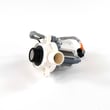
- GE washer drain pump assembly WH23X28418 (won’t drain, weak drain, loud pump)
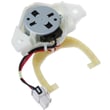
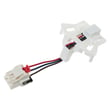
- GE washer lid lock assembly WH08X37938 (won’t spin because lid will not lock)
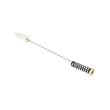
- Washer suspension rod and spring assembly WH16X26911 (repeated out-of-balance, banging)
Why it matters
Running Drain & Spin protects the drive system and helps prevent odors and residue that can happen when water sits in the tub. It also helps you confirm whether the issue is balance-related, a lid lock problem, or a drain pump/drain hose restriction.
For cycle behavior details and indicator light meanings, use the owner's manual.
Last updated: February 2026
How to order GE appliance parts?
For your GE GTW540ASP1WS washer, we recommend ordering replacement parts by matching your full model number and the exact part ID from the parts list for this model. For model-specific part identification and accessory guidance, use the owner's manual.
How we recommend ordering parts for GTW540ASP1WS
- Confirm the full model number: GTW540ASP1WS (use the complete model, not a partial).
- Identify the failed system (drain, fill, spin, lid lock, controls).
- Match the exact part ID and description before you buy.
- If your washer is leaking or not draining, check hoses and the drain pump first.
- If your washer is shaking or banging, check the suspension components.
Common GTW540ASP1WS parts customers order
| Symptom | Likely part category | Example part available for this model |
|---|---|---|
| Won’t drain, water left in tub | Drain system | GE washer drain pump assembly WH23X28418 |
| Excessive vibration or off-balance | Suspension | Washer suspension rod and spring assembly WH16X26911 |
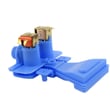
| Won’t fill or fills slowly | Water inlet | Washer water inlet valve assembly WH13X26535 |
| Won’t start, lid won’t lock | Lid lock | GE washer lid lock assembly WH08X37938 |
Accessories and ordering details from the manual
The GTW540ASP1WS documentation lists common installation and maintenance accessories such as new water supply hoses (recommended replacement about every 5 years) and a drain hose extension kit for higher discharge installations. Use the accessory list in the owner's manual to match the correct item and part number for your setup.
Why it matters
Ordering by the exact model number and part ID helps ensure fit and compatibility, reduces repeat repairs, and avoids issues like siphoning or improper drain height setups that can look like a drain pump failure.
Last updated: February 2026
Is a 4.5 cu ft washer big?
Yes. A 4.5 cu ft washer is considered large capacity for most home washers; it handles bigger mixed loads and many bulky items with fewer cycles. For your GE GTW540ASP1WS, follow the loading and water-level guidance in the GTW540ASP1WS owner's manual to get the best cleaning.
What “large capacity” means in real use
A 4.5 cu ft washer typically works well for:
- Family-size loads of everyday clothes
- Bedding and towel loads (loaded loosely, not packed)
- Bulky items that can move freely during agitation
- Fewer total loads per week compared with smaller tubs
Loading tips that make a big tub work better
Even with a large tub, overloading reduces wash performance. We recommend:
- Load items loosely; do not press them down
- Distribute bulky items around the basket, not piled in the center
- Use Auto/Precise Fill (if your model has it) for most loads
- Manually choose a higher water level for lightweight bulky items (comforters, pillows) when needed
- Avoid washing items that are too large to move freely (some cushions)
Capacity and water level: what to expect
High-efficiency top-load washers often use less water than older designs, so the waterline can look lower even when the washer is correctly filling.
| What you notice | What it usually means | What to do |
|---|---|---|
| Water level seems low | Normal high-efficiency operation | Let the cycle run; avoid overloading |
| Bulky load not fully saturated | Load is too tight or water level too low | Re-load loosely; select a higher water level |
| Washer pauses when lid opens | Normal sensing behavior on some settings | Close lid to resume sensing/fill |
Why it matters
A large-capacity washer saves time only when the load can circulate. Correct loading and water-level selection help prevent poor rinsing, detergent residue, and out-of-balance spinning.
Last updated: February 2026
What parts fail in a washing machine?
In a GE GTW540ASP1WS washer, the parts that fail most often are the ones that move water, lock the lid, or drive the wash and spin action. Typical failures show up as not draining, not filling, not spinning, leaks, or loud vibration; the parts list and owner's manual help match symptoms to the right repair.
Most common washer parts that fail
- Drain system parts: drain pump, drain hose, clogs in the pump or hose
- Fill system parts: water inlet valve, supply hoses, valve screens
- Spin and drive parts: drive belt, clutch, shifter, drive pulley, gear case
- Lid safety parts: lid lock and striker (won’t start or stops mid-cycle)
- Suspension parts: suspension rods and springs (out-of-balance, banging)
- Controls and wiring: control board, selector switch, wire harness connections
Model-specific parts on GTW540ASP1WS that commonly solve these symptoms
If your symptom matches, these are frequent fixes for this model:
| Symptom | Likely system | Example part for this model |
|---|---|---|
| Won’t drain, water left in tub | Drain | GE washer drain pump assembly WH23X28418 |
| Won’t fill or fills slowly | Fill | Washer water inlet valve assembly WH13X26535 |
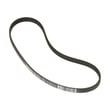
| Won’t spin or makes belt noise | Drive | Washer drive belt WH01X24180 |
| Lid won’t lock, won’t start | Safety | GE washer lid lock assembly WH08X37938 |
| Excessive shaking or banging | Suspension | Washer suspension rod and spring assembly WH16X26911 |
Quick checks before replacing parts
- Unplug the washer; do not reach into the basket until all moving parts stop.
- Check for small items (coins, socks) that can block draining.
- Inspect hoses for bulges, cracks, or seepage; replace water supply hoses every 5 years.
- Confirm the load is balanced; bulky items should be loaded around the outside of the basket.
- If the washer is dead or erratic, reseat harness connections and check for visible damage.
Why it matters
Catching the right failure early prevents secondary damage. For example, a restricted drain can strain the pump, and worn suspension can cause repeated out-of-balance events that stress the drive system.
Last updated: February 2026


