Owner’s manual
 Error Codes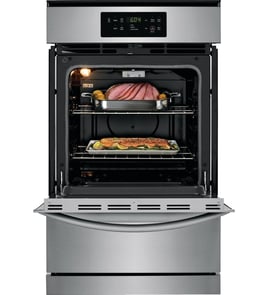



Can you have a gas wall oven?
Yes. The Kenmore 91130169894 is a 24-inch built-in gas wall oven, so a gas wall oven is a standard, real configuration when your kitchen has the correct gas supply, venting, and electrical connection for the controls and igniter (as outlined in the owner's manual).
What “gas wall oven” means
A gas wall oven is a built-in oven that installs into a cabinet cutout and uses natural gas (or LP after proper conversion) for heat.
- It still needs electric power for the igniter, controls, and oven light
- It uses a gas burner and igniter to create heat
- It is designed to be mounted in a wall cabinet, not slid in like a range
Fuel type and LP conversion basics
For this Kenmore model, the manual notes the oven ships set up for natural gas. If your home uses LP (propane), the oven must be converted using the procedure in the installation instructions that came with the oven.
| Gas type | Typical home supply | What you do before using the oven |
|---|---|---|
| Natural gas | Utility gas line | Use as configured from the factory |
| LP (propane) | Tank/bottled gas | Convert and adjust burners before operation |
What to check before buying parts or planning a repair
These quick checks help confirm you truly have a gas wall oven setup and avoid ordering the wrong parts.
- Confirm the model number 91130169894 on the oven’s model and serial tag
- Verify you have a gas shutoff valve and a flexible or hard gas connection to the cabinet
- Make sure a nearby electrical outlet powers the oven controls and igniter
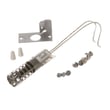
- If the oven will not heat, inspect the igniter circuit; a common replacement is the igniter WB2X9154
- Review safety and operating details in the owner's manual
Why it matters
Gas wall ovens heat differently than electric models; troubleshooting often centers on the ignition system, gas supply, and burner flame quality. Knowing you have a gas wall oven helps you choose the right parts (like an igniter or gas valve) and follow the correct safety steps.
Last updated: February 2026
How to tell if a gas stove igniter is bad?
On the Kenmore 91130169894 gas built-in oven, a bad igniter usually shows up as an oven that will not light, lights very slowly, or has an igniter that glows but never gets hot enough to open the gas valve and ignite the burner. The oven uses a glow bar style igniter to light the burner during baking. See the lighting sequence in the owner's manual.
Quick signs the igniter is failing
- Igniter glows, but the burner never lights
- Oven takes much longer than normal to reach temperature
- Burner lights inconsistently (sometimes lights, sometimes does not)
- You smell gas briefly with no ignition (turn the oven off and ventilate)
- Weak, delayed ignition followed by a “whoosh” when it finally lights
What “normal” looks like on this model
The normal sequence is: you start Bake, the glow bar heats to a bright orange, then gas flows and the burner ignites. If the glow bar never gets bright enough, the safety valve may stay closed and the burner will not light.
| What you see | What it usually means | What to check next |
|---|---|---|
| No glow at all | No power to igniter or open igniter | Wiring connections, control, igniter continuity |
| Glows dull or takes a long time | Weak igniter | Replace igniter |
| Glows bright but no flame | Gas supply/valve issue | Gas shut-off valves open, gas supply, valve/regulator |
How we test it (safe, practical checks)
- Watch the igniter: it should glow bright orange shortly after you start Bake.
- Check gas supply basics: confirm the gas shut-off valve is open and supply is connected.
- Electrical test (power off): check igniter continuity with a meter; an open circuit indicates failure.
- Amperage test (advanced): many glow-bar igniters must pull enough current to open the safety valve; a weak igniter can glow but still fail to light.
Parts that commonly fix “won’t heat” symptoms
If the igniter is weak or open, the correct replacement for this model is the igniter WB2X9154.
Why it matters
A weak igniter can prevent the burner from lighting reliably, causing long preheat times, uneven baking, and delayed ignition. Getting the burner to light promptly helps the oven heat safely and cook consistently.
Last updated: February 2026
How to replace igniter on gas wall oven?
To replace the igniter on your Kenmore gas built-in oven model 91130169894, we shut off power, access the burner area by removing the oven bottom, swap the igniter, then reassemble the oven bottom and racks before restoring power. Use the owner's manual for access-panel details.
Before you start (safety and prep)
- Turn off electrical power at the breaker or fuse box before servicing.
- Let the oven cool completely.
- Handle the igniter carefully; it can crack if bumped.
- Take a quick photo of wire routing and connectors before disconnecting anything.
- Keep screws organized so the oven bottom and panels reinstall correctly.
Steps to replace the igniter
- Disconnect power to the oven.
- Remove oven racks to create working space.
- Remove the oven bottom to access the burner area (this model uses a removable oven bottom).
- Locate the igniter mounted near the burner.
- Disconnect the igniter wiring (unplug connector or remove wire nuts, depending on your harness).
- Remove mounting screws, take out the old igniter, and install the new one.
- Reinstall the oven bottom: fit rear tabs into the rear slots, then lower the front and slide the front tab into place.
- Reinstall racks, restore power, and test bake.
What to check if the oven still will not heat
- Weak igniter symptoms: burner takes a long time to light, or never opens the gas valve.
- Loose or damaged wiring: inspect connectors and harness routing.
- Gas supply issue: confirm other gas appliances work and the shutoff valve is open.
- Control or valve problem: if the igniter glows but no flame appears, the gas valve circuit may be at fault.
| Symptom | Most common cause | What we do next |
|---|---|---|
| No glow from igniter | Open igniter or wiring issue | Check connections; replace igniter if open |
| Glows but no flame | Weak igniter or gas valve issue | Replace igniter first; then diagnose valve |
| Lights after long delay | Weak igniter | Replace igniter |
Parts that commonly come up in this repair
- Igniter WB2X9154
- Range wire harness WB18K5632 (if wiring is heat-damaged)
Why it matters
A failing igniter can prevent the burner from lighting reliably, which stops baking performance and can cause repeated ignition attempts. Replacing the igniter restores normal burner ignition and steady oven heat.
Last updated: February 2026
What are the parts of a gas oven?
A gas wall oven like Kenmore model 91130169894 is built around a gas burner system for baking and broiling, plus safety and control parts that regulate temperature and ignition. Common parts include the oven control, igniter, temperature sensor, racks, oven bottom, door, and venting components (see the owner's manual).
Main parts you will typically find
- Oven control and display: sets bake, broil, timer, and other functions
- Ignition system: ignites gas at the burner (example: igniter WB2X9154)
- Oven temperature sensor: helps the control maintain set temperature (example: sensor WB21X5301)
- Gas valve and regulator: controls and stabilizes gas flow (examples: range gas control valve WB21K5009, pressure regulator WB19T10079)
- Oven cavity hardware: removable oven racks, removable oven bottom panel, and interior light
- Vent and airflow parts: vent grille and related passages that let heat and moisture escape
- Door and broiler area: removable oven door, broiler drawer, broiler pan and grid
How these parts work together (quick map)
| System | What it does | Common symptoms when it fails |
|---|---|---|
| Ignition + gas delivery | Lights and feeds the burner flame | Burner will not light, delayed ignition, weak flame |
| Temperature sensing + control | Regulates heat to match your setting | Overheats, underheats, uneven baking |
| Cavity, racks, door, venting | Holds heat safely and supports cookware | Heat loss, smoke, poor cooking results |
Why it matters
Knowing the major gas oven components helps you troubleshoot faster. For example, if the oven burners do not work, we focus first on gas supply being on, correct control settings, and burner adjustment, then move to ignition and control parts.
Before you replace anything
- Turn off power to the oven at the breaker
- Shut off the gas supply valve before servicing
- Let the oven cool completely
- Confirm the symptom (no ignition vs. no heat vs. temperature off)
- Use the wiring and feature diagrams in the owner's manual to identify the exact component
Last updated: February 2026
What is the rough opening for a wall oven?
For the Kenmore gas built-in oven model 91130169894, the rough opening is the cabinet cutout sized to the exact width, height, and depth listed for your unit. Use the cutout dimensions in the 91130169894 owner's manual so the oven slides in fully and the venting area stays clear.
Rough opening basics (what to measure)
Measure the cabinet cutout, not the oven door or trim.
- Measure width at the front of the cutout (left to right)
- Measure height at the front of the cutout (top to bottom)
- Measure depth from the cabinet face to the back wall
- Confirm the cutout is square and plumb (uneven openings cause binding)
- Check for obstructions behind the cutout (gas line routing, junction box, bracing)
Typical planning ranges for a 24-inch single wall oven
These ranges help with early planning; the final numbers must match the manual for model 91130169894.
| Dimension | Typical range for 24-inch wall ovens | Notes |
|---|---|---|
| Cutout width | 22 1/2 to 23 1/2 in. | Trim often covers small gaps |
| Cutout height | 27 1/4 to 28 1/2 in. | Varies by control layout and trim |
| Cutout depth | 22 to 24 in. | Allow room for gas and wiring behind oven |
Why it matters
A correct rough opening prevents installation issues like an oven that will not seat flush, pinched wiring, or restricted airflow at the oven vent. On a gas wall oven, keeping the vent path clear is essential for normal operation.
Parts to protect when fitting the oven into the cutout
If you pull the oven out to measure or service it, protect these components from kinks and pinching:
Last updated: February 2026