
How do I know what model my garage door opener is?
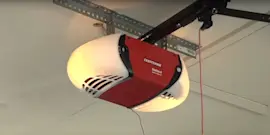
Your garage door opener model number is usually printed on a label on the powerhead (the motor unit mounted to the ceiling). On many Craftsman openers, including model 13953600, you can find it under a light lens or on the side of the unit near the antenna wire.
Where to look on a Craftsman opener
Check these common label locations on the motor unit:
- Under the front light lens
- Under the left light lens (when you are facing the opener from inside the garage)
- On the opposite side of the antenna wire
- On the back or side panel near the wiring terminals
- On the hanging bracket area (near where the opener is bolted to the ceiling supports)
What the label looks like
Most model labels include a few key fields. Use the model number for parts lookup.
| Label item | What it’s used for | Example you might see |
|---|---|---|
| Model number | Identifies the exact opener version | 13953600 |
| Serial number | Manufacturing identifier | Varies |
| Logic board number | Helps match control boards | Varies |
| Date code | Approximate build date | Varies |
Why it matters
Craftsman garage door openers often share similar housings, but parts like the logic board, travel module, wall control, safety sensors, and remote compatibility can differ by model. Using the correct model number helps us match the right replacement parts and troubleshooting steps.
Next step if the label is missing or unreadable
- Look for a second label on another side of the motor unit
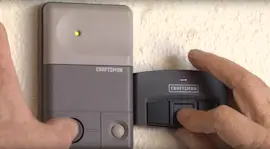
- Check the wall control and remote for part numbers (helpful clues)
- Use our troubleshooting resources to narrow it down by symptoms and blink patterns
- Search by model number or opener type on Sears PartsDirect
For symptom-based identification, use Craftsman error codes to match light flashes or diagnostic codes to likely causes.
Last updated: February 2026
Is it worth repairing a 20 year old garage door opener?
For a 20-year-old Craftsman garage door opener (model 13953600), replacement is usually the better long-term choice because most openers are built for a 10 to 15 year lifespan and newer units add meaningful safety, security, and noise improvements. A small, low-cost repair can make sense if the door system is otherwise in good shape.
When repair still makes sense
We recommend repairing an older opener when the problem is clearly minor and the rest of the system is operating smoothly.
- The opener runs normally but a remote or wall control is intermittent
- The safety sensors are simply misaligned or dirty
- The door is binding because the rollers or hinges need service (not an opener failure)
- The chain or belt just needs proper tensioning and lubrication
- You need a short-term fix while planning a full upgrade
For step-by-step troubleshooting, use our Craftsman error codes guide.
Signs replacement is the smarter investment
If you are seeing repeated failures or major drive issues, replacement typically costs less over time than chasing multiple repairs.
- The motor hums but the door will not move (possible gear or drive failure)
- The opener reverses frequently even after basic force and travel checks
- The lights blink and the door will not close consistently (sensor or logic issues)
- The unit is loud, jerky, or stalls under normal door weight
- You have already replaced multiple components in the last 1 to 2 years
Quick decision checklist
| What you’re dealing with | Typical best choice | Why |
|---|---|---|
| One small, inexpensive issue | Repair | Restores function with minimal cost |
| Repeated breakdowns | Replace | Better reliability and fewer callbacks |
| Major drive or motor problem | Replace | High labor and parts cost risk |
| Safety or security concerns | Replace | Newer designs improve protection |
Why it matters
A garage door opener is a safety device as much as a convenience feature. When an older unit becomes unreliable, you risk nuisance reversals, inconsistent closing, and more wear on the door hardware.
If you decide to repair, we list compatible replacement parts by model on the parts list for 13953600; for broader model-based part searches, use Sears PartsDirect.
Last updated: February 2026
Will any remote work with any garage door opener?
No. A garage door opener remote is not universally compatible; it must match the radio system used by your Craftsman 13953600 (brand, frequency, and “learn” technology). Some “universal” remotes can be programmed to multiple openers, but they still only work with specific compatible systems.
What determines remote compatibility
A remote will work only when these items line up with your opener:
- Brand and platform: Craftsman, LiftMaster, and Chamberlain often share platforms, but not across all generations.
- Learn button color and logic board type: This identifies the programming system used.
- Frequency: Common systems use 315 MHz or 390 MHz (the remote must support the same frequency).
- Security/rolling code generation: Newer rolling-code systems require a compatible remote.
- Remote type: Standard visor remote vs. keychain remote vs. wireless keypad.
Quick checks before you buy or program a remote
Use these steps to avoid ordering the wrong remote for a Craftsman 13953600:
- Look at the opener motor unit and note the learn button color and any logic board markings.
- Confirm whether your opener uses rolling code (most newer units do).
- If you have an existing working remote, match its FCC ID or model family when possible.
- If the door only works from the wall button, troubleshoot the opener first (a remote will not fix a sensor or travel issue).
- When shopping, match the remote’s compatibility list to your opener’s learn system.
Common remote types and what they’re best for
| Remote option | Best for | Notes |
|---|---|---|
| Standard remote | Daily use | Most reliable when it’s the correct match for the opener system |
| Universal remote | Multiple doors/brands | Must explicitly support your opener’s learn system and frequency |
| Wireless keypad | No-remote entry | Also must match the opener’s learn system |
Why it matters
Using an incompatible remote wastes time and can create confusing symptoms (no response, intermittent operation, or failure to program). Matching the correct Craftsman-compatible remote helps ensure reliable range, secure operation, and smooth programming.
For troubleshooting blinking lights or diagnostic patterns that can affect remote operation, use our Craftsman error codes. For parts and compatible accessories, start with the model-based parts list, or search by model number on Sears PartsDirect.
Last updated: February 2026
What are the common problems with Craftsman garage door openers?
Common problems with the Craftsman 13953600 garage door opener include safety sensor issues (misalignment or blocked beam), drive system wear (chain/belt slack, worn gears), and control problems (wall button, remote, keypad, or logic board). These often show up as a door that reverses, won’t close, or makes grinding/clicking noises.
Most common symptoms and what they usually mean
- Door won’t close and lights blink: safety sensors are blocked, misaligned, or have wiring damage.
- Door starts down then reverses: travel limits or force settings are off, or the door is binding.
- Motor runs but door doesn’t move: stripped drive gear, broken trolley, or a loose chain/belt.
- Grinding noise from the opener head: worn drive and worm gear set (common on chain drives).
- Remote/keypad works sometimes: weak battery, interference, or an antenna/logic board issue.
- Wall control works but remotes don’t: remote programming, lock/vacation mode, or receiver problem.
Quick checks we recommend first (safe, no special tools)
- Clear the photo-eye path and wipe the sensor lenses.
- Confirm both sensors are aimed at each other; indicator LEDs should be steady.
- Test door balance: disconnect the opener and lift the door by hand; it should stay near mid-travel.
- Inspect the rail and trolley for binding, loose hardware, or obvious wear.
- Check the opener light behavior and any diagnostic flashes; use Craftsman error codes to match the pattern.
Common causes and typical fixes
| Problem area | Typical cause | Typical fix |
|---|---|---|
| Safety sensors | Sun glare, misalignment, damaged wire | Realign sensors, add shielding, repair wiring |
| Travel/force | Force too high/low, limits out of range | Adjust force/limits carefully |
| Drive system | Worn gear, loose chain/belt, broken trolley | Replace worn drive parts, set proper tension |
| Controls | Bad remote battery, programming lost, bad wall control | Replace battery, reprogram, troubleshoot wall control |
Why it matters
Most “won’t close” complaints are safety-related; the opener is designed to stop or reverse to prevent injury or damage. Catching sensor alignment and drive wear early also helps prevent stripped gears and repeated reversals.
If you need replacement parts for the Craftsman 13953600, start with the parts list for this model, or search by model number on Sears PartsDirect.
Last updated: February 2026
How to find a compatible garage door opener?
For a Craftsman garage door opener like model 13953600, compatibility comes from matching the opener’s control system: learn button type, radio frequency, and whether it uses rolling code or dip switches. Identify those details on the motor head label, then choose a remote, keypad, or smart control that matches.
What to match on Craftsman 13953600
Check the motor unit (powerhead) label and the area near the learn button.
- Learn button presence and color
- Frequency (commonly 315 MHz or 390 MHz on many Craftsman-era units)
- Rolling code system vs. dip switches (older fixed-code)
- Wall control style (basic button vs. multi-function console)
- Safety sensor system (photo eyes must be compatible)
Quick compatibility checklist
Use this to narrow down what will pair successfully.
| What you find | What it indicates | What to shop for |
|---|---|---|
| Learn button present | Newer receiver platform | Remote/keypad that matches that learn-button platform and frequency |
| No learn button; dip switches | Fixed-code system | Dip-switch remote/keypad with matching switch pattern |
| Opener won’t close; lights blink | Often sensor issue | Fix sensors/force settings before replacing controls |
Steps we recommend
- Unplug the opener, then remove the light lens if needed to see the learn button area.
- Write down 13953600 plus any FCC/IC info from the label.
- Confirm learn button color or confirm dip switches.
- If replacing a remote, match the existing remote series when possible.
- Program and test open, close, and safety reverse.
Why it matters
“Universal” remotes and smart hubs still need the correct frequency and code technology to pair with the receiver in your Craftsman 13953600. Matching those details prevents pairing failures and unnecessary returns.
Helpful troubleshooting resource
If you see blinking lights or diagnostic patterns, check Craftsman error codes first; many issues point to sensors, travel limits, or force settings rather than a bad remote.
For parts and accessories, start with the parts list for your model, then search by model number on Sears PartsDirect.
Last updated: February 2026