Installation guide
 Owner’s manual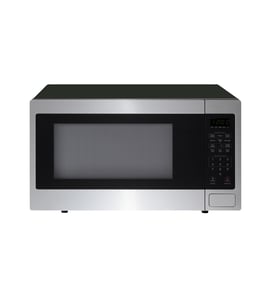




What is the average life of a countertop microwave?
Most countertop microwaves, including the GE JEB1860SM2SS, typically last 7 to 10 years with normal household use. Heavy daily use, poor ventilation, and door or electrical issues can shorten lifespan; consistent cleaning and safe operation help you reach the upper end of that range.
Typical lifespan and what changes it
- Normal use: 7 to 10 years
- Heavy use (multiple cycles daily): often 4 to 7 years
- Light use and good care: 10+ years is common
Signs your microwave is nearing end of life
- Heats slowly or unevenly (longer cook times than before)
- Loud buzzing or humming during heating
- Door won’t close cleanly or feels loose
- Intermittent power, dead display, or random shutoffs
- Burning smell, arcing, or recurring sparks (stop using and inspect)
What to do to extend life on the GE JEB1860SM2SS
We recommend these habits because they reduce stress on the door system, airflow, and high-voltage components:
- Keep the cavity clean; wipe spills before they bake on
- Use only microwave-safe cookware; avoid metallic trim and questionable containers (see the owner's manual)
- Do not run the microwave empty
- Close the door gently; avoid slamming or pulling on the handle
- Maintain proper airflow and clearance if installed with a trim kit (see the installation guide)
Quick decision guide: repair vs. replace
| Symptom | Common cause | Typical next step |
|---|---|---|
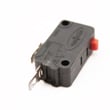
| Door won’t start or stops when door moves | Door interlock issue | Check/replace a door switch such as the microwave primary interlock switch WB24X10047 |
| Runs but does not heat | High-voltage circuit problem | Use our troubleshooting steps; many repairs require a qualified technician |
| Turntable not rotating | Turntable drive issue | Check the microwave turntable motor WB26X10143 |
Why it matters
A microwave that is aging often shows it through door interlock problems or heating performance changes. Keeping the door sealing surfaces clean and ensuring the door closes properly helps maintain safe, reliable operation.
Last updated: February 2026
What is the most reliable countertop microwave?
If you want the most reliable countertop microwave, we recommend prioritizing proven door-safety design, steady heating performance, and easy-to-service parts. In day-to-day use, Panasonic inverter models are widely regarded as top-tier for consistent heating; Toshiba and LG also tend to rate well for long-term ownership. For your GE JEB1860SM2SS, keeping the door interlock system and power supply healthy is the biggest reliability driver.
What “reliable” means for a countertop microwave
Reliability is usually less about brand name and more about how well these systems hold up:
- Door interlock switches and latch alignment (prevents no-start and safety shutdowns)
- High-voltage heating circuit performance (transformer, diode, capacitor system)
- Control panel and keypad durability
- Cooling airflow and keeping vents unblocked
- Sensible cooking habits (avoiding arcing, overheating, and empty runs)
Quick buying checklist (what to look for)
Use this checklist when comparing models across brands:
- 1,000 to 1,200 watts for faster, more consistent heating
- Sensor cooking or humidity sensing for fewer overcooked results
- Solid door feel with clean, consistent latching
- Readily available replacement parts (switches, door pieces, power cord)
- Good ventilation clearance around the cabinet
Brand and feature comparison (practical guidance)
| What you care about | What to prioritize | Why it helps reliability |
|---|---|---|
| Even heating | Inverter-style power control | Reduces hot spots and repeat cooking cycles |
| Fewer “won’t start” issues | Strong door latch and interlock design | Door-switch problems are a common failure point |
| Long-term serviceability | Common, stocked replacement parts | Faster, cheaper repairs |
Keeping your GE JEB1860SM2SS reliable
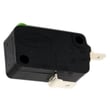
If your microwave intermittently won’t start, stops when the door moves, or runs only with the door held a certain way, the door interlock system is the first place we look. Common service parts include the microwave primary interlock switch WB24X10047 and the monitor switch WB24X25397.
Also follow the airflow guidance in the installation guide; blocked airflow can cause improper operation and damage.
Why it matters
Most “unreliable microwave” complaints trace back to preventable stress: poor ventilation, door slamming/misalignment, and arcing events. Choosing a model with steady power control and maintaining door-switch integrity typically delivers the longest service life.
Last updated: February 2026
What are common problems with GE JEB1860SM2SS microwaves?
Common problems with the GE JEB1860SM2SS countertop microwave include running but not heating, not powering on, door not latching or starting reliably, turntable issues, and arcing or burning inside the cavity. Many of these symptoms trace back to door interlock components, power-supply protection parts, or high-voltage heating components.
Most common symptoms and what they usually point to
- Runs but does not heat: high-voltage circuit issue (often the high-voltage transformer or high-voltage diode)
- Dead, no display, no response: power cord, noise filter, internal fuse, or a safety cutout issue
- Starts only when you lift or slam the door: worn door latch parts or failing interlock switches
- Turntable not rotating: turntable motor or a control issue
- Sparking or burning smell (arcing): metal/foil contact, damaged waveguide cover area, or food splatter carbonizing
Parts on this model that commonly relate to these problems
If your symptom matches, these are model-specific parts we often see involved:
- Door safety and start issues: microwave primary interlock switch WB24X10047, monitor switch WB24X25397
- No heat: microwave high-voltage transformer WB27X10971, microwave high-voltage diode WB27X35382
- Turntable not moving: microwave turntable motor WB26X10143
- No power or intermittent power: power cord WB18X10475, noise filter WB27X11134
| Symptom | Common check | Part examples for JEB1860SM2SS |
|---|---|---|
| Runs, no heat | High-voltage components | WB27X10971, WB27X35382 |
| Won’t start with door closed | Door interlock circuit | WB24X10047, WB24X25397 |
| Turntable not turning | Motor and coupler drive | WB26X10143 |
| Completely dead | Line power path | WB18X10475, WB27X11134 |
Safe troubleshooting steps we recommend first
- Verify the outlet has power (try a small lamp or another appliance).
- Unplug the microwave for 2 minutes, then plug back in to reset the control.
- Inspect the door for looseness, misalignment, or a broken release lever.
- If arcing occurred, stop using the microwave until the cause is corrected.
- For built-in trim kit installs, confirm airflow is not blocked and clearances are maintained per the installation guide.
Why it matters
Microwaves use door interlocks as critical safety devices; a worn switch or latch can cause no-start symptoms, blown fuses, or intermittent operation. Heating problems often involve high-voltage parts that require careful diagnosis and safe handling.
Last updated: February 2026