 Owner’s manual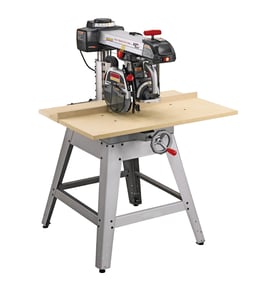

Are radial arm saws worth anything?
Yes. A used radial arm saw can be worth money, but value depends mostly on brand reputation, completeness (especially the guard and anti-kickback parts), and how well it’s been maintained and tuned. For a Craftsman 113197250, local demand and condition typically drive the price more than age alone.
What drives the value most
- Safety equipment included: a complete blade guard, riving knife, and anti-kickback pawls raise value.
- Mechanical condition: smooth carriage travel, tight arm locks, and minimal play in the yoke and column matter.
- Table and fence condition: intact table sections and a straight fence help resale.
- Motor and switch function: reliable start/stop and no overheating smells.
- Accessories and documentation: original hardware and the owner's manual help prove completeness.
Quick value ranges (typical local resale)
These are common U.S. secondhand ranges for older 10-inch radial arm saws in working order.
| Condition | What buyers usually see | Typical range |
|---|---|---|
| Needs work | missing guard parts, rough travel, noisy motor | $0 to $75 |
| Usable | runs well, basic adjustments hold | $75 to $200 |
| Clean and complete | tuned, smooth, complete guard/anti-kickback setup | $200 to $400 |
How to check your saw before pricing it
- Verify the on-off switch works correctly and the key is used as intended.
- Confirm the miter and bevel locks hold firmly at common angles.
- Inspect the guard system for key components like the riving knife and anti-kickback pawls.
- Check for excessive blade wobble (bearing/arbor issues) and carriage slop.
- Look for cracked castings, bent arm, or damaged wiring.
Why it matters
Radial arm saws are valued for accurate crosscuts and dado work, but buyers pay more when the saw is complete and set up to reduce kickback and wrong-way feed risks. A well-maintained Craftsman 113197250 is easier to sell and safer to use.
Last updated: February 2026
What is the best brand of radial arm saw?
There is no single “best” brand for every shop; the best radial arm saw is the one that is accurate, safe, and supported with the right guards and adjustments for how you cut. For the Craftsman 113197250 radial arm saw, we focus on keeping the saw properly guarded and set up using the owner's manual.
What to prioritize when choosing a radial arm saw brand
A radial arm saw is only as good as its alignment, guarding, and condition. When comparing Craftsman, DeWalt, Delta/Rockwell, and other legacy saws, we recommend prioritizing:
- Complete blade guarding (upper and lower guard present, anti-kickback parts installed if equipped)
- Solid arm and carriage travel (smooth movement, minimal play)
- Fence and table condition (flat, secure, not heavily chewed up)
- Repeatable alignment (crosscut squareness and bevel settings hold)
- Parts availability and documentation (manuals, diagrams, and common hardware)
How Craftsman 113197250 fits into the decision
Craftsman radial arm saws like model 113197250 are widely used and can be excellent performers when tuned and used within safe operating practices. The manual content for this model family emphasizes major ripping hazards such as outfeed zone hazard, kickback, and wrong-way feed, so brand choice should never outweigh safe setup and technique.
Quick comparison: what “best” usually means
| What you care about most | What to look for | Why it matters |
|---|---|---|
| Accuracy | Tight pivots, stable arm, easy-to-set stops | Cleaner cuts and less rework |
| Safety | Complete guard system, correct feed direction | Reduces kickback and contact risk |
| Longevity | Good bearings, solid castings, serviceable motor | Fewer breakdowns over time |
| Ease of ownership | Clear manual, common fasteners, available wear parts | Faster maintenance and repairs |
Why it matters
Radial arm saws can crosscut and (with the right setup) rip, but ripping is where many serious incidents happen. Choosing a brand with a complete guard system and then keeping your saw aligned, guarded, and used correctly is what most improves real-world results.
Last updated: February 2026
When did Craftsman stop making radial arm saws?
Craftsman did not publish a single, universal “stop date” for radial arm saws across all models. For Craftsman model 113197250, the most reliable way to place your saw in time is to use the model and serial information and compare it to the documentation in the owner's manual.
What we can confirm for model 113197250
The owner's manual we have for 113197250 is for a 10-inch radial saw guard kit (catalog 9-29012 and 9-29013) and lists 113.197250 among the compatible models. That tells us this saw family was supported with guard and repair parts information, but it does not state a production end year.
What the manual helps you do
- Identify compatible guard kit components for the 113-series saw family
- Use the parts list to match hardware and guard pieces by description
- Follow safety and setup steps for guarding and operation
- Reference diagrams when inspecting missing or damaged guard parts
How to estimate the era of your Craftsman radial arm saw
Use these practical identifiers to narrow down when your saw was made or sold.
- Check the model and serial tag location (often on the arm, column, or base)
- Record the serial number and any date code printed on the tag
- Note the motor plate information (HP, amps, voltage, RPM)
- Compare your guard and table style to the diagrams in the owner's manual
Quick guide: what to look for
| Item to check | What it tells you | Where to find it |
|---|---|---|
| Model number (113197250) | Confirms the exact Craftsman model | ID tag on saw |
| Serial or date code | Narrows the build or sale timeframe | ID tag or motor plate |
| Guard kit style | Confirms which safety parts match | Manual diagrams |
Why it matters
Knowing the approximate era helps you match the correct guard components, table parts, and electrical items; it also sets expectations for alignment and maintenance on a vintage radial arm saw.
Last updated: February 2026