Error Codes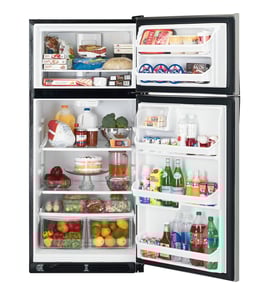





Is a top mount or bottom mount fridge better?
A top-mount refrigerator like the GE GTS22KGNCRBB is usually “better” when you want lower cost, simpler design, and easy freezer access; a bottom-mount is usually “better” when you want the fresh-food section at eye level and use the refrigerator more than the freezer.
Quick comparison
| Feature | Top-mount (freezer on top) | Bottom-mount (freezer on bottom) |
|---|---|---|
| Fresh-food access | More bending | Less bending, more eye-level access |
| Freezer access | Easiest access | Drawer-style, easier organization |
| Typical price | Lower | Higher |
| Complexity | Simpler | More moving parts (drawers, rails) |
| Best for | Frequent freezer use | Frequent fresh-food use |
How to choose for your kitchen and habits
- Choose top-mount if you use frozen foods often, want a straightforward layout, and prefer fewer “extras” to maintain.
- Choose bottom-mount if you cook with fresh ingredients daily and want the most-used shelves at comfortable reach.
- If anyone in the home has back or knee discomfort, bottom-mount usually reduces bending for everyday items.
- If you store bulky frozen items (pizza boxes, large bags), compare freezer layout and bin sizes before deciding.
- If you want the simplest long-term ownership, top-mount designs tend to be easier to live with.
Why it matters
The “better” choice is the one that matches how you actually load the fridge. Most households open the fresh-food door far more than the freezer, so bottom-mount can feel more convenient day to day; top-mount can feel more practical if frozen storage is your priority.
Related GE tips that help either style
If your decision is driven by convenience features, these GE-specific guides can help you compare what you will use most:
Last updated: January 2026
What are the disadvantages of a top mount fridge?
A top-mount refrigerator like the GE GTS22KGNCRBB puts the freezer at eye level and the fresh-food section lower, so the biggest disadvantages are bending more for everyday items, fewer convenience features on many models, and less flexible organization compared with some bottom-freezer designs.
Common disadvantages (what most owners notice)
- More bending for fresh food: the refrigerator compartment is below the freezer, so produce drawers and lower shelves get used with more crouching.
- Less “grab-and-go” freezer access: the freezer is convenient, but the fridge (used more often) is not.
- Fewer premium features on many top-mounts: external ice and water dispensers are less common than on many side-by-side or French door units.
- Organization can feel simpler: fewer adjustable bins, dividers, and specialty zones on many top-mount designs.
- Narrower freezer storage: bulky boxes can be harder to stack neatly in a top freezer.
Quick comparison: top-mount vs bottom-freezer
| Feature | Top-mount refrigerator | Bottom-freezer refrigerator |
|---|---|---|
| Fresh-food access | Lower, more bending | Higher, easier reach |
| Freezer access | Eye level | Lower drawer |
| Typical feature set | Often simpler | Often more feature-rich |
| Cost to buy/repair | Often lower | Often higher |
Why it matters
If you use the fresh-food section many times a day, the “bend-to-reach” layout is the main comfort tradeoff. If you use the freezer more often, a top-mount can feel more convenient and straightforward.
When a “top-mount disadvantage” is actually a repair issue
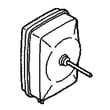
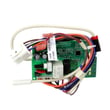
If the complaint is about temperature swings, warm fridge, or noisy airflow, that is usually a cooling or airflow problem, not the layout. For this model, common repair paths include checking the evaporator fan and controls such as the GE refrigerator evaporator fan motor WR60X31522 and the GE refrigerator electronic control board WR55X43825.
Last updated: January 2026
What is the most common problem with GE profile refrigerators?
The most common GE Profile refrigerator complaint is not cooling properly (warm fresh food section, soft ice, or temperature swings). On the GE GTS22KGNCRBB top-mount refrigerator, the same core issues apply: airflow problems, frost buildup, or a failed fan can stop cold air from circulating.
Quick checks we recommend first
- Confirm the temperature controls were not bumped warmer.
- Make sure the doors fully close and the gaskets seal all the way around.
- Do not block the air vents with food packages.
- Listen for the evaporator fan running when the compressor is on.
- Check for heavy frost on the freezer back wall (a defrost problem clue).
Most common causes (and what they look like)
| Symptom | Most likely cause | What you typically notice |
|---|---|---|
| Freezer cold, fridge warm | Airflow or damper issue | Weak airflow into fresh food section |
| Warm everywhere | Sealed system or compressor start issue | Compressor clicks, runs briefly, or runs nonstop |
| Loud humming or rattling | Fan blade or fan motor issue | Noise changes when door opens/closes |
| Frost blanket on freezer panel | Defrost system issue | Cooling gets worse over days |
Parts that commonly relate to “not cooling”
If troubleshooting points to a failed fan or defrost heat issue on this model, these parts are commonly involved:
- GE refrigerator evaporator fan motor WR60X31522 (moves cold air through the freezer and into the refrigerator)
- Refrigerator defrost heater assembly WR55X31113 (melts frost off the evaporator during defrost)
- Fixed damper WR02X31092 (helps route cold air into the fresh food section)
Why it matters
A refrigerator that is not cooling is often an airflow or frost issue at first. Catching it early helps prevent food spoilage and can reduce strain on the compressor and electronic controls.
Helpful GE troubleshooting resources
- GE refrigerator error codes (useful if your display shows a fault)
Last updated: January 2026