
What is XC602100 air compressor?
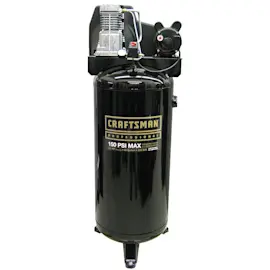
The XC602100 is a Campbell Hausfeld stationary electric air compressor model (not a Coleman model). It is commonly described as a 60-gallon, 2-stage, oil-lubricated compressor designed for higher-demand shop use, with a cast-iron pump and higher maximum tank pressure than many portable units.
How this relates to your Coleman L0502710
Because this page is for the Coleman L0502710 air compressor, XC602100 is a different brand and model number. When ordering parts or troubleshooting, always match the exact model number on your compressor’s data plate to avoid getting the wrong pressure switch, regulator, or check valve.
- Confirm the model number is L0502710 (Coleman) versus XC602100 (Campbell Hausfeld)
- Match electrical requirements (voltage, phase, amperage) before replacing motor or switch components
- Match pressure ratings when replacing a pressure switch or safety valve
- Match fitting sizes and thread types for gauges, regulators, and check valves
Quick comparison
| Item | Coleman L0502710 | Campbell Hausfeld XC602100 |
|---|---|---|
| Brand | Coleman | Campbell Hausfeld |
| Model number | L0502710 | XC602100 |
| Typical use | General compressed-air tasks (varies by configuration) | Stationary, higher-demand shop use |
| Pump type | Varies by configuration | Commonly described as 2-stage, oil-lubricated |
Why it matters
Air compressor parts are not universal. Using the wrong model when selecting parts can lead to incorrect cut-in/cut-out pressure settings, air leaks, poor tank fill performance, or motor overload. For repair help by symptom, we use the same troubleshooting flow regardless of brand.
Helpful DIY troubleshooting
- If your compressor will not power on, use air compressor won't start
- If it runs but will not build pressure, use air compressor won't build tank pressure
- If it starts hard or struggles against tank pressure, use air compressor won't start with a full air tank
For parts lookup beyond what is listed for this model, search by model number on Sears PartsDirect.
Last updated: February 2026
What is the largest 10AMP compressor?
There is no single “largest 10-amp compressor” because 10A is an electrical limit, not a size rating. In practice, the largest 10A units are typically portable compressors that stay under a 120V, 10A circuit while maximizing tank size and air delivery (CFM/LPM). For model-specific parts help on your Coleman L0502710, use the parts lookup on Sears PartsDirect.
What “largest” should mean for a 10A compressor
When you compare 10A compressors, we recommend focusing on performance specs that actually describe capacity:
- Air delivery: CFM at 90 PSI (or LPM) for tool use
- Tank size: gallons or liters for run time and cycling
- Max pressure: PSI (often 125 to 150 PSI on many portables)
- Duty cycle: how long it can run before cooling
- Pump type: oil-free (lower maintenance) vs oil-lubricated (often quieter, longer-lived)
Typical ranges you will see at 10 amps (120V)
Most 120V compressors that truly stay near a 10A draw land in these common ranges:
| Spec | Typical 10A portable range | What it affects |
|---|---|---|
| Tank size | 1 to 6 gallons | Run time before the motor cycles |
| Air delivery | ~1.0 to 3.0 CFM @ 90 PSI | Whether it can keep up with air tools |
| Max pressure | ~120 to 150 PSI | Stored air capacity and tool compatibility |
Quick way to pick the “largest” 10A option for your needs
Use this checklist to match the compressor to the job:
- Brad nailers, inflators: prioritize portability; small tank is fine
- Finish nailers, light staplers: mid-size tank helps reduce cycling
- Impact wrench, die grinder, DA sander: prioritize higher CFM; many 10A units will struggle
- Frequent use: choose a better duty cycle and cooling design
Why it matters
A compressor can be “large” by tank size but still feel weak if CFM is low. For real-world tool performance, CFM at your working PSI matters more than amps alone. If your compressor will not start, will not build pressure, or leaks air, our DIY guides can help you pinpoint the limiting component.
Related DIY help
Last updated: February 2026
How to get more CFM out of a compressor?
You cannot “turn up” CFM on a Coleman L0502710 air compressor beyond what the pump and motor are built to deliver; CFM is mainly limited by motor horsepower, pump displacement, and RPM. You can, however, maximize the usable airflow by reducing restrictions, fixing leaks, and matching pressure settings to the tool.
What actually increases usable CFM
- Lower the regulated outlet pressure to the minimum your tool needs; many tools consume less air at lower pressure, and the compressor cycles less aggressively.
- Use larger, shorter air hose (for example, 3/8-inch ID instead of 1/4-inch) to reduce pressure drop.
- Remove restrictions: clogged intake filter, kinked hose, undersized quick-connects, or a dirty regulator.
- Fix air leaks at fittings, drain valve, tank check valve, and couplers.
- Add storage, not CFM: a larger auxiliary tank increases run time before pressure drops, but it does not increase the compressor’s true CFM.
Quick checks that often make the biggest difference
- Set the regulator just above the tool requirement (common shop tools are 70 to 90 PSI).
- Listen for hissing; soap-test fittings to find small leaks.
- Drain tank moisture; water reduces effective tank volume and can cause corrosion.
- Confirm the compressor reaches normal cut-out pressure and restarts cleanly.
Options comparison
| Goal | What to do | What it changes |
|---|---|---|
| More airflow at the tool | Bigger/shorter hose, better fittings | Reduces pressure drop (feels like more CFM) |
| Longer tool run time | Add an auxiliary tank | More stored air, same CFM |
| True higher CFM | Larger compressor (more HP/pump) | Increases actual delivered CFM |
Why it matters
Running a compressor at higher pressure than needed increases heat, noise, and cycling, and it can make air-hungry tools feel “starved” even when the compressor is working normally.
Related troubleshooting and repair help
If the compressor seems weak or slow to recover, use these guides to pinpoint the cause:
- Air compressor won't build tank pressure
- Air compressor air leaks
- Air compressor can't adjust the output air pressure
For model-based parts lookup and ordering, start with the parts list for Coleman L0502710, or search by model on Sears PartsDirect.
Last updated: February 2026