Owner’s manual
 Error Codes


Does a Kenmore freezer have a reset button?
Kenmore Elite upright freezer model 25324092101 typically does not use a dedicated “reset” button for normal operation. Most issues that feel like a reset are handled by restoring power, correcting control settings, or addressing an alarm condition; see the 25324092101 owner's manual for the exact control and alarm features on your unit.
What to try first (safe “reset” steps)
- Unplug the freezer (or switch the breaker OFF) for 5 minutes.
- Restore power and confirm the outlet is grounded; do not use an extension cord.
- Set the temperature control back to a normal mid-range setting.
- Keep the door closed and allow at least 4 hours for temperatures to stabilize.
- If the alarm is sounding, locate the high-temp alarm switch (some models) and set it as desired.
If you are trying to stop a high-temp alarm
Some versions include a high-temp alarm ON/OFF switch that you can view only with the door open. Turning that switch OFF silences the alarm feature (it does not fix the underlying warming issue).
| Symptom | What it usually means | What to do next |
|---|---|---|
| Alarm sounds after loading food | Temperature rose from warm items | Limit door openings; allow several hours to recover |
| Alarm sounds after outage | Freezer warmed during power loss | Verify power is stable; let unit run and recheck |
| Alarm sounds with door closed | Possible air leak or cooling problem | Inspect door seal; check for frost buildup |
Why it matters
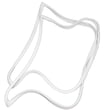
A freezer that is not cooling after a “reset” usually has a power, airflow/door seal, or defrost system problem. For example, a torn gasket can leak warm air and keep temperatures unsafe; replacing the freezer door gasket 5304507199 restores the door seal so the freezer can hold temperature.
Last updated: February 2026
How big is a Kenmore chest freezer model 25324092101?
The Kenmore Elite 25324092101 is an upright freezer model, not a chest freezer. For exact exterior dimensions and clearance requirements for your specific unit, we recommend checking the 25324092101 owner's manual, which is written for this model series.
What to check to confirm size and fit
Before you measure for a space (garage, basement, pantry), we recommend:
- Confirm the model number on the serial plate (upright models are typically labeled on the upper-left wall inside the cabinet).
- Measure width, height, and depth with the door closed.
- Measure depth with the door open (important for tight hallways and door swings).
- Allow airflow space around the cabinet for efficient cooling.
- Verify you have a properly grounded outlet nearby (avoid extension cords).
Typical upright freezer size range (helpful planning)
Most Kenmore-style upright freezers in this family fall into a common footprint range. Use this for planning, then confirm with your measurements:
| Measurement | Typical range for upright freezers | Why it matters |
|---|---|---|
| Width | 28 to 33 in. | Cabinet opening and door swing clearance |
| Height | 60 to 73 in. | Overhead cabinets, shelving, and transport |
| Depth | 27 to 32 in. | Hallway clearance and door opening space |
Why the “chest freezer” dimensions you found may not match
The dimensions you may see online for a “253” model can belong to a different freezer style (chest vs. upright) or a different full model number. The serial plate location and the operating instructions in the manual are the most reliable way to match specs to 25324092101.
Related setup tips that affect fit and performance
- Place the freezer near a grounded outlet.
- Keep it in a location where ambient temperatures stay within normal operating limits.
- Level the cabinet so the door seals evenly.
- Avoid blocking vents or packing items tightly against interior air passages.
Last updated: February 2026
What are the common problems with Kenmore Elite refrigerators?
Common problems we see on Kenmore Elite cooling products like model 25324092101 include warm temperatures (cooling failure), heavy frost from defrost issues, water leaks from a blocked drain, noisy operation from fan problems, and door sealing issues that let warm air in. Use the 25324092101 owner's manual for model-specific operating and care steps.
Most common symptoms and what usually causes them
- Not cold enough or temperature swings: dirty condenser area, restricted airflow, failing compressor or start components
- Heavy frost or ice buildup: defrost heater, defrost thermostat, or control problem
- Water pooling or ice on the floor of the cabinet: clogged or frozen drain path
- Noisy humming, rattling, or squealing: evaporator fan motor or fan blade issue
- Door not sealing, frost around the door: worn or warped gasket, door not aligned
Quick checks we recommend before replacing parts
- Confirm the control is set correctly and allow 24 hours after any adjustment.
- Make sure air can circulate; do not pack items tightly against interior vents.
- Verify the freezer is installed where ambient temperature stays within normal indoor ranges (the manual notes operation up to about 110°F for best efficiency).
- Clean dust from the condenser area (unplug first).
- Inspect the door seal for gaps and paper-test the gasket around the perimeter.
Parts that commonly fix these issues on 25324092101
| Symptom | Part to check first | What it affects |
|---|---|---|
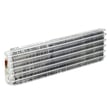
| Frost buildup, warm cabinet | Freezer defrost heater 216730700 | Melts frost off the evaporator during defrost |
| Frost buildup, defrost not completing | Thermostat 297216600 | Senses evaporator temperature for defrost control |
| Door frost, poor sealing | Freezer door gasket 5304507199 | Prevents warm, moist air leaks |
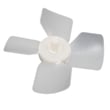
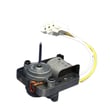
| Loud fan noise, weak airflow | Motor 297309000 or blade 5308000010 | Circulates cold air across the evaporator |
Why it matters
Most “Kenmore Elite refrigerator/freezer problems” trace back to airflow, defrost, or sealing. Fixing those early prevents food thawing, excessive frost, and longer compressor run times.
Last updated: February 2026
What is the average lifespan of a Kenmore Elite refrigerator?
Most Kenmore Elite refrigerators last 10 to 15 years with normal household use and basic maintenance. For your Kenmore Elite model 25324092101 (an upright freezer), the same 10 to 15 year lifespan range is typical for the refrigeration system when airflow, temperature settings, and door sealing are kept in good shape; see the 25324092101 owner's manual for care and operating guidance.
Typical lifespan and what usually fails first
In our experience, these items most often drive end-of-life decisions on a refrigerator or upright freezer:
- Compressor and sealed system wear (cooling gets weak or stops)
- Evaporator fan motor noise or no airflow (warm cabinet, uneven temps)
- Defrost system issues (heavy frost, poor cooling)
- Door gasket leaks (frost buildup, longer run times)
- Electronic control board problems (erratic temps, no-start)
Maintenance that helps you reach the full lifespan
These simple habits reduce run time and stress on the sealed system:
- Keep 2 to 3 inches of clearance around the cabinet for airflow
- Clean dust from the condenser area (where accessible) a few times per year
- Confirm the door closes fully and the gasket seals all the way around
- Avoid overloading shelves so air can circulate
- Set temperatures to normal targets (freezer typically 0°F)
Quick reference: lifespan expectations
| Appliance type | Typical lifespan | Notes |
|---|---|---|
| Standard refrigerator | 10 to 15 years | Depends on usage and maintenance |
| Upright freezer (like 25324092101) | 10 to 15 years | Defrost and door seal condition matter |
| Sealed system components | 10 to 15 years | Often the costliest repair category |
Why it matters
A refrigerator or freezer that runs longer to hold temperature uses more energy and can shorten the life of major components. Catching airflow, frost, or gasket issues early often prevents sealed-system strain.
Last updated: February 2026
Where is the model number on a Kenmore upright freezer?
On the Kenmore Elite upright freezer model 25324092101, the model and serial number plate is typically on the upper left wall inside the freezer compartment. This is the primary location listed for upright models in the 25324092101 owner's manual.
Where to look first (fastest checks)
- Open the freezer door and look on the upper left interior wall
- Check near the top liner area where labels are easiest to read
- Use a flashlight; frost and glare can hide the print
- Write down both the model number and serial number exactly as shown
Other common label locations on upright freezers
If the inside upper-left wall label is missing, damaged, or painted over, these are the next most common places to check on many Kenmore upright freezers:
- Inside side wall (mid-height)
- Ceiling area inside the cabinet
- Behind the kick plate (front bottom grille area)
- Back exterior panel near the power cord entry
Why it matters
The exact model number (like 25324092101) ensures we match the correct Kenmore parts and diagrams for your freezer, especially for model-specific items such as the freezer door gasket 5304507199 or electronic controls.
Quick reference
| Location | How to access | What you will see |
|---|---|---|
| Upper left interior wall (most common) | Open door, look high on left wall | Model and serial plate |
| Kick plate area | Remove or tilt grille (if equipped) | Sticker or plate |
| Back exterior panel | Pull unit forward safely | Sticker near wiring/cord |
Last updated: February 2026
Why is my Kenmore Elite freezer not freezing?
If your Kenmore Elite freezer model 25324092101 is running but not freezing, the most common causes are poor airflow around the cabinet, a door that is not sealing, or a cooling system or control problem (compressor, defrost system, or electronic control). Start with installation and sealing checks from the 25324092101 owner's manual.
Quick checks we recommend first
- Confirm the freezer is plugged into a grounded outlet (no extension cord or adapter).
- Make sure the room temperature is not extreme; for best performance, keep the freezer where surrounding temps stay below about 110°F.
- Verify the freezer is level so the door closes and seals correctly.
- Check the door closes fully and the gasket is not torn, warped, or stiff.
- Allow space around the freezer for air circulation so it can reject heat.
- If it was recently installed or restarted, give it time to pull down temperature (several hours; up to 24 hours for a full load).
Most likely causes and what you will notice
| What you notice | Likely cause | What to do next |
|---|---|---|
| Warm cabinet, compressor seems to run a lot | Poor ventilation or dirty condenser area | Improve clearance and airflow; clean dust from the condenser area |
| Frost buildup, weak cooling, temps swing | Defrost system issue | Test defrost components; inspect for heavy frost on the evaporator cover |
| Door pops open or doesn’t “grab” | Door not sealing or freezer not level | Re-level the cabinet; inspect/replace gasket |
| No steady cooling, clicking or intermittent running | Start device, control, or compressor issue | Check start components and control board; consider professional sealed-system service |
Parts that commonly fix “not freezing” symptoms
These are model-matched parts we often see involved in cooling and temperature complaints:
- Freezer door gasket 5304507199 (air leaks cause warm temps and frost)
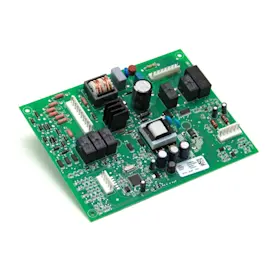
- Frigidaire freezer electronic control board 216979700 (can mismanage compressor/defrost)
- Freezer defrost heater 216730700 (failed heater can lead to ice-blocked airflow)
- Thermostat 297216600 (defrost bi-metal thermostat issues can stop proper defrost)
- Compressor 5304478809 (sealed-system cooling failure)
Why it matters
A freezer that is not level or not sealing can look like a major failure, but it often creates simple problems first: warm temperatures, moisture, and frost that blocks airflow. Fixing airflow and sealing early helps protect the compressor and keeps food safely frozen.
Last updated: February 2026