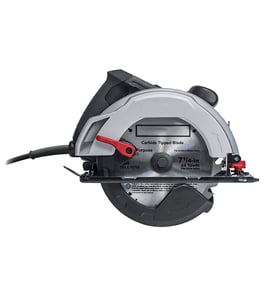

What is the bottom plate of a circular saw called?
On a Craftsman 315109040 7-1/4" circular saw, the bottom plate is commonly called the shoe (also called the base plate). It rides on the workpiece to stabilize the saw and helps you control straight cuts and bevel cuts.
Common names you will hear
- Shoe
- Base plate
- Saw base
- Foot plate
- Sole plate (less common)
What the shoe does (and why it matters)
The shoe is the reference surface that keeps the blade at a consistent depth and angle as you cut. If the shoe is bent or loose, the saw can wander, bind, or cut at the wrong bevel angle.
Quick checks if cuts are not straight
- Inspect the shoe for bends, cracks, or a twisted edge.
- Confirm the bevel and depth adjustments lock tightly.
- Check that the blade is sharp and installed correctly.
- Make sure the blade is square to the shoe at 0 degrees (90 degrees to the base).
- Verify the workpiece is supported so the kerf does not pinch the blade.
Shoe adjustments at a glance
| Adjustment | What it changes | Typical use |
|---|---|---|
| Depth | How far the blade extends below the shoe | Cleaner cuts, less kickback risk |
| Bevel | The angle between blade and shoe | 0 degrees for square cuts; 45 degrees for bevels |
| Edge guide alignment (if equipped) | How the shoe tracks along an edge | Repeated straight rip cuts |
Related DIY skill that helps with saw repairs
If your saw has power issues while you are checking alignment, testing the cord, switch, or internal wiring with a meter is a good next step; how to use a multimeter to test electrical parts video walks through the basics.
Last updated: February 2026
Why is my circular saw stopping mid cut?
Your Craftsman 315109040 7-1/4" circular saw usually stops mid-cut because the motor is being overloaded (blade binding, dull blade, cutting too fast), power is dropping (cord, outlet, breaker), or the switch/brushes are failing and interrupting current under load.
Quick checks that fix most mid-cut shutdowns
- Unplug the saw; confirm the blade is tight and installed correctly.
- Try a new or known-sharp blade; a dull blade is the most common cause of binding.
- Reduce feed pressure; let the blade do the work, especially in wet lumber or thick stock.
- Check the shoe (base) is square and not dragging; misalignment increases binding.
- Verify the lower blade guard moves freely; a sticking guard can pinch the cut.
Power and electrical causes to rule out
A saw that runs fine free-spinning but quits in the cut often has a power delivery problem.
- Test a different outlet on a different circuit.
- Avoid long, thin extension cords; use a heavier-gauge cord and keep it as short as practical.
- Inspect the cord and plug for nicks, soft spots, or heat discoloration.
- If it stops and restarts when you wiggle the trigger, the switch or internal wiring is suspect.
| Symptom | Most likely cause | What to do next |
|---|---|---|
| Stops only in thick/hard material | Blade dull, binding, cutting too fast | Change blade; slow feed; support workpiece |
| Stops randomly, even in easy cuts | Switch contacts, loose connection | Inspect trigger feel; check wiring/terminals |
| Stops after warming up | Worn motor brushes, overheating motor | Check brush wear; clean vents; reduce load |
| Breaker trips | Overload, short, wrong cord | Try different circuit; inspect cord; check for shorts |
Motor overheating and brush wear (common on older saws)
If the housing gets very hot or you smell hot insulation, the motor may be overheating from restricted airflow (packed sawdust) or worn brushes/commutator. Blow out vents with dry compressed air (eye protection on) and re-test with a sharp blade.
Why it matters
When a circular saw stops mid-cut, the blade can bind and kick back. Fixing the root cause (binding, power drop, or failing electrical parts) improves cut quality and reduces safety risk.
For model-number help before ordering parts, use how to find your appliance model number (and what it means for parts).
Last updated: February 2026
How to change an old Craftsman circular saw blade?
To change the blade on your Craftsman 315109040 7-1/4" circular saw, unplug the saw, lock the blade, remove the arbor bolt and outer washer, then swap the blade and reassemble in the same order. Confirm the blade teeth face the correct direction before tightening.
Safety first (before you touch the blade)
- Unplug the saw (do not rely on the trigger switch).
- Wear cut-resistant gloves and eye protection.
- Set the saw on a stable bench with the blade guard closed.
- Use the correct wrench for the arbor bolt (rounded hardware is hard to remove).
- If the guard sticks or the bolt will not break loose, stop and inspect for damage.
Blade change steps (typical for this Craftsman style)
- Unplug the saw.
- Press and hold the spindle lock (usually a button near the upper blade guard) and rotate the blade by hand until it locks.
- Use the wrench to loosen the arbor bolt.
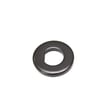
- Remove the outer washer (flange).
- Retract the lower blade guard and lift the old blade off the arbor.
- Install the new 7-1/4" blade on the arbor.
- Reinstall the outer washer and arbor bolt; tighten firmly while holding the spindle lock.
- Spin the blade by hand to confirm it clears the guard and spins true.
Quick checks that prevent wobble and binding
| Check | What to look for | What to do |
|---|---|---|
| Blade direction | Teeth point the same way as the rotation arrow on the guard | Flip blade if needed |
| Washer order | Inner flange stays seated; outer flange sits flat | Re-seat flanges flat |
| Arbor bolt tightness | Blade does not slip under load | Tighten securely |
| Guard action | Guard snaps back closed | Clean debris; inspect spring |
Why it matters
A correctly installed blade reduces kickback risk, cuts straighter, and protects the motor and arbor bearings from vibration.
For more DIY safety guidance before repairs, see are diy appliance repairs safe.
Last updated: February 2026
What is a 140 tooth circular saw blade used for?
A 140-tooth circular saw blade is a fine-finish blade used to make very smooth, low tear-out cuts in thin materials (like plywood veneers, laminates, and trim). For a Craftsman 315109040 7-1/4" circular saw, the key is matching blade diameter, arbor size, and RPM rating before using any high-tooth-count blade.
Best uses for a 140-tooth blade
A high tooth count takes smaller “bites,” which improves edge quality but cuts slower.
- Veneered plywood and cabinet-grade plywood (crosscuts and short rips)
- Laminate flooring and melamine (use a blade designed for laminates)
- Thin hardwood trim and molding where you want minimal splintering
- Paneling and other thin sheet goods
- Finish cuts where you want less sanding afterward
When a 140-tooth blade is the wrong choice
A 140T blade is not a good all-purpose choice; it can overheat or bog down in thicker stock.
| Cutting task | Typical tooth count | What you get |
|---|---|---|
| Framing and fast rough cuts (2x lumber) | 18 to 24T | Faster cutting, better chip clearing |
| General purpose | 40 to 60T | Balanced speed and finish |
| Fine finish in thin sheet goods | 80 to 140T | Cleanest edge, least tear-out |
Compatibility checks for Craftsman 315109040
Before buying or installing a blade for this model, confirm these basics.
- Blade diameter: 7-1/4 inch (matches the saw’s size)
- Arbor size: match the saw’s arbor (commonly 5/8 inch on many 7-1/4 inch saws)
- Max RPM rating: blade rating must meet or exceed the saw’s no-load RPM
- Kerf thickness: very thick kerf blades can strain smaller saws
- Material-specific grind: choose plywood/laminate tooth geometry when needed
Why it matters
Using the right tooth count and a blade that matches the saw’s arbor and RPM helps prevent burning, kickback risk, and poor cut quality. High-tooth blades excel at finish work, not speed or heavy ripping.
For help confirming the exact model number before ordering parts or accessories, use how to find your appliance model number (and what it means for parts).
Last updated: February 2026
